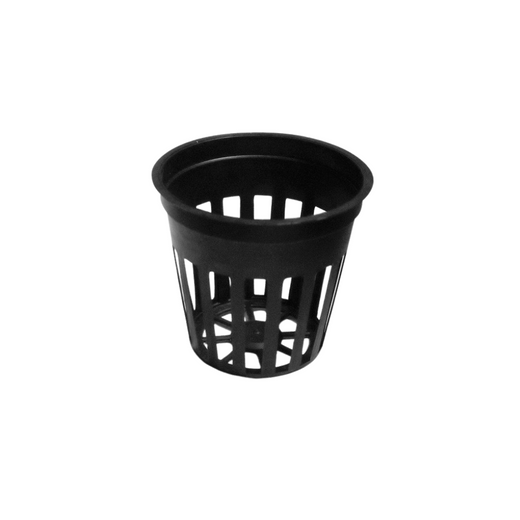


Modular RDWC 2.0 hydroponic kit, 2 to 18 pots
Regular price
Dhs. 807.00
Regular price
Sale price
Dhs. 807.00
Unit price
/
per
| Number of pots | Prix | Prix au unité | vs 3 |
|---|---|---|---|
| 2 | Dhs. 807.00 | Dhs. 403.50 | −4 % |
| 3 | Dhs. 1,259.00 | Dhs. 419.67 | — |
| 4 | Dhs. 1,362.00 | Dhs. 340.50 | −19 % |
| 6 | Dhs. 1,618.00 | Dhs. 269.67 | −36 % |
| 8 | Dhs. 1,831.00 | Dhs. 228.88 | −45 % |
| 9 | Dhs. 2,514.00 | Dhs. 279.33 | −33 % |
| 12 | Dhs. 3,111.00 | Dhs. 259.25 | −38 % |
| 16 | Dhs. 3,623.00 | Dhs. 226.44 | −46 % |
| 18 | Dhs. 3,965.00 | Dhs. 220.28 | −48 % |
This RDWC system continuously circulates an oxygenated nutrient solution between 19 L double-walled pots connected by a push-fit circuit in 32 mm. It can be configured from 2 to 18 pots around a controller pot, pumps included, and it is manufactured in Italy, guaranteed for 2 years, and dispatched within 3 to 7 days from Turin.

7/7 customer service by e-mail

Payment in instalments, free of charge
The summary
- What it is: 19 L pots connected together, in which the roots are permanently submerged in a recirculating nutrient solution.
- What sets it apart: a 32 mm circuit, the easiest of the two generations to assemble and dismantle.
- Nine configurations: from 2 to 18 pots, with the 6 to 9 pot format fitting a 120 by 120 cm grow tent.
- What you do: you measure and adjust at the controller pot, once for the entire network.
- What to choose alongside it: grow medium for the baskets, a complete hydroponic nutrient solution, and a pH meter.
- Where it ships from: from the workshop in Robassomero, near Turin.
Recirculating deep water culture, 32 mm circuit, 2 to 18 × 19 L pots
An isolated bucket will always drift. Its pH shifts one way while the one next to it goes the other, and after three weeks you have as many different growing environments as you have buckets. Connecting the pots to one another eliminates this problem at source: the solution circulates, blends together, and becomes a single body of water for all your plants, with one level to top up and one pH to maintain.
🔄 One system, one water supply
Each 19 L pot is drilled in line at 38 mm and takes the 32 mm pipe connecting it to the next. At the end of the run, the controller pot houses the pump, which sends the solution back to the growing pots. An air stone placed at the bottom of each pot maintains dissolved oxygen levels, and the loop runs continuously. Levels then equalise by gravity on their own, provided all pots are sitting on a perfectly level surface, a difference of just a few millimetres is enough to deprive the highest pot of its share.
The pot itself is moulded with a double wall, black on the inside and white on the outside. The black blocks light, without which algae cannot establish themselves in a nutrient-rich solution. The white reflects lamp energy and limits heat build-up in the solution, which matters in an enclosed grow tent where heat has nowhere to go. These pots are manufactured in Italy, and the 32 mm push-fit fittings click together by hand, with no adhesive or jubilee clips required. A pot can therefore be removed from the system in a matter of seconds for cleaning or replacement, without disturbing the others or draining the whole setup.
🧪 Measuring at a single point
This is the step that makes all the difference compared with individual pots. You dip your probe into the controller, take a reading, make your adjustment in the same place, and the pump distributes the correction throughout the entire system within a few minutes. One reading a week is sufficient under steady-state conditions, two in the first few days after transplanting. The trade-off of this shared system can be summed up in one sentence: all your plants receive the same nutrient solution, so they must be at the same stage, a plant in flower and a young seedling in the same system forces a compromise that suits neither.
pH is read on the controller
The value applies to all pots, since the water is the same throughout.
Fertilisers are added at the controller
They are never poured directly into a growing pot, where the dose would remain localised for several minutes.
The level is topped up at the controller
It is the lowest point in the circuit, and the first place where evaporation becomes visible.
Draining is done via the controller
It comes round every seven to fourteen days, to start again with a fresh solution.
Light enters from the top
The black wall only protects the wall itself. A poorly fitted lid, a basket smaller than its hole, or a cover left slightly open all let in enough light to turn the solution green within a few days. Check that each pot is properly closed after every transplanting, that is the only point of entry for algae.
Clay pebbles and nutrients to get started
The grow medium for the baskets, a complete hydroponic nutrient solution, and a way to read pH will define your first week of growing. The 6 L clay pebbles rinse and go in within minutes, and the three-bottle 500 ml nutrient kit covers a full first cycle on a small system.
🌡️ What to monitor in summer
Warm water holds less dissolved oxygen, and dissolved oxygen is precisely what protects roots that are permanently submerged. The white wall gives you a margin, it works no miracles in a room at 30 degrees. If you are growing in a greenhouse or a loft, solution temperature becomes a figure to watch as closely as pH. The practical limit is around 24 °C; above that, the root hairs begin to brown and the risk of rot increases, even as the plant is demanding more oxygen than it would in cooler conditions. A thermometer left in the controller costs very little and saves you from discovering the problem on the roots once it has already taken hold.
🧰 Expanding later
The fittings clip and unclip by hand, so a pot can be added or removed between cycles without dismantling the rest of the system. The pot extension is designed for exactly that, and the grow bed only option replaces a damaged tank. The limiting factor is not the fittings but the pump already in place: beyond its capacity, the pots at the far end of the run receive less than the others. A reliable sign of this is the last pot taking several minutes to reach the same level as the controller after filling.
🔧 The two parts that wear out
Don't overlook the two parts that wear out, because they cost little and can bring a whole crop to a standstill when they're missing: the 32 mm push-fit seals and the air stones. The former eventually start to weep, the latter to produce large bubbles instead of a fine mist. A weeping seal shows itself as a damp mark at the base of the fitting, often well before the water level changes. A tired air stone is better replaced than cleaned, its price doesn't justify the time spent, and its blocked pores make the air pump work harder for nothing.
🪴 The first fill
Set up the network dry first, pots lined up and fittings pushed together, then fill with clean water and let it run for an hour. This lets you check that every joint holds, that the levels equalise, and that the pump feeds the last pot as well as the first. Rinse the clay pebbles until the water runs clear, fill the baskets, prepare the solution, adjust the pH last, and transplant plants that already have roots. Allow around 19 kg per pot once filled, which quickly adds up to several hundred kilograms across a large network: the floor is chosen beforehand, never afterwards. A concrete slab, a load-bearing floor, or tiled ground are all suitable; a simple sheet laid over a timber floor far less so.
Technical specifications
The essentials
- Principle
- Recirculating deep waterThe roots are continuously submerged, the solution circulates in a closed loop.
- Configurations
- From 2 to 18 pots
- Growing pot
- 19 L, double-walledBlack inside to block light, white outside to reflect the lamp output.
- Material
- Food-grade polypropylene
Hydraulic
- Pot drilling
- 38 mm in-lineThis measurement is what sets a 2.0 pot apart from a PRO pot, which is bored to 58 mm.
- Pipework and seals
- 32 mm push-fitReplacement seals are ordered by this diameter, not by that of the pot.
- Diffuser
- 1 air stone per pot
- Assembly
- Tool-free, dismountable
Origin and warranty
- Manufacturing
- Italie, Robassomero
- Guarantee
- 2 years
To budget for separately
- Grow medium in the baskets
- Clay pebbles or rockwool
- Nutrition
- 1 complete hydroponic nutrient solution
- pH reading
- 1 drop test or a meter
- Rooted plants
- Sown or propagated separately
6 further specifications are available in the detailed view.
In the box
- The double-walled 19 L growing pots, in the quantity corresponding to the chosen configuration.
- 1 controller pot of 19 L with its solid lid.
- 1 submersible water pump and 1 air pump.
- 1 cylindrical air stone per growing pot.
- 32 mm pipes, push-fit fittings, and pre-drilled covers for the network.
- 1 growing net pot per pot.
Drilling dimensions, pipe diameter and pot construction taken from the supplier's component catalogue on 19/09/2026. Configurations, guarantee and origin taken from supplier descriptions on the same date.
Two generations of RDWC
The same principle and the same 19 L pot. This table only compares what changes from one generation to the next.
The 2.0 is the entry-level generation, and often the right choice
The professional range offers a larger circuit, a filter and level regulation. All of this is only worthwhile if your setup actually needs it: the questionnaire looks at your situation first, not the equipment.
| Pipework diameter (mm) | Pot drilling (mm) | Inline filter | Float valve to controller | Minimum pots (pots) | Maximum pots (pots) | Volume per pot | Price | |
|---|---|---|---|---|---|---|---|---|
| Recommended RDWC 2.0Your choice | 32 mm | 38 mm | No | No | 2 pots | 18 pots | 19 L | Dhs. 807.00 |
| RDWC PROYour choice | 50 mm | 58 mm | Yes | Yes | 3 pots | 24 pots | 19 L | Dhs. 1,788.00 |
RDWC 2.0Recommended
Circuit
Pipework diameter (mm)32 mm
Pot drilling (mm)38 mm
Inline filterNo
Float valve to controllerNo
Capacity
Minimum pots (pots)2 pots
Maximum pots (pots)18 pots
Common to both
Volume per pot19 L
RDWC PRO
Circuit
Pipework diameter (mm)50 mm
Pot drilling (mm)58 mm
Inline filterYes
Float valve to controllerYes
Capacity
Minimum pots (pots)3 pots
Maximum pots (pots)24 pots
Common to both
Volume per pot19 L
Diameters and drilling dimensions taken from the supplier's component catalogue on 19/09/2026.
Help choosing
Two generations , which one suits you?
Estimate your
delivery time
Your estimate
Delivery
Estimated time
It covers preparing your order and then the transit time quoted by the carrier, counted in working days.
It is not a guaranteed delivery date: public holidays, peak periods, customs or a carrier delay can extend it. The exact amount, in your currency, is worked out in the cart once your address is entered.
Dispatch takes place from the workshop in Robassomero, near Turin. The number of parcels depends on the configuration ordered, and the 19 L pots take up considerable volume for a modest weight. Plan for home delivery and have someone available to receive it. Exact shipping costs and final delivery times are shown at checkout once your address has been entered. Outside the European Union, import duties and taxes remain the responsibility of the recipient.
Frequently asked questions
10 questions
6 key questions, 10 in the detailed view
Vous aimerez aussi


Sold out

Sold out

Sold out


Related articles

Start-up
Getting started with indoor hydroponics
The first month of a box system installation, from filling with water to the first reading.
Read the article

Crops
Growing peppers in aquaponics
One of the crops that makes the best use of a large solution volume per plant.
Read the article

Technical
Regulating pH in an aquaponics system
The method for measuring and adjusting, to understand before the first fill.
Read the article

Diagnostic
Understanding and fixing cloudy water
What causes a solution to turn green or white, and where light most commonly enters.
Read the article

Understand
Growing without soil in hydroponics
What growing in solution changes, and what it requires in terms of monitoring.
Read the article

Grow media
Which grow medium to choose for aquaponics
What fills the basket matters less than you'd think, except at the moment of transplanting.
Read the article
Let us talk about your project
Une question sur ce produit ou votre installation ? Notre équipe vous répond et vous conseille.

Paiement plusieurs fois sans frais
Proposé selon le montant du panier, au moment du paiement.

Livraison sous 5 à 15 jours ouvrés
Selon les produits et sites d'expédition. Estimation par destination dans l'estimateur de cette page.

SAV 7/7 par mail ou chat
Notre équipe répond à toutes vos questions.

Faire un achat engagé
Devenez acteurs du changement.
