Rainwater in aquaponics

Written by Tristan Ulrich · October 18, 2026
Cuve de récupération d'eau de pluie alimentée par une descente de gouttière à côté d'une petite serre

Rainwater is free, readily available and perfectly suited to watering, but introducing it into an aquaponic system calls for a few very specific precautions. Here is how to collect it, test it and use it without upsetting your fish or your biofilter.

Using rainwater in your aquaponic system

An aquaponics grower almost always ends up asking the question. The garden water butt overflows after every storm while the pond loses several centimetres in summer. This free resource has real advantages, since it contains neither chlorine nor chloramines, it often arrives at a temperature close to that of the pond, and it costs nothing.

The difficulty lies elsewhere. Rainwater is very low in minerals, almost devoid of buffering capacity, and it also runs off a roof before reaching the tank. This guide details the parameters to monitor, the roofs to rule out, how to filter, store and remineralise, as well as the practices that allow risk-free use.

Rain falling into an open barrel filled with clear water, illustrating very soft rainwater

Rainwater that is naturally very soft

Rainwater forms by condensation of water vapour and reaches the ground almost devoid of mineral salts. Its conductivity, which reflects the quantity of dissolved salts, is therefore very low, far below that of tap water. It is also slightly acidic by nature, even far from any pollution, because it dissolves carbon dioxide from the air as it falls, which puts its pH a little below 6, at around 5.6 to 5.7.

This purity is an asset for watering, where it prevents limescale build-up. In aquaponics, it becomes instead the most delicate parameter to manage, because a living system needs minerals and above all buffered water, able to absorb the acidity produced day to day.

Carbonate hardness test under way, a drop of reagent falling into a vial of bluish water

Why rainwater makes the pH drop

KH measures carbonate hardness, that is, the amount of dissolved carbonates and bicarbonates. It acts as a chemical buffer and stops the pH from swinging sharply at the slightest disturbance.

Nitrification, however, produces acidity continuously, consuming roughly 7 grams of alkalinity, expressed as calcium carbonate, for every gram of ammonia nitrogen converted. In a well-buffered system, the carbonates neutralise this acidity and the pH falls only slowly. With rainwater, whose KH is almost zero, the reserve runs out quickly and the pH can crash, a phenomenon aquarists call a pH crash.

Nitrifying bacteria work best between pH 7 and 9 and slow down markedly below 6.5, which lets ammonia and nitrite build up. American aquaponics guidelines recommend an alkalinity of at least 100 milligrams per litre as calcium carbonate, which is about 5 to 6 German degrees.

Tiled roof covered in moss and a zinc gutter clogged with leaves after the rain Cu copper water test in drops

What the roof adds to rainwater

The water that reaches the tank has run off dozens of square metres of roofing, then along a gutter, picking up everything it has met on the way. The most common contributions are organic: leaves, pollen, moss and bird droppings, which increase the organic load and the oxygen consumption of the pond.

The most sensitive issue, however, remains metallic. Copper is toxic to fish at very low concentrations, with the reference values adopted in Europe to protect aquatic life sitting at around 1 to 3 micrograms per litre, and its toxicity increases in soft, low-alkalinity water. Because acidic, unbuffered rainwater attacks metals more readily, the combination of rain and a metal roof deserves a systematic check with a copper test.

Roofs and gutters to avoid

Before even considering filtration, the first safeguard is to choose the right collection surface. Some roofing materials are suitable, while others should be ruled out as soon as the water is going to end up in a tank containing fish. The Bavarian environmental authorities, for instance, advise against using water from uncoated copper, zinc or lead roofs to water a vegetable garden. The principle is simple: anything that releases metals, biocides or hydrocarbons is a problem.

  • Copper roofing, flashings and gutters.
  • Bare zinc and galvanised steel, which release zinc into the run-off water.
  • Old fibre-cement roofs, which may contain asbestos.
  • Bitumen shingles, particularly anti-algae models whose granules contain copper.
  • Any roof recently treated against moss with a chemical product.

Painted or lacquered metal roofing releases far fewer metals than bare metal, and PVC or lacquered aluminium gutters generally pose few problems. If you are unsure about an existing roof, the most cautious solution is to analyse the water in the tank or, more simply, to reserve it for watering the vegetable garden. Water tests in drop format let you monitor the basic parameters and copper, while measuring other heavy metals is a job for a laboratory.

First-flush diverter fitted to a PVC downpipe

Diverting the first rain water

After a dry spell, the roof collects dust, pollen, droppings and atmospheric deposits. The first litres of the next rainfall wash this surface and carry most of the pollution.

Diverting the first rainfall, often called the first flush, means sending this initial volume somewhere other than the tank. A vertical tube fitted to the downpipe fills first, then a floating ball or a simple overflow directs the rest to storage. A small drip valve then empties the tube between rainfalls.

American and Australian guidelines recommend volumes of around 0.4 to 2 litres per square metre of roof, and field studies show that rules of thumb often underestimate the need after a long drought. The device can be built for a few pounds' worth of PVC plumbing.

Mesh leaf guard catching leaves and twigs at the inlet of a downpipe

Filtering rainwater before the tank

Filtration takes place in successive stages, from the coarsest to the finest. A strainer placed at the inlet of the downpipe holds back leaves and twigs, then a filtering collector or a fine screen installed just before the tank stops particles, roof grit and pollen. This second stage is the most useful, and also the one most often forgotten when it comes to cleaning, especially in autumn.

A fine cartridge can complete the set-up at the tank outlet, at the point where the water is drawn off. However, do not use any chlorine-based disinfectant on water intended for a living system.

Fully opaque black storage tank installed in the shade against a stone wall

Storing rainwater away from light

Light is enough to turn stored water green, which is why rainwater harvesting manuals call for a fully opaque tank. Closed with a lid, which also stops mosquitoes laying eggs and animals falling in, it should be placed in the shade or buried, which keeps the water cooler and more stable. Fit a drain at the lowest point and draw water from about ten centimetres above the bottom, so as not to stir up the accumulated sediment.

Series of coloured test tubes after analysing the pH, KH and GH of rainwater Pocket pH, EC and TDS tester, with calibration kit

Testing rainwater before introducing it

No water should enter a living system without being checked first. Three measurements are enough to form a reliable opinion, and they take only a few minutes with drop tests.

Start with KH, using a carbonate hardness test, as it is the deciding parameter here. Tank water showing 0 or 1 degree of German hardness should not be introduced in large quantities without correction. Then measure the pH, which is generally acidic, followed by the GH, which reflects total hardness and therefore the presence of calcium and magnesium, two elements your plants need.

A conductivity meter is a useful addition to the kit. Unusually high conductivity in rainwater points to contamination somewhere in the collection circuit, and its source must be found before any water is drawn.

Remineralising and buffering rainwater

Correcting rainwater does not mean raising the pH directly, which would not hold. You need to rebuild the alkaline reserve, in other words raise the KH, and the pH then stabilises by itself.

In aquaponics, sodium bicarbonate should be avoided, contrary to common practice in aquarium keeping, because sodium accumulates in the system and eventually harms the plants. The reference publications recommend potassium or calcium compounds instead, which also supply nutrients. Potassium bicarbonate is the easiest to dose. By calculation, you need about 1.8 grams per 50 litres to raise the KH by one German degree. Always dissolve it in a separate bucket, never directly in the pond, and proceed in small steps spread over several days.

Two slower but very steady solutions exist. A net of rinsed oyster shells or limestone gravel placed in the filter releases calcium carbonate faster the lower the pH is, which creates natural regulation. The calcium supplied in this way is useful to plants, notably against blossom end rot in tomatoes. However, take care not to exceed a pH of 7, above which iron becomes less available, as our article on iron deficiency explains. For the complete method, see our dedicated guide to pH.


Two watering cans side by side, one filled from the tap and the other with rainwater, for a mix of the two sources JBL BiotoPond pond water conditioner, chlorine neutraliser

Mixing rainwater and mains water

The safest strategy is not to choose between the two sources, but to combine them. Mains water supplies the carbonates that are missing, while rainwater dilutes limescale that is often excessive. In a hard-water area, a mix of equal parts generally gives a good balance, whereas with mains water that is already soft it is better to limit yourself to a quarter rainwater and check the KH after each top-up.

Prepare the mix in advance in a buffer tank. Free chlorine is volatile and disappears through aeration, all the faster when the water is agitated, but chloramines, used by some water suppliers, will not go away simply by standing and require a suitable water conditioner.

Pipe delivering a trickle of water into a pond whose level has dropped because of summer evaporation

Topping up for evaporation without shock

This is the most common and the most sensible use, since evaporated water leaves all the dissolved salts behind. Top up in stages rather than emptying the tank in one go, add the water in a thin stream and keep an eye on the temperature, limiting the difference between the top-up water and the pond water. Our article on summer evaporation details the volumes involved, month by month.

First filling of a new aquaponic grow bed lined with clay pebbles, in a greenhouse Potassium bicarbonate powder for aquaponics

Starting an aquaponic system with rain water

Filling a new system with rainwater is possible, since there are as yet no fish or bacteria to look after, provided you remineralise before cycling, for example with potassium bicarbonate. Nitrifying bacteria consume alkalinity to function and settle poorly in water without carbonates. Aim for a KH of about 5 degrees German and a pH close to 7 before introducing any source of ammonia, then allow about a month for cycling, longer in cold weather.

Mistakes to avoid with rainwater

Most incidents do not come from the water itself, but from the way it was introduced. The classic scenario is a familiar one: an aquaponics grower sees the level dropping, empties their tank into the pond all at once, and the next day finds the pH has crashed and the fish are gasping at the surface.

  • Introducing a large volume all at once.
  • Neglecting to measure the KH before each significant addition.
  • Collecting from a roof or from bare copper or zinc gutters.
  • Storing in a translucent tank exposed to the sun.
  • Correcting the alkalinity with sodium bicarbonate, or directly in the pond.

One last, more subtle mistake is to overlook the first collection of the year. After winter, the roof has accumulated moss and debris, and the tank may have stood for several months without circulation. Empty it, rinse it and discard the first spring rains generously before you start drawing water again. If your water turns cloudy after an addition, our article on cloudy water explains what to do.

Large rainwater collection tank along the side of a house, connected to a vegetable garden and a greenhouse

What volume of tank to plan for

Calculating the collection potential is simple. Multiply the roof area in plan view, in square metres, by the annual rainfall in millimetres, then apply a loss coefficient of about 0.8 to allow for evaporation, overflow and the first flush that is diverted away.

A 60-square-metre roof in a region receiving 700 millimetres a year therefore yields in the order of 33,000 litres annually, more than enough to cover the top-ups of a domestic system. The constraint is therefore storage, not the resource itself.

For use limited to aquaponics, a 500 to 1,000-litre tank is usually enough to see you through the dry weeks of summer. If you also water the vegetable garden, aim for several thousand litres and direct the overflow to a soakaway bed.

Rainwater harvesting in Europe

The resource and the legal framework vary from one country to another, which mainly changes the sizing and the paperwork, never the technical precautions. In France, Belgium or Germany, rainfall is generally sufficient and fairly well spread across the year. In southern Europe, the rain falls mostly in autumn and winter, and some dry regions receive far less, which makes storage the limiting factor. Further north, frost means an outdoor tank has to be drained or buried below the frost line.

In France, the use of rainwater is governed by decree no. 2024-796 and the order of 12 July 2024, which have applied since 1 September 2024 and repealed the order of 21 August 2008. Watering the garden and vegetable patch at the scale of a single building is among the permitted uses. In Belgium, the Flemish Region and the Brussels-Capital Region require a cistern in new builds, and some Walloon municipalities require one too. These rules change regularly, and the French order was in fact amended in 2026, so it is best to check with your local council before carrying out any permanent installation.

Conclusion: rainwater, a resource to manage carefully

Rainwater deserves its reputation. Free and without chlorine or chloramines, it is a great help to the aquaponics grower, particularly during dry weeks when evaporation calls for regular top-ups. Its real limitation is its lack of buffering capacity, which is corrected with three habits: avoid copper or bare zinc roofing, measure the KH and remineralise without sodium, and introduce the water gradually.

Mixing it with mains water remains the safest solution for getting started. Nothing then stops you from increasing the share of rainwater once you have your bearings.

Sources

Southern Regional Aquaculture Center, Recirculating Aquaculture Tank Production Systems: Aquaponics, Integrating Fish and Plant Culture (SRAC 454), Minimum alkalinity of 100 mg/L, sodium bicarbonate to be avoided, nitrification optimum, iron above pH 7, cycling time

Qi and Vielma, Natural Resources Institute Finland (Luke), Effects of alkalinity-controlling chemicals on biofilter performance and sludge properties in freshwater recirculating aquaculture systems, Aquacultural Engineering, 2026, Sodium build-up with sodium bicarbonate, around 7 g of alkalinity consumed per gram of nitrified nitrogen

Ineris, Copper and its compounds, toxicological and environmental data sheet, Concentration with no foreseeable effect on freshwater organisms, in the order of 1 to 2 µg/L

International Commission for the Protection of the Rhine, report no. 234, Substance Data Sheet, Copper, Environmental quality standard for copper in inland waters, 2.8 µg/L

Bayerisches Landesamt für Umwelt, Regenwassernutzung, Uncoated copper, zinc and lead roofs are not recommended; store in a cool, dark place

Texas Water Development Board, The Texas Manual on Rainwater Harvesting (third edition), Natural pH of rain, first-flush diversion volumes, requirement for an opaque tank

Ineris AIDA, Order of 12 July 2024 on the health conditions for using water unfit for human consumption, French framework in force since 1 September 2024 and repeal of the 2008 order

Buildwise, Water and roofing, drainage regulations, Water tank requirement in the Flemish Region and the Brussels-Capital Region

Frequently asked questions

In an opaque tank, kept closed and cool, generally several months with no noticeable deterioration. Rainwater harvesting manuals stress the opacity of the container precisely because light triggers algae growth.

What ages badly is not the water but what it carries. A tank whose filter is never cleaned accumulates leaves and sediment that ferment at the bottom, and an unpleasant smell is then a reason not to use it.

Yes, at least for several rainfalls. These products are designed to kill living organisms, and your pond is home to some. Divert all the roof water after an application, then wait for several rainy spells before reconnecting the tank.

Absolutely, it is even one of its best uses. Water free of limescale and chlorine suits young roots very well, whereas it needs correcting before going into a stocked pond.

Most often yes, provided you check three points before connecting the downpipe.

  • The exact nature of the material and of its surface treatments
  • The absence of copper, bare zinc or lead solder in the gutters
  • The catchment area, which is calculated from the ground projection and not from the slope

First stop any new addition of rainwater, then suspend feeding for the day. A drop in pH almost always goes hand in hand with a biofilter that is slowing down, and it must not be given any additional load.

Then raise the alkalinity gradually, never the pH directly. Aquaponics references recommend an alkalinity of at least 100 milligrams per litre, expressed as calcium carbonate. This is the reserve that has to be rebuilt for the pH to stabilise.

A correction spread over two to three days is better than a sudden fix, which would add a second shock to the first.

Very little, and not enough to feed a crop. It is above all water almost empty of dissolved salts, useful for diluting, not for fertilising.

Read next

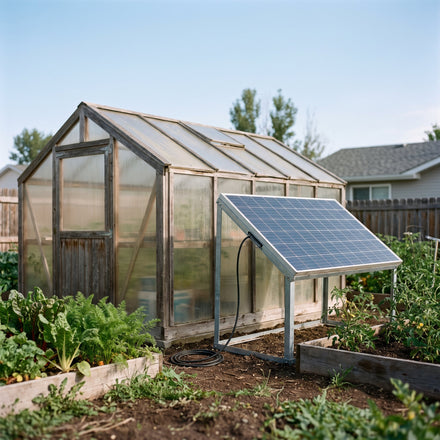
Solar aquaponics, a self-sufficient system

Solar aquaponics, a self-sufficient system

The sun can do far more than power a pump: it oxygenates the tank, circulates the water, cooks the fish and dries the herbs from the harvest. Here is how to make a small

Read the article
What to sow in autumn in aquaponics

What to sow in autumn in aquaponics

Autumn is not the end of the growing season, it is the start of the most peaceful one. Here is what to sow, when to do it and how to achieve leaf harvests through

Read the article
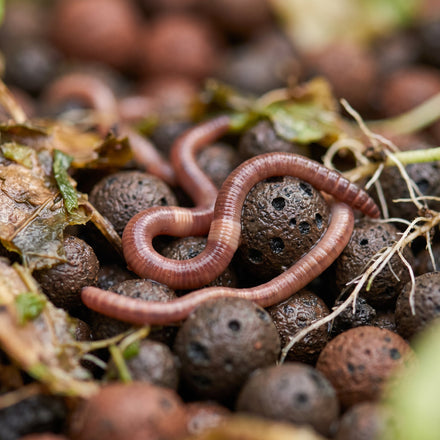
Vermiponics: worms in aquaponics

Vermiponics: worms in aquaponics

Vermiponics involves introducing compost worms into the grow medium beds of an aquaponic system, where they break down fish sludge and plant debris that bacteria then convert into assimilable nutrients. This page covers suitable

Read the article
Aquaponics in businesses and schools

Aquaponics in businesses and schools

We picture aquaponics in a garden or a greenhouse. Rarely in a school playground, a hospital's shared garden or the lobby of a corporate headquarters. And yet, that is where it produces some of

Read the article
Aquaponics and Summer Holidays

Aquaponics and Summer Holidays

You're going away for two weeks in July and your aquaponics system will be running without you : this thought rightly makes you anxious, because heatwaves, evaporation, and fish feeding raise practical questions. Good

Read the article
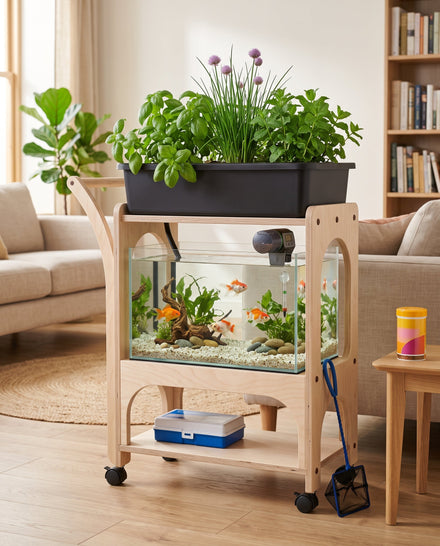
Aquaponics with children

Aquaponics with children

Setting up a small aquaponic system at home gives children a complete ecosystem to observe every day, with fish, bacteria and plants all at work. This guide brings together ages, species, fast-growing crops and

Read the article

Discover our aquaponics greenhouses and kits:

View all
Produits du rayon Kits d'aquaponie chez Univers Aquaponie

Aquaponics kits

Aquaponics kits ready to install in the garden, on a patio or in a greenhouse, with fish tank, grow beds and pump.

Discover
Produits du rayon Univers Plantes chez Univers Aquaponie

Plants

Seeds, grow media, fertilisers and aquatic plants for successful growing in aquaponics, hydroponics and the vegetable garden.

Discover
Produits du rayon Univers Équipements chez Univers Aquaponie

Equipment Universe

The equipment that keeps a system running: soilless growing, water circulation and aeration, filtration, temperature, plumbing and lighting.

Discover
Produits du rayon Serres d'aquaponie chez Univers Aquaponie

Aquaponics greenhouses

Greenhouses designed for aquaponics, supplied with their fish tank and grow towers.

Discover
Produits du rayon Univers Poissons chez Univers Aquaponie

Fish

Feed, monitor the water and care for your pond, aquarium or aquaponic fish.

Discover
Produits du rayon Univers Formation chez Univers Aquaponie

Learning

Books and practical courses on aquaponics, hydroponics and food self-sufficiency.

Discover