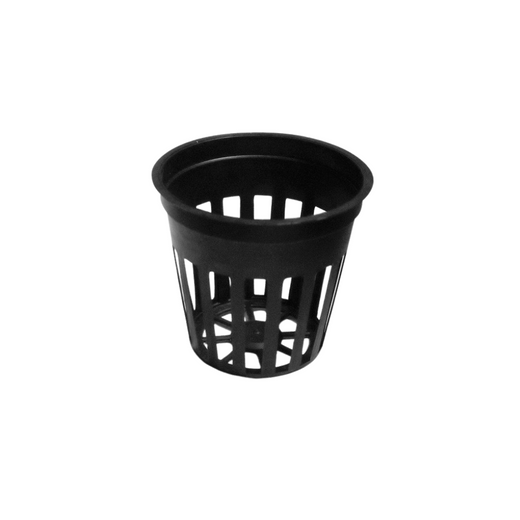


Flood table pack with 10 pots: system, grow medium and nutrients
Regular price
$338.53
Regular price
$369.87
Sale price
$338.53
Unit price
/
per
$112.84 × 3 with no fees
Klarna.
This pack combines the Terra Aquatica flood-and-drain tray and its ten fabric pots, a 50 L bag of coco fibre, nutrients, and everything needed to measure and adjust pH, available in mains-powered, solar, or solar with organic nutrition versions.
 Customer support 7 days a week by email
 Delivery within 2 to 15 business days
100 % secure payment
The summary
- What you receive: the complete flood table with its ten 4 L fabric pots, a 50 L coco coir bag, the nutrients, powdered pH- adjuster, and a pH test kit.
- Three versions: mains-powered, solar, or solar with organic nutrition. The grow bed, the 100 L reservoir, the pots, and the grow medium are identical across all three.
- The timer: required for the mains-powered version, where it controls the flood cycles. Built into the pump on the solar version.
- Flood frequency: two to four cycles per day with the supplied coco coir, stopped overnight.
- How to choose: ten pots on a 100 L reservoir — the mid-range scale of the product line.
- How it arrives: 33 to 35 kg depending on the version, in several large parcels.
Ten-pot flood-and-drain table, coco fibre and nutrients, mains or solar-powered
A flood-and-drain table is the most forgiving system in soilless growing: no nozzles to unblock, no bare roots, and a breakdown can be recovered in hours rather than minutes. This pack delivers it complete, with ten fabric pots, grow medium, nutrition, and everything needed to measure and adjust pH. You choose from three versions, which differ only in power consumption and the nutrient chemistry used.
🌊 Flood, then let the air return
The pump fills the grow bed sitting above the 100-litre reservoir; when it stops, the water drains back down through the same pipe. As it recedes, it draws fresh air into the grow medium, and it is this back-and-forth action that oxygenates the roots. There is no siphon, no solenoid valve, and no moving parts other than the pump. The duration of a cycle is determined on your own setup: time the first fill of the grow bed, then set your timer slightly above that figure. An overflow standpipe fixes the maximum water level and protects against flooding if the timer sticks in the on position. The tray and reservoir are roto-moulded in recycled polyethylene and are completely opaque, a translucent wall would allow light to reach the solution, which is enough to trigger algae growth. The whole unit sits on the floor, with the reservoir acting as a base for the grow bed, so there is no support to build and no raising to plan for.
🥥 Coco fibre
On an ebb-and-flood table, the grow medium sets the pace. Clay pebbles retain almost nothing and call for six to eight flood cycles per day; coco fibre holds moisture for several hours and needs only two to four cycles, stopped overnight. The 50-litre bag fills ten 4-litre pots with ease, and can be reused for up to three crops with a rinse in between. It arrives ready to use, no pre-rinsing, buffering, or pre-fertilisation required, so all nutrition comes through the solution. Between crops, a thorough flush with plain water washes out accumulated salts; the fibre compacts slightly with each cycle, which gradually reduces aeration, so after three crops it goes to the compost rather than back into the tray. Its natural pH sits at around 6, well within the working range, so no prior buffering is needed.
Mains
Submersible pump rated at 6.5 W, 600 litres per hour. Requires a nearby socket and a digital timer, not included.
Solar
5 W pump at 6 to 9 V, 300 litres per hour, one panel and a battery station. The timer is built in.
Organic solar
The equipment is identical to that of the solar version, with Pro Organic Grow and Bloom in place of the mineral range.
What stays the same
The tank, the 100 L reservoir, the ten 4 L fabric pots, the 50 L of coco fibre and pH control.
Three standard precautions
In the solar version, do not position the panel in the shadow cast by the greenhouse at low sun angles. Never leave the coir soaking wet between cycles, it suffocates the roots. And wear goggles when measuring out the Micro: the only bottle classified Danger, H318.
Ten rooted plants at assembly
Have ten pre-rooted plants ready for the day of assembly, a short-interval digital timer if you are using the mains version, lighting only if the bench is indoors, and a clear south-facing location for the panel if you opt for a solar version. Allow approximately 95 x 97 cm of floor space, plus a clear passage on one side to access the reservoir.
👝 Fabric pots
The ten pots included are 4-litre fabric pots, and the material allows air to pass through the sides. Your root balls breathe across their entire surface rather than receiving air only from the top, which reduces root circling against the edges. The trade-off is that they also dry out through the sides: on a breezy terrace in midsummer, keep an eye on the grow medium rather than following a watering frequency you've read elsewhere. They can be machine-washed on a cold cycle between crops, without fabric softener, and fold flat for winter storage. Across the 86 x 86 cm of usable surface on the tray, the ten pots leave room between plants; you can fit up to 22 if you're growing lettuce or herbs, provided you keep them all at the same stage, as they all share the same reservoir and therefore the same solution.
🧪 Nutrition in three bottles
The TriPart range, available in mains and solar versions, splits nutrition into three parts. Micro, at NPK 5-0-1, supplies calcium, iron and trace elements and is used from seedling to harvest. Grow, at 3-1-6, delivers the nitrogen and potassium needed during the growth phase. Bloom, at 0-5-4, delivers the phosphorus and potassium needed during flowering. During active growth, allow 1.8 ml of Grow, 1.2 ml of Micro and 0.6 ml of Bloom per litre in your tank; during flowering, Bloom increases to 2.4 ml. Pour each bottle separately into the water in your tank, never add one concentrate directly to another. These doses are based on soft water; with water that already contains significant levels of calcium and magnesium, reduce Micro slightly, otherwise the starting conductivity will be too high before the plants have had a chance to take up anything.
🌱 The organic version
Offered as the third version, Pro Organic comes in two bottles rather than three and replaces mineral salts with ingredients of plant and animal origin. The maximum dosage is 2 ml per litre: Grow ranges from 0.25 ml at start-up to 2 ml during vegetative growth, and Bloom holds at 2 ml during flowering. The fundamental difference lies in the process: these materials must be mineralised by micro-organisms before they become available to plants, which makes nutrition slower and more buffered beneath your crops. This also means more regular maintenance of the reservoir and pump is required. The range complies with European organic farming regulations. In practice, this mineralisation requires a solution that does not drop below 18 °C; if it does, the micro-organisms slow down and nutrition lags behind the plants' needs.
📈 pH in a closed circuit
100 litres circulate in a closed loop for two to three weeks. Plants take up ions unevenly, evaporation concentrates what remains, and pH shifts without warning. Outside the useful range, elements that are present in your reservoir become unavailable, and you see your plants stall despite a correctly dosed solution. Aim for 5.5 to 6.5 up to pre-flowering, then 6.4 to 6.8, and always adjust last, once the nutrients have been added. The powdered pH corrector is dosed at around 1 g per 5 to 6 litres, dissolved before being poured in. Our article on pH regulation covers measurement and correction in detail. With a volume like this, a correction takes around an hour to distribute evenly, so take your control reading after that delay rather than immediately after dosing.
⏱️ Setting the cycles
The number of flood cycles is something you settle through observation, not by following a ready-made table. With the coco fibre supplied, start with three cycles during the day, then watch: a grow medium that never dries out at the surface needs one cycle removed; a pot that dries out by late afternoon needs one added. The season shifts this setting, a plant in full summer heat drinks noticeably more than in March, and a table placed outdoors also responds to the wind. At night, the cycles stop: transpiration is almost nil, and a grow medium that stays permanently saturated will eventually suffocate the roots. One last pointer is worth more than a timer: lift a pot at the end of the day, and its weight tells you in an instant whether the grow medium has dried out as much as it should, that one action replaces any frequency table.
🧽 Maintenance between two crops
A residue of solution remains in the tray between cycles, and it is this that must be kept in the shade, algae can establish themselves within a few days on any lit surface. Cover the exposed surface with empty pots or a board. At the end of a growing cycle, drain the reservoir, rinse it with clean water, and rinse the pump strainer under the tap; a clogged filter slows filling time without giving any indication that it is doing so. Check that the tray is level before restarting, as a tray on a slope will leave one side dry at every flood cycle. Once a season, if your water is hard, circulate diluted white vinegar, then rinse twice before making up a fresh nutrient solution, limescale reduces pump flow well before it becomes visible on the walls.
Technical specifications
What's in the pack
- Flood table
- 1 complete systemGrow bed, 100 L reservoir, pump, ten 4 L fabric pots, level tube and fittings.
- Coco fibre
- 50 LNeutral grow medium, ready to use. Reusable for up to three crops with a rinse in between.
- Mineral nutrition
- TriPart, 3 x 1 LMains and solar versions. Grow at 3-1-6, Micro soft water at 5-0-1, Bloom at 0-5-4.
- Organic nutrition
- Pro Organic, 2 x 1 LOrganic solar version only. Grow and Bloom, capped at 2 ml per litre.
- pH- corrector in powder form
- 250 gUrea phosphate. Approximately 1 g per 5 to 6 litres, dissolved before adding.
- pH drop test
- 60 ml, range 4.0 to 8.5Read in daylight against a white background. No calibration, no batteries.
The three versions
- Mains
- Pump 6.5 W, 600 L/hSubmersible. Requires a domestic socket and a timer, to be arranged separately.
- Solar
- Pump 5 W, 300 L/hLow-voltage 6 to 9 V, photovoltaic panel and battery station, built-in timer.
- Organic solar
- Identical equipment to the solar unitOnly the nutrition changes: Pro Organic in place of TriPart.
- Cycle in solar version
- approximately 10 min per hourFactory setting, not adjustable.
- Recommended cycles on mains power
- 2 to 4 times a dayWith the supplied coco fibre, stopped at night. Six to eight with clay pebbles.
- Solution renewal
- Every 2 to 3 weeksIn between, you only top up evaporation losses with plain water.
Dimensions and construction
- Footprint
- approximately 95 x 97 cmPlus a passageway on at least one side to open the reservoir.
- Total pack weight
- 33 to 35 kg33.1 kg mains-powered, 34.7 kg solar, 33.7 kg solar organic.
- Pots included
- 10 fabric pots of 4 LThe fabric allows air through the sides, which limits root circling.
- Manufacturing
- FranceRotomoulded and assembled in France.
To budget for separately
- Timer
- Mains-powered versionShort thread, a matter of minutes. Without it, nothing controls the flood-and-drain cycles.
- Rooted plants
- 10 plug plants ready to transplantNo bare seeds, no fresh cuttings. There is no obligation to fill all ten slots in the first cycle.
- Lighting
- Indoors onlyNot needed on a terrace, in a garden, or in a greenhouse.
- Panel placement
- Full south-facing, unobstructedIn the solar version. Check the shadow cast by the greenhouse at low sun angles.
- Replacement coco fibre
- After two to three growing cyclesThe grow medium should be replaced when it compacts and drains less effectively.
- Electronic pH meter
- Measuring comfortThe drop test is sufficient for the entire first season.
14 further specifications are available in the detailed view.
In the box
- 1 complete flood-and-drain table: grow bed, 100 L reservoir, pump, 10 x 4 L fabric pots, level tube and fittings.
- 1 bag of coconut fibre, 50 L.
- Nutrition according to version: 3 bottles of TriPart at 1 L for the mineral option, or 2 bottles of Pro Organic at 1 L for the organic option.
- 1 pot of pH- powder adjuster, 250 g, and 1 liquid pH test kit, 60 ml.
- In the solar version, the photovoltaic panel and its battery station.
Pump specifications, weight and dimensions taken from the supplier's parts catalogue and packing sheet, TriPart and Pro Organic doses from their application tables, on 10/09/2026. The system is identical to the one sold separately.
Ten pots, or a different scale
The three growing packs in the range, and the scale they are designed for.
Available power takes priority over the number of plants
Only one of the three packs can run without a mains socket, depending on the version. The other two require a permanent power supply, otherwise nothing circulates.
| Plants grown simultaneously (plants) | Water reserve (L) | Principle | Timer | Electrical socket | Consumption (kWh/jour) | Grow medium supplied | Nutrition included | Pots or baskets included | |
|---|---|---|---|---|---|---|---|---|---|
| 45 L hydroponic pot pack: nutrition and pH controlYour choice | 1 plants | 45 L | Air emulsion, continuously | None | Required | 0,04 kWh/jour | 20 L of clay pebbles, depending on the version | 3 x 1 L | 1 growing chamber |
| Flood table pack with 10 pots: system, grow medium and nutrientsYour choice | 10 plants | 100 L | Flood and drain | Depending on the version | Depending on the version | 0,007 kWh/jour | 50 L of coco coir | 3 x 1 L, or 2 in organic | 10 textile pots of 4 L |
| Hydroponic pack for 20 plants: system, grow medium and nutrientsYour choice | 20 plants | 150 L | Gutter-fed circulation | None | Required | 0,38 kWh/jour | 10 L of clay pebbles | 3 x 1 L | 20 baskets of 8 cm |
45 L hydroponic pot pack: nutrition and pH control
What you grow
Plants grown simultaneously (plants)1 plants
Water reserve (L)45 L
PrincipleAir emulsion, continuously
Installation
TimerNone
Electrical socketRequired
Consumption (kWh/jour)0,04 kWh/jour
What the pack adds to the system
Grow medium supplied20 L of clay pebbles, depending on the version
Nutrition included3 x 1 L
Pots or baskets included1 growing chamber
Flood table pack with 10 pots: system, grow medium and nutrients
What you grow
Plants grown simultaneously (plants)10 plants
Water reserve (L)100 L
PrincipleFlood and drain
Installation
TimerDepending on the version
Electrical socketDepending on the version
Consumption (kWh/jour)0,007 kWh/jour
What the pack adds to the system
Grow medium supplied50 L of coco coir
Nutrition included3 x 1 L, or 2 in organic
Pots or baskets included10 textile pots of 4 L
Hydroponic pack for 20 plants: system, grow medium and nutrients
What you grow
Plants grown simultaneously (plants)20 plants
Water reserve (L)150 L
PrincipleGutter-fed circulation
Installation
TimerNone
Electrical socketRequired
Consumption (kWh/jour)0,38 kWh/jour
What the pack adds to the system
Grow medium supplied10 L of clay pebbles
Nutrition included3 x 1 L
Pots or baskets included20 baskets of 8 cm
Specifications taken from the product pages of the three packs and from the supplier's parts catalogue on 10/09/2026.
Help choosing
The right pack for your space and your scale
Estimate your
delivery time
Your estimate
Delivery
Estimated time
It covers preparing your order and then the transit time quoted by the carrier, counted in working days.
It is not a guaranteed delivery date: public holidays, peak periods, customs or a carrier delay can extend it. The exact amount, in your currency, is worked out in the cart once your address is entered.
Several large parcels: the table, the bag of grow medium, and the consumables. The table parcel cannot be delivered to a collection point. Exact shipping costs and final delivery times are shown at checkout once your address has been entered. Outside the European Union, import duties and taxes are the recipient's responsibility. Delivery times run from the date of dispatch, excluding public holidays.
Frequently asked questions
12 questions
6 key questions, 12 in the detailed view
You may also like





Related articles

Understand
Growing without soil in hydroponics
The starting point if growing without soil is new to you: what solution culture changes, and what it demands.
Read the article

Technical
Regulating pH in an aquaponics system
The pack includes everything needed to measure and adjust pH. This article explains when to do it, and by how much.
Read the article

Start-up
Creating your indoor seedling space
Plants enter the system already rooted. Here is how to produce them without complicated equipment.
Read the article

Crops
What to grow in hydroponics, season by season
What to plant and when: the calendar that determines how the crop is managed.
Read the article

Grow media
Which grow medium to choose for aquaponics
The grow medium determines how often you water and how well the roots can breathe.
Read the article

Diagnostic
Identifying deficiencies in aquaponics
A complete solution is no guarantee against a deficiency. Knowing how to read the leaf saves you from correcting the wrong element.
Read the article

Understand
Aquaponics and hydroponics — what's the difference?
This pack is hydroponic, not aquaponic. The article places the two approaches in context with one another.
Read the article

Start-up
Germination failure: causes and solutions
The most common cause of a failed start is not the equipment but the seedlings.
Read the article
Let us talk about your project
A question about this product or your setup? Our team will answer and advise you.

Interest-free instalment payments
Offered depending on the cart amount, at checkout.

Delivery in 2 to 15 working days
Depending on the products and shipping sites. Estimate by destination in the estimator on this page.

After-sales service 7 days a week by email or chat
Our team answers all your questions.

Shop responsibly
Become part of the change.
