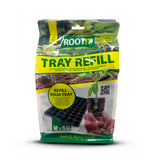




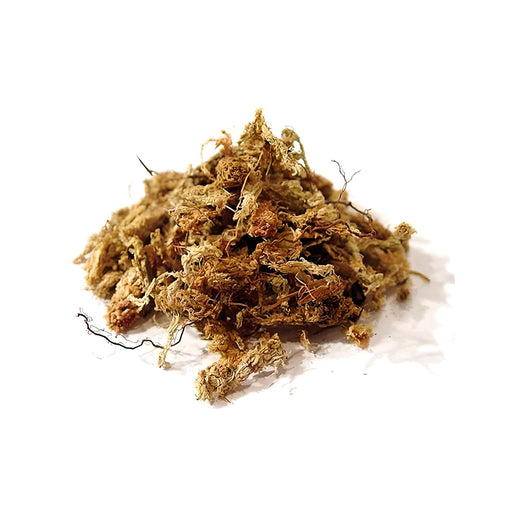


Peat-free coir cutting plugs, pack of 60
Regular price
$16.66
Regular price
Sale price
$16.66
Unit price
/
per
These ROOT!T cutting plugs are made of coir fibre bound by a natural polymer, peat-free. Slipped into a cell tray and then rehydrated, they take a seed in their wide hole or a cutting in their narrow hole, and are transplanted whole once rooted.
100 % secure payment
The summary
- What it is: 60 peat-free coconut fibre plugs, 32 mm in diameter and 38 mm high.
- What it is for: sowing seeds or rooting cuttings, thanks to a two-level hole at the top of the plug.
- How many trays: one tray of 60 cells, or five trays of 24 with two bags.
- In aquaponics: the rooted plug moves into a slotted pot without its root ball falling apart.
Refill of 60 coco plugs for sowing or taking cuttings in a cell tray
Peat has long been the base of seedling plugs, and many gardeners are now looking to do without it. These ROOT!T plugs replace the peat with coco fibre, held in shape by a natural polymer. Each plug measures 32 mm in diameter and 38 mm in height, and it slips into the cell of a seed tray. Once rehydrated, it keeps its shape, retains water around the seed or cutting, and you transplant it whole when the roots emerge from it.
🥥 A peat-free coco fibre
Supplied dry and lightweight in a resealable pouch, the plugs resist mould and fungi, so they keep well between seasons. To prepare them, first place them in the cells of the tray, then leave them to soak overnight in First Feed, a starter fertiliser, diluted to 5 ml per litre of water. By morning, each plug has regained its volume and its water reserve. The polymer that binds the fibres keeps the plug in its cylindrical shape throughout rooting, so it can be handled without crumbling. As the material is biodegradable, it then breaks down into the compost or grow medium that receives the seedling, with no sleeve or netting to remove.
✂️ The two-stage hole
The wide hole
The flared opening at the top takes one or two seeds, placed at a shallow depth.
The narrow hole
At the bottom of the opening, a finer, deeper hole holds the stem of a cutting nicely upright.
The right time
Transplant the plug once the roots appear on its sides, without waiting for them to coil.
What next
The whole plug sits in a pot of compost, coco fibre or a hydroponic basket.
A 60-cell tray for a complete refill
One bag fills exactly one 60-cell tray, and two bags fill five 24-cell trays. Planning the tray before you order saves you from leaving dry plugs at the bottom of the bag. Placed on a germination heat mat controlled by a thermostat and covered with a dome, this tray keeps a gentle, humid atmosphere until the roots have taken.
An overnight soak before planting
A plug that is planted dry or only half rehydrated will dry out the seed or the base of the stem within a few hours. Leave the filled tray to soak overnight, drain off the excess, then plant: the plug should be soft and evenly moist.
The same plug therefore serves two different purposes. For a seedling, you place one or two seeds at the bottom of the wide opening, without burying them any deeper, and keep the tray covered until germination. For a cutting, you push the stem into the narrow hole, which holds it upright and in contact with the damp fibre; a few drops of rooting gel placed in this hole before inserting the stem coat the cut end, as the gel was designed for these media. One plant per plug remains the rule, so that each plug can be transplanted without disturbing the roots of its neighbour.
🌡️ From planting to roots
For cuttings, aim for a temperature of around 22 °C, without exceeding 24 to 25 °C for any length of time, and air saturated with humidity, which a dome keeps around the leaves. In these conditions, the first roots often push through the fibre within 2 to 4 weeks. Vegetable seeds, for their part, need about 24 °C by day and at least 18 °C at night, whereas lettuces sprout best between 15 and 21 °C. In both cases, the plug must stay moist without sitting in water: a waterlogged coco plug deprives the roots of oxygen, and a dry one is hard to re-wet. Vent the dome for a few minutes each day as soon as condensation runs down its sides.
🐟 From the tray to the growing bed
In aquaponics, a seedling raised in a coir plug moves into the growing bed without its root ball falling apart. A lettuce is ready at 3 or 4 true leaves, and a basil or mint cutting as soon as its roots poke out through the sides of the plug. You then set it in a slotted grow pot, wedged with clay pebbles, and its roots reach down towards the system water. The coir fibre, held together by its polymer, keeps the shape of the plug all the way into the basket, with no peat or mineral particles to release into the tank. If the plugs have been soaked in First Feed, rinse them in clean water before transplanting, because this fertiliser stays in the nursery and never goes into the fish water. In raft or gutter systems alike, choose a slotted basket whose diameter leaves a little room around the plug, so that the roots reach the water quickly. The guide to herbs in aquaponics shows this step from propagating cuttings to planting in the system.
🌍 Peat and its peat bogs
Drained peatlands emit each year about 1.9 gigatonnes of CO2 equivalent, around 5% of human greenhouse gas emissions, because peat exposed to the air decomposes and releases the carbon it stored. Extraction for horticulture is among the uses that have caused at least 94% of the UK's raised bogs to disappear, and extracted peat only re-forms at a rate of about 1 mm per year. These plugs avoid this material by relying on coir, a by-product of the coconut whose pH lies between 5.5 and 6.2, a range that suits most vegetable and herb seedlings. You thus get a peat-free medium that is used like a conventional plug, for sowing as well as for taking cuttings.
Technical specifications
The stopper
- Material
- Coco fibre, natural polymerPeat-free, biodegradable
- Dimensions
- Ø 32 x 38 mm high
- Planting hole
- Two-tierWide for the seed, narrow and deep for the stem
- Storage
- Dry, with the bag resealedThe material resists mould
Application
- Full trays
- 1 tray of 60Or 5 trays of 24 with 2 sachets
- Rehydration
- An overnight soakFirst Feed at 5 ml per litre
- Uses
- Seedlings and cuttingsWith ROOT!T gel in the narrow hole for cuttings
- Transplanting
- Whole stopperAs soon as the roots appear on the sides
In the box
- 60 coco-fibre cutting plugs, in a resealable bag
Material, dimensions, double hole, rehydration and yield per tray from the brand. Temperatures based on SRAC fact sheet 5011 and the ROOT!T guideline; peat and coir based on the IUCN and the Royal Horticultural Society.
Manufacturer and product safety
- Manufacturer
- HydroGarden Wholesale Supplies Ltd
Information provided under Regulation (EU) 2023/988 on general product safety.
Estimate your
delivery time
Your estimate
Delivery
Estimated time
It covers preparing your order and then the transit time quoted by the carrier, counted in working days.
It is not a guaranteed delivery date: public holidays, peak periods, customs or a carrier delay can extend it. The exact amount, in your currency, is worked out in the cart once your address is entered.
The sachet ships from a distributor's warehouse in France, as a light parcel. The exact shipping cost is shown in your basket.
Frequently asked questions
6 questions
6 key questions
You may also like


Related articles

Crops
Herbs in aquaponics
The move from cutting to grow bed is shown there for basil and mint.
Read the article

Seedling
Getting spring seedlings off to a good start in aquaponics
Seedlings in trays come first there, before being moved into the system.
Read the article

Grow media
Which grow medium should you choose in aquaponics?
Coco fibre is compared there with the other growing media.
Read the article

Diagnosis
Germination failure: causes and solutions
A poorly rehydrated medium is among the causes of germination failure.
Read the article

Seedling
Setting up an indoor seedling area
Heat and humidity are regulated there around the cell trays.
Read the article
Let us talk about your project
A question about this product or your setup? Our team will answer and advise you.

Interest-free instalment payments
Offered depending on the cart amount, at checkout.

Delivery in 2 to 15 working days
Depending on the products and shipping sites. Estimate by destination in the estimator on this page.

After-sales service 7 days a week by email or chat
Our team answers all your questions.

Shop responsibly
Become part of the change.
