Goldfish in aquaponics

Written by Tristan Ulrich · September 5, 2026
Poisson rouge en aquaponie

The goldfish remains the most popular species for starting an aquaponic system, and not without reason. Its hardiness, tolerance of cool water and high waste output make it a surprisingly effective partner for your crops.

The goldfish, an ideal choice for beginners

Long confined to the bowl, the goldfish suffers from a misleading reputation. It is, however, one of the species best suited to a domestic aquaponic system in a temperate climate, precisely because it tolerates cool water and forgives management mistakes.

This guide covers what really matters for success: temperature, the volume you will need, the ammonia load it generates, its feeding requirements, and the filtration to size up. You will also find cohabitation guidelines and points to watch depending on your country.

Close-up of a Carassius auratus goldfish showing its scales and forked caudal fin

A cyprinid long overlooked

The goldfish, Carassius auratus, belongs to the cyprinid family, along with the carp. Domesticated in China from the crucian carp over a thousand years ago, it was selectively bred for its colour long before it became a worldwide ornamental fish. This long domestication largely accounts for its hardiness.

Despite its association with the bowl, a properly fed specimen commonly reaches 20 to 30 centimetres and frequently exceeds ten years of age. Some individuals live considerably longer in outdoor ponds. It should therefore be regarded as a medium-sized fish, not a stopgap species.

Its tolerance of fluctuations in temperature and water quality makes it an excellent candidate for a first system. It can absorb swings that would be fatal to more delicate species, giving you time to learn. To compare it with other options, our guide on choosing species reviews the most common fish.

Thermometer submerged in an aquaponic tank to monitor goldfish water temperature

The temperature that suits it

The goldfish is a coldwater species. Available data place its comfort range at around 18 to 22 °C, with an optimum growth range generally described as 20 to 23 °C depending on conditions. It can tolerate considerably wider swings, but stability matters more than the absolute value.

Below 10 °C, its metabolism slows markedly and it gradually stops feeding. Above 26 °C, the water holds less dissolved oxygen and the fish shows signs of stress by lingering near the surface. These two thresholds frame the management of a domestic system.

This preference for cool water becomes an advantage in a temperate climate. It removes the need for constant heating that tropical species require, and it pairs well with cool-season crops such as lettuce, spinach, and corn salad.

How much water to allow per fish

The question of water volume comes up in every beginner discussion, and the answers vary considerably. The reason is straightforward: acceptable stocking density does not depend solely on the number of fish, but also on filtration capacity, water movement, and the growing area that consumes the nitrates.

A cautious guideline is to allow around 50 litres for the first adult fish, then 30 to 40 additional litres per fish added. This figure is indicative. Published research on stocking density in aquaponic systems tends to work in mass per volume, with trials conducted at around 0.8 kilograms of fish per cubic metre — which corresponds to a low-intensity, comfortable approach.

Rather than pushing for the maximum, it is better to monitor a few concrete signs over time.

  • Ammonia and nitrites remain undetectable once the cycle is established
  • Fish are not sitting at the surface with their mouths open
  • Plants grow without widespread yellowing
  • The water stays clear between maintenance sessions

If any of these points deteriorates, the system is loaded beyond what it can absorb. Removing a fish or increasing the growing area will often resolve the situation more durably than repeated water changes.

Goldfish at the bottom of a tank with organic sediment acting as an ammonia source in aquaponics

High ammonia production

Goldfish eat a great deal and produce waste in proportion. This trait explains their reputation for quickly clouding the water in a traditional aquarium. In aquaponics, this drawback becomes an advantage, since that waste provides the fertiliser for your crops.

The excreted nitrogen appears first as ammonia, which is toxic even at low concentrations. Nitrifying bacteria convert it into nitrites, which are also toxic, then into nitrates that plants can absorb. This biological relay takes several weeks to establish itself — this is the cycle's start-up phase.

Until this cycle is fully established, introduce only a few fish and feed them cautiously. Our article on the nitrogen cycle details the stages involved and the timescales typically observed.

Coloured water test vials for measuring pH and hardness in aquaponics Carbonate Hardness Test

pH and water hardness

Goldfish tolerate a wide pH range, often quoted as 6.0 to 8.0, with an ideal comfort zone around 7.0 to 7.5. Plants and nitrifying bacteria perform best at slightly lower values. The compromise most commonly adopted in aquaponics falls between 6.8 and 7.2.

Carbonate hardness, measured as KH, deserves just as much attention as pH itself. It acts as a buffer and limits sudden fluctuations. In soft water, pH can drop without warning, stressing the fish and slowing nitrification.

Regular testing remains the only reliable way to manage a pond. Our guide on pH regulation explains how to make adjustments gradually and without disruption.

Comet, shubunkin or veil-tail

The name goldfish covers dozens of varieties derived from the same species, with very different body shapes. This has direct practical consequences in aquaponics, as not all of them tolerate the same conditions.

The so-called common varieties, with a streamlined body and a single caudal fin, are the most robust. The common goldfish and the comet, recognisable by its long, deeply forked tail, swim quickly and handle cold water well. The shubunkin, with its blotched blue-and-calico colouring, belongs to the same category and tolerates an outdoor pond perfectly well.

The so-called fancy or Japanese varieties — such as the veil-tail, telescope and lionhead — have been selectively bred for a rounded body and highly developed fins. This body shape compresses the internal organs, restricts swimming ability and makes them noticeably more fragile. They cope poorly with the sustained current of a circulation pump and are less resistant to low winter temperatures.

For an aquaponic system, particularly an outdoor one, stick to the common forms. Reserve fancy varieties for a calm indoor tank with a more stable temperature, where their slow swimming does not put them at a disadvantage against faster tank-mates at feeding time.
Goldfish feeding on floating pellets at the water surface Goldfish food

Feeding well without overloading

Goldfish are omnivorous and opportunistic. They will eat as much as they are offered, with no reliable sense of satiety. The most practical rule is to feed only what they consume in two to three minutes, once or twice a day, and to remove any leftovers.

High-quality floating pellets formulated for coldwater fish form the basis of a good diet. They allow you to observe feeding behaviour, which remains the best indicator of stock health. A fish that refuses its food almost always signals a water quality or temperature problem.

Overfeeding is the most common mistake. It places an unnecessary ammonia load on the system, clouds the water, and encourages algae. Below 12 °C, reduce feeding significantly — the metabolism slows down and undigested food will pollute the pond.

Goldfish nibbling the white roots of plants suspended in the water

The roots it loves to nibble

Here is the point that few guides mention. Goldfish are constantly rooting around and will readily nibble at roots hanging in the water. In a deep water culture system, where lettuce roots dip directly into the tank, the damage can become visible within just a few days.

The solution is straightforward. Physically separate the fish from the roots, either by working with a grow medium bed, or by fitting a grid or net beneath the rafts. Water circulation is maintained and the crops are protected.

This rooting behaviour does have a useful side effect. By disturbing the sediment, goldfish resuspend organic particles that the filtration system then captures, which limits the build-up of sludge at the bottom of the pond.

Sizing the filtration and oxygenation

The high waste output of goldfish demands serious filtration. Two distinct functions must be provided, and confusing them is a classic cause of failure.

Mechanical filtration captures solid particles before they break down. Foams, brushes and sieves need regular cleaning — using pond water, never tap water, as the chlorine would destroy the bacterial colonies. Biological filtration houses nitrifying bacteria on a high-surface-area medium. It should only be cleaned with care and never entirely at once. Our range of filtration media and bacterial supports covers both requirements.

Oxygenation deserves particular attention with this species. Goldfish have a high oxygen demand, and warm water holds less of it. A correctly sized air pump safeguards the system during hot spells, when the risk is at its greatest. Aeration systems remain the best safety investment for a stocked pond, ahead of any other improvement.

Three varieties of goldfish — comet, veiltail and shubunkin — swimming together

Choosing compatible tankmates

The goldfish is a sociable species and thrives in company. A group of three to five individuals, where the volume allows, displays more natural behaviour and feeds more consistently than a solitary specimen.

Compatibility is best considered in terms of temperature and swimming speed. Mixing single-tailed and fancy varieties causes problems, as the former reach the food long before the latter. It is better to group similar body shapes together.

With other species, caution is essential. Tropical fish require far warmer water and are not suitable. Koi carp, on the other hand, share the same preference for cool water, but they grow to a size that demands a considerably larger pond, as our koi carp guide explains in detail.

By country: rules worth knowing

Goldfish are found in ponds and aquariums across Europe, and keeping them at home presents no particular difficulty anywhere. They are a common ornamental species, available in pet shops throughout European countries, which explains why they are such a popular choice for beginners.

One point deserves attention everywhere, yet is often overlooked. The goldfish is a non-native species capable of establishing itself permanently in temperate natural environments, where it competes with local wildlife and degrades water quality by disturbing the substrate. Releasing goldfish into a watercourse, public pond, or natural pool is a practice to be avoided, and it is regulated or prohibited in many European countries under legislation against invasive non-native species.

The practical implication is straightforward. If you need to rehome fish — due to lack of space or at the end of the season — look for a private keeper, a pet shop, or an aquatics club willing to take them on. Depending on the country and region, local rules may also apply to large outdoor ponds, particularly regarding registration or drainage connections. A quick enquiry with your local authority will clear up any doubt within minutes.

Garden pond in autumn with fallen leaves and goldfish just below the surface Pond aerator kit + hoses + diffusers

Overwintering outdoors

This is one of the great advantages of the species. A common-shaped goldfish will overwinter without heating in an outdoor pond, provided it is deep enough not to freeze solid. A depth of at least 80 centimetres is generally recommended in a temperate climate.

As the cold sets in, the fish descends and enters a state of marked torpor. Feeding must be tapered off progressively below 8 to 10 °C, as digestion becomes very slow. Continuing to feed at this stage causes digestive problems and needlessly pollutes the water.

The critical issue is gas exchange. A surface frozen over entirely prevents the escape of decomposition gases. Keep an area ice-free using an air stone or a floating de-icer, and never break the ice with a tool — the shockwave this creates is dangerous to the fish.

Conclusion: the right fish for learning

The goldfish ticks almost every box for a successful first experience. It tolerates cool water and needs no heating in our climate, it weathers the management errors that are unavoidable in the first few months, and its high waste output feeds the growing beds generously. Very few species offer this combination.

Its real requirements come down to three points. Sufficient volume, because it grows far larger than most people expect. Filtration and oxygenation sized to match what it produces. And measured feeding, since overfeeding remains by far the most costly mistake. Everything else comes down to daily observation, which will teach you more than any table of values.

There is one choice many people overlook: the variety. A comet or shubunkin will work perfectly in an outdoor pond with natural overwintering, whereas a fantail will always depend on a sheltered indoor tank. Making this decision upfront will save you having to rethink your entire setup a season later.

Sources

FishBase, Carassius auratus, Goldfish, Species fact sheet establishing the very wide thermal tolerance of the goldfish, its maximum size and a recorded maximum lifespan of several decades — figures referenced in the product description and the FAQ.

Purdue University / Illinois-Indiana Sea Grant, Water Quality: Water Sources Used in Aquaculture (AS-486), Gives the reference ranges for pH, alkalinity, un-ionised ammonia, and nitrite that underpin the section on pH and carbonate hardness.

Oklahoma State University Extension, Nitrification and Maintenance in Media Bed Aquaponics (HLA-6729), Biofilter cycling time and grow medium bed maintenance

Frontiers in Sustainable Food Systems, Current technologies for nutrient recovery in aquaponic systems: a review, Quantifies the proportion of nitrogen from feed actually assimilated by fish and the ammoniacal nitrogen levels measured in aquaponics, supporting the section on ammonia production and the question about starting the cycle.

MDPI Horticulturae, Spinach Responds to Minimal Nutrient Supplementation in Aquaponics by Up-Regulating Light Use Efficiency, Photochemistry, and Carboxylation, Identifies iron deficiency as the bottleneck for leaf development in a closed loop and quantifies the gain in leaf area after supplementation, a figure cited in the question about yellowing lettuces.

Frequently asked questions

Technically yes — it is a cyprinid closely related to the carp, but the flesh is lean and riddled with fine bones. Nobody keeps it for the table; it is valued for its hardiness and for the fertiliser it provides for crops.

Iron is the most common culprit. The water in an aquaponic system supplies very little in a form that plants can absorb, and the deficiency shows first on young leaves, which turn pale between veins that remain green. A trial conducted on spinach in a closed loop showed that iron supplementation alone increased leaf area by nearly ninefold in twenty days — which gives a clear sense of the scale of the issue.

The remedy involves a chelated iron product, chosen according to the pH of your water. Dosing should be done gradually, monitoring the recovery of new growth rather than targeting a specific figure.

If yellowing affects the older leaves at the bottom of the plant instead, look towards nitrogen or magnesium. Visual diagnosis always comes down to the location of the symptoms.

It's possible, but less straightforward than it appears. A goldfish is not a miniature animal — it commonly exceeds twenty centimetres, and the lifespans recorded for this species run into decades. A very small volume condemns it to stunted growth and water conditions that fluctuate far too quickly.

If your tank is genuinely small, one fish fed correctly is better than a crowded group, with an oversized filter and strict rationing. Bear in mind that a shoaling species fares better with company, and plan for a more generous volume as soon as possible.

This uniform green colour comes from microscopic algae in suspension, which thrive on excess nutrients and light. The effect is primarily aesthetic, but it signals a real imbalance.

  • Growing surface too small for the fish load
  • Direct sun exposure with no shading whatsoever
  • Overfeeding leaving uneaten food to decompose on the bottom

The lasting solution is to increase the planting area and add shading — not to treat chemically a body of water where your nitrifying bacteria live.

It is done frequently, and the goldfish is indeed the species that copes best with this delicate phase. The principle remains questionable in itself, since you are asking the fish to produce the ammonia that will feed bacteria that are not yet established.

If you choose this approach, introduce very few individuals, feed them as sparingly as possible, and test every two days. Ammonia levels recorded in functioning aquaponic systems range from a few tenths of a milligram to a few milligrams per litre, and it is precisely this rise and subsequent fall in values that you are monitoring during the start-up period.

The fishless method, using pure ammonia or a bacterial activator, is more comfortable for the fish and equally effective.

A healthy adult tolerates several days without food without any ill effect — far better than an excess of feed left to decompose in the water. For a longer absence, use an automatic feeder set to the minimum rather than giving a large ration before you leave.

Read next

Raising tilapia in aquaponics

Raising tilapia in aquaponics

Tilapia is the most widely farmed fish in the world in aquaponics, renowned for its hardiness and rapid growth. Understanding its actual requirements in terms of temperature, volume and feeding is the key to

Read the article
Raising perch in aquaponics

Raising perch in aquaponics

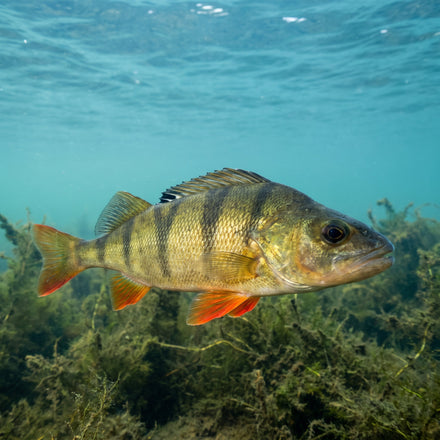
The common perch is the predatory fish of European temperate waters: hardy, with sought-after flesh, and perfectly suited to aquaponic systems in temperate climates. Here is how to raise this fish, the temperatures to

Read the article
Salmonponics: aquaponics in cold water

Salmonponics: aquaponics in cold water

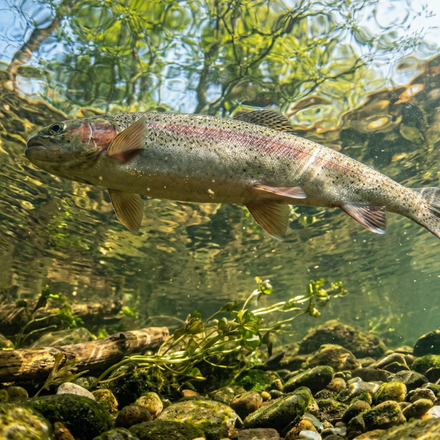
Aquaponics is often associated with pond fish like goldfish and koi. However, there is a variant perfectly suited for our temperate regions, cool climates, and winters : salmoponics. Trout, char, brook trout, these iconic

Read the article
Is aquaponics suitable for animal welfare ?

Is aquaponics suitable for animal welfare ?

We often talk about what aquaponics produces. But rarely about what the fish that make it work experience. Are they simply tolerated in a system designed for production, or can aquaponics truly respect their

Read the article
What to sow in autumn in aquaponics

What to sow in autumn in aquaponics

Autumn is not the end of the growing season — it is the start of the most peaceful one. Here is what to sow, when to do it and how to achieve leaf harvests

Read the article
Growing pots for aquaponics

Growing pots for aquaponics

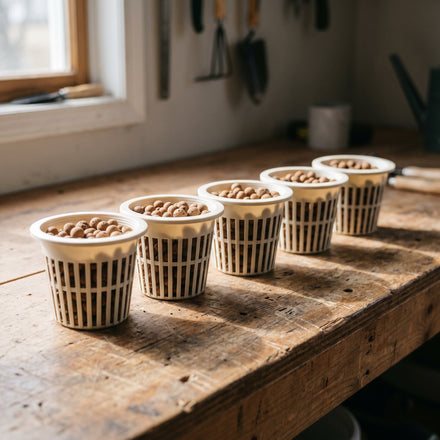
The net pot is an unassuming but decisive accessory in aquaponics: it supports the plant, houses the grow medium and allows water and oxygen to circulate freely. This guide explains how to choose the

Read the article