UV steriliser for ponds

Written by Tristan Ulrich · October 24, 2026
Bloc de filtration et stérilisateur UV installés au bord d'un bassin de jardin

A pond UV steriliser eliminates the single-celled algae responsible for green water, provided it is correctly sized and fitted at the right point in the circuit. This guide covers the power to choose, the role of flow rate, annual maintenance and the real limits of the unit.

Choosing the right pond UV steriliser

Every spring, the same scene plays out in gardens across Europe. The water turns cloudy, goes green within a few days, and the fish vanish behind an opaque veil. The usual reaction is to order a UV lamp, often the cheapest and least powerful one, only to find three weeks later that nothing has changed. The problem rarely lies with the unit itself: it almost always comes down to its sizing, its flow rate and its place in the circuit.

This guide follows the reasoning in the order in which it actually arises, from the physical principle to the wattage per cubic metre, from the flow rate to the position according to the type of filter, and then to the maintenance that determines effectiveness through the seasons. You will also find what UV does not do, what to do during a treatment, and a full section on aquaponics, where the unit raises questions that pond guides leave unanswered.

Two jars comparing green water and clear water after UVC treatment

What a UV steriliser does

A UV steriliser does not filter anything. Its germicidal low-pressure mercury vapour lamp, housed in a quartz sleeve, emits most of its radiation at around 254 nanometres, a wavelength that the DNA of micro-organisms absorbs strongly. The exposed cells are not dissolved, they lose their ability to divide. The single-celled algae in suspension that are responsible for green water thus stop multiplying and clump together into fine particles that the mechanical filter then retains.

Two practical consequences follow. The water does not clear overnight: allow anywhere from a few days to two weeks depending on the load, with the sponges needing to be rinsed more often during this phase. A UV unit that is not paired with mechanical filtration will not give clear water either, since nothing collects the neutralised algae. Our article on green pond water covers the complementary measures in detail.

Germicidal lamp in its quartz sleeve inside the open housing of a UVC clarifier

UV clarifier or steriliser

The two words describe the same device: a germicidal lamp inside a quartz tube with water flowing around it. What sets them apart is the dose received, that is, the relationship between the lamp's power, the flow rate and the clarity of the water. At a low dose, the unit clarifies, meaning it neutralises suspended algae; at a markedly higher dose, it also reduces free-floating bacteria and some of the swimming stages of parasites. A model sold as a steriliser therefore only sterilises if you give it the matching power and a slow flow rate, and no pond device makes water sterile in the strict sense.

Dose: the key to a UV steriliser's effectiveness

The technical literature reasons in terms of dose, expressed in millijoules per square centimetre (mJ/cm²). This dose is the product of the intensity of the radiation received and the exposure time. Double the flow rate and you halve the contact time, and therefore the dose, at the same lamp power. The US Environmental Protection Agency also notes that the dose actually delivered drops when the water is cloudy or coloured, because particles and organic matter absorb the radiation, and when the sleeve becomes fouled or the lamp ages.

Requirements vary greatly between organisms. Trials by the Norwegian institute Nofima on aquaculture pathogens show that most of the bacteria and viruses tested are reduced by 99.9% at doses generally below 10 mJ/cm², whereas Norwegian regulations require a minimum of 25 mJ/cm² in fish farms. Larger, more resistant organisms, such as the copepodids of the salmon louse, conversely require more than 100 mJ/cm². The free-swimming stages of freshwater fish parasites, including the agent of white spot, are also far more demanding than algae, which explains why a small clarifier does not protect against an outbreak.

One nuance reconciles these figures with the modest power ratings sold for ponds. The reference doses apply to a single pass, as in drinking water treatment. In a pond, the same water passes through the chamber many times a day, and the algae are exposed continuously: a low but repeated dose is in practice enough to keep green water in check, provided the whole volume passes through the unit often enough.

Measuring the depth of a pond to calculate the volume and size the UVC EHEIM Clear UVC pond UV steriliser, 7 to 60 W

UV power, how many watts

Start with the real volume of the pond: length multiplied by width, then by the average depth, in metres. A pond measuring 4 m by 3 m, with an average depth of 0.8 m, holds about 9.6 m³, which you should round up, as slopes and shelves often skew the estimate.

Manufacturers then reason according to the fish load, and EHEIM's data sheets illustrate this well. Its CLEARUVC 60 W clarifier is rated for 60 m³ without fish, 30 m³ with fish and 15 m³ with koi, which works out at 1 W, 2 W and then 4 W per cubic metre. The guideline of 1 W per 1,000 litres that you sometimes read therefore applies to a pond without fish, rarely to the reality of a garden.

For a stocked ornamental pond, use a baseline of 2 W per cubic metre, go up towards 3 W in full sun or with generous feeding, and aim for 4 W for koi. For the 9.6 m³ example in full sun, the target is around 30 W, which points towards a 36 W model rather than an 18 W one. A slightly oversized unit has no drawback for the fish, whereas the opposite can cost you a season.

Flow rate control valve fitted between the pump and the pond's UV steriliser

The flow rate through the UV steriliser

Every unit carries a maximum flow rate stated by the manufacturer. This is not a comfort recommendation but the limit beyond which the contact time, and therefore the dose, becomes insufficient. An oversized pump will turn a steriliser into a mere clarifier, or even into an illuminated pipe, without anything to tell you so. A flow rate that is too low causes the opposite problem, because the pond water then does not pass in front of the lamp often enough.

When the pump exceeds the permitted flow rate, fit a bypass with a valve, which sends part of the flow straight back to the pond, or run the UV unit from a small dedicated pump, as JBL recommends for powerful filters. The real flow rate of a pump depends on the delivery head and on friction losses, not just on the figure printed on the box: check the curve of each of our pond pumps before choosing.

UV steriliser fitted after the pond filter on the return line EHEIM PRESS pressurised pond filter with pump, with or without UV-C

Placing the UV unit in the pond circuit

There is no single position that suits every set-up, but there is a good position for each type of filtration. Two principles guide the choice. UV works better on water that has already been cleared of its larger particles, and the algae it clumps together must then be caught by a mechanical filter.

With a gravity-fed filter in a box, supplied by a submersible pump and placed above the water level, the unit is fitted between the pump and the filter, as JBL indicates, and the box then retains the algae flocs. With a pressure filter, the UV can be placed before or after it, and several models incorporate it directly, such as the EHEIM PRESS pressure filter, offered with or without a UV-C clarifier. In a pond with a bottom drain, where the water passes through the filter by gravity before being drawn back by the pump, the UV goes on the return line, after filtration, where the water is at its clearest.

A few rules apply in every case. Mount the housing out of the water, in the shade and within easy reach for changing the lamp, respect the direction of flow marked on the body, and never run the lamp without water circulating, as it will then heat up in an empty chamber, which every manufacturer prohibits.

Checks to make before buying a UV steriliser

Buying a UV unit takes ten minutes of preparation, with the figures in hand. Most disappointments come from choosing a unit based solely on the volume printed in large type on the box, without taking into account the fish, the sunshine or the pump already in place. Start by noting down these values.

  • The actual volume of the pond in cubic metres, measured rather than estimated.
  • The fish load and feeding rate, which move the target from 1 to 4 W per cubic metre.
  • The exposure to sunlight, which speeds up algae growth.
  • The actual flow rate of the pump at your delivery head, compared with the maximum flow rate of the unit.
  • The type of filter (gravity-fed, pressurised or with a bottom drain), which determines where the unit goes.
  • The price and availability of the replacement lamp, which needs changing every season.
  • The CE marking and a power supply designed for outdoor use.

Also measure the hardness of your water. In hard water, a white film settles on the quartz sleeve and reduces efficiency, which means cleaning it more often. A total hardness test will tell you how often to plan for this maintenance.

Filamentous algae clinging to a stone in pond water that has stayed clear

What a pond UV does not treat

This is the most common source of disappointment. A UV unit only acts on what passes through its chamber, and only on microscopic life. Filamentous algae head the list of what escapes it: attached to the walls, the stones and the plants, they never pass through the unit, and water that has turned clear, letting light penetrate further, may even favour them. Controlling them relies on reducing phosphates, removing them by hand and competition from plants, as our article on pond algae in summer explains.

UV also does nothing about water clouded by clay or silt, about parasites already attached to the fish, or about ammonia, nitrite and nitrate, which are down to the biofilter, the plants and water changes. Installed on an overstocked or under-filtered pond, it masks a symptom without treating the cause. A phosphate test often proves more instructive than a more powerful lamp.

Foams and ceramic media colonised by bacteria in a pond filter

UV steriliser and nitrifying bacteria

The worry often comes up: will the UV destroy the bacteria that convert ammonia into nitrite and then nitrate? In an established system, the risk is low, because these bacteria live mainly as a biofilm attached to the foams, media, walls and grow medium, which the unit never reaches since it only treats the water passing through it. Caution is mainly needed at start-up. Until the nitrogen cycle is established, with nitrite consistently at zero, it is sensible to leave the UV switched off.

Aquaponic installation with fish tank and grow bed, the plants absorb the nutrients Newa Pure Light 9 W UV-C steriliser for aquarium, pond and aquaponics

A UV steriliser in aquaponics

In aquaponics, the loop links the fish tank, the filtration and the crops, and the water is almost never renewed. UV is common in recirculating fish farms, but its value in a home system is more debatable. A team at Kentucky State University measured no significant drop in the bacteria monitored in the water, on the leaves and on the roots of aquaponic systems fitted with a UV unit, and put forward water turbidity as the likely explanation. Other trials on lettuce report, on the contrary, a sharp drop in coliforms, with no effect on yield.

The unit is mainly justified in three cases: a fish tank overrun by green water, often because it receives too much light, a quarantine or high-density grow-out tank, and the disinfection of questionable top-up water. A versatile model such as the Newa Pure Light, designed for aquariums, ponds and aquaponics, fits on the return line of a pump or filter, after mechanical filtration. Shading the tank nonetheless remains the first step against green water, well before buying a lamp.

Chelated iron, the weak point of UV in aquaponics

The iron supplied to plants travels in chelated form, bound to an organic molecule (EDTA, DTPA or EDDHA) that keeps it soluble despite a pH close to neutral. However, ultraviolet radiation breaks these chelates down. The iron released can oxidise and precipitate, which makes it unavailable to the roots. Published measurements show that not all chelates are equal: Fe-EDDHA withstands UV markedly better than EDTA and DTPA.

Hydroponics growers have known this for a long time. A compilation of studies reported in the horticultural press cites one in which twenty-four hours of sterilisation of a nutrient solution lowered boron and manganese by more than 20%, with iron by far the most affected element. These figures apply to an intensely irradiated solution, not to a pond fitted with a modest clarifier, and not every study finds an effect on plant growth. The intensity of the treatment appears to be the deciding factor.

The sensible approach comes down to three decisions. Prefer moderate clarification to permanent sterilisation of the loop. Supply iron preferably as Fe-EDDHA and switch the UV off for a few hours after each addition, long enough for the plants to absorb it, a practice from the field rather than an established rule. Finally, keep an eye on the young leaves, because chlorosis appearing after a UV unit has been installed should point towards this cause, as our article on iron deficiency in aquaponics explains; an iron test lets you check this.

Bare quarantine tank with a sponge filter and a goldfish isolated before introduction into aquaponics

Treatments and bacteria, when to switch off the UV

Medication added to the pond also passes through the UV chamber, where some molecules are broken down, which throws off the dosage. JBL therefore asks you to switch off the clarifier for the whole duration of a treatment and to turn it back on only at the end, after any water change specified in the instructions. In aquaponics, the question is different: most fish medications are not compatible with crops intended for consumption, so sick fish are treated in a separate quarantine tank.

Live bacteria need the same care when added to the water, since they circulate freely before attaching themselves, and JBL then advises switching off the UV for a day. Products that are placed directly in the filter largely avoid the problem: the data sheets for the Kido Filter Boost and Kido Pond Pearl activators state that the lamp can stay on. If in doubt, follow the product instructions.

Quartz sleeve of a pond UVC half cleaned of its limescale film

Cleaning the UV's quartz sleeve

The whole performance of the unit depends on the clarity of the quartz tube that separates the lamp from the water. In hard water, a whitish film of limescale builds up on it, often together with a biofilm, and sharply reduces the dose transmitted without any outward sign, as the indicator stays lit. Plan to clean it at least once a season, more often in very hard water or if green water keeps returning for no other reason. Unplug the unit, open it, take out the sleeve carefully, rub it with a soft cloth soaked in white vinegar, then check the O-rings and replace them as soon as they harden, because water getting into the electrical compartment cannot be repaired.

Worn, blackened UVC lamp placed next to a new lamp before the annual replacement EHEIM replacement UV-C bulb for Clear UVC, 7 to 60 W

Replace the UV lamp every season

A UV-C lamp keeps giving off a bluish glow long after it has lost a large part of its germicidal efficiency, and this visible light proves nothing. EHEIM states a lifespan of about 8,000 hours for its pond lamps, and JBL puts replacement between 6,000 and 8,000 hours, or roughly 250 days of continuous running. Beyond that, the emission at 254 nm has dropped too far to guarantee results.

The practical rule is therefore an annual replacement, in spring, before the algae start up again. Write the date in marker pen on the housing: it is the surest way not to let two seasons slip by. For EHEIM CLEARUVC clarifiers, the replacement UV-C bulb exists in every power rating, from 7 to 60 W, and can be changed in a few minutes, with the unit unplugged.

UV steriliser dismantled and stored frost-free in a garden shed over winter

UV power consumption and winter care

The running cost can be worked out in one line: power in kilowatts, multiplied by the number of hours, multiplied by the price per kilowatt-hour. Over a season running continuously from March to October, roughly 5,800 hours, an 18 W unit uses around 105 kWh and a 36 W unit twice that, which comes to about €20 and €40 respectively at €0.20 per kilowatt-hour, before ballast losses.

This figure varies from one European country to another, as the price of electricity can differ by a factor of two. In every case, the UV clarifier costs far less to run than the filter pump, which also runs continuously and often draws more power.

When the water stays cold for a prolonged period, below about ten degrees, algae barely grow and many pond keepers switch the unit off until spring. If you turn it off, dismantle it, drain it completely and store it somewhere frost-free, because any water left inside could freeze and crack the quartz sleeve.

UV and electrical safety around the steriliser

UV-C radiation is not harmless. For the eye, the INRS describes damage to the cornea and conjunctiva, known as photokeratoconjunctivitis, which causes a gritty feeling in the eyes, watering and redness, and for the skin, burns comparable to sunburn. Germicidal lamps, which are very rich in short-wave UV, are cited as a frequent cause of accidents. The rule is therefore absolute: never look at a lit UV-C lamp, and never power it outside its housing. Rely on the indicator light provided for this purpose; on many models, the lamp also switches off automatically when the housing is opened.

On the electrical side, pond equipment sold in Europe must carry the CE mark, and the European standard EN 60335-2-55 sets the safety requirements for electrical appliances for aquariums and garden ponds. In France, the NF C 15-100 standard requires a socket circuit to be protected by a 30 mA RCD. Plug the unit into a waterproof outdoor socket rated IP44 at minimum, placed out of reach of splashes, and run the cable down below the socket before bringing it back up to it, forming a drip loop, so that water running along the cable does not reach the plug.

Two further habits complete the safety routine. Always unplug before opening the housing or handling the sleeve, and never leave a cracked unit in service. At the end of its life, the lamp contains mercury: it must go to a lamp collection point, in a shop or at a recycling centre, never in household waste.


Conclusion: a properly sized pond UV steriliser

A UV steriliser solves one specific problem and solves it well: the proliferation of single-celled algae that turn the water green. It replaces neither mechanical filtration, which catches the flocs it produces, nor biological filtration, which converts the nitrogen, nor the plants, which consume the nutrients at source. On a well-designed pond, three guidelines are enough: 2 to 4 W per cubic metre depending on the fish and the sunshine, a flow rate kept below the manufacturer's limit, and a new lamp every spring.

In aquaponics, the question is not so much whether you need a UV as how to choose the right dose, the right position and the right moment. Moderate clarification, switched off during treatments, seeding and iron additions, preserves both the clarity of the water and the nutrition of the crops.

Sources

United States Environmental Protection Agency, Ultraviolet (UV) Treatment Toolkit: Technical Resource for States (EPA 815-B-21-007), Definition of UV dose, germicidal wavelength of 254 nm, effect of water transmittance, sleeve fouling and lamp ageing.

Nofima, A lot to save from targeted UV, UV doses required for aquaculture pathogens, the Norwegian regulatory minimum of 25 mJ/cm² and organisms that are resistant beyond 100 mJ/cm².

EHEIM, CLEARUVC60 pond clarifier, technical data sheet, Volumes treated without fish, with fish and with koi, 220-240 V supply and a lamp life of around 8,000 hours.

JBL, PROCRISTAL UV-C Compact plus 11 W, product sheet and frequently asked questions, Position between pump and filter in a pond, bypass for powerful filters, switching off during treatments and after adding bacteria, replacement between 6,000 and 8,000 hours, mercury lamp.

Kentucky State University, Aquaculture Research Center, Evaluation of ultra-violet sterilization to reduce potential human pathogens in aquaponic systems (World Aquaculture Society), No significant drop in the bacteria monitored in aquaponics under UV, with water turbidity put forward as the explanation.

HortiDaily, UV sterilization in aquaponics, Compilation of studies on UV in aquaponics and hydroponics, covering the drop in boron and manganese, iron precipitation, and effects on coliforms and lettuce yield.

Science in Hydroponics, Using UV sterilization in your recirculating hydroponic crop, UV degradation of iron chelates and the better stability of Fe-EDDHA.

INRS, Ultraviolet radiation lamps, quantifying the risks associated with their use (ND 2074), Effects of UV on the eyes and skin, and frequent accidents linked to germicidal lamps.

Frequently asked questions

Yes, throughout the algae season. A UV steriliser only acts on the water passing through its chamber while the lamp is on, and a timer that switches it off for several hours a day lets the algae population bounce back.

A few causes come up almost every time, and should be checked in this order.

  • A pump that is too fast, pushing water through quicker than the unit's maximum flow rate.
  • A lamp that is more than a season old, whose germicidal output has dropped well before the blue glow fades.
  • A quartz sleeve that is scaled up or clouded with biofilm.
  • A saturated mechanical filter, which no longer traps the algae flocs.
  • A unit sized for a pond without fish, when yours is stocked.

If everything is in order, recalculate the actual volume of the pond and check how much sun it receives.

No, the radiation stays confined within the body of the unit and the fish are never exposed to it. The danger is to your eyes and skin if the lamp is switched on outside its housing.

No. UV only affects the free-swimming stages of the parasite, as they pass through the chamber, and these stages need a much higher dose than algae do. Parasites already established on the skin and gills escape it entirely.

A powerful unit, set to a slow flow rate, can limit the spread in a heavily stocked tank, but it is no substitute for treatment. During treatment, switch the UV off, as it would break down part of the product.

Not necessarily. A well-planted pond, partly shaded and lightly stocked with fish, often keeps its suspended algae in check on its own. The device becomes useful when the balance is lost, in spring before the plants start growing again, or after an increase in the fish population and feeding.

By eye, it is impossible to tell: the visible glow persists long after the germicidal output has dropped. Without a radiometer, the only reliable method is still the hours counter, or the commissioning date noted on the casing. Manufacturers put replacement at between 6,000 and 8,000 hours, which is about one season of continuous operation.

Read next

Protecting your aquaponic system in winter

Protecting your aquaponic system in winter

Winter is a critical period for an aquaponic system: the pond may freeze, bacterial activity collapses and the fish's metabolism slows right down. With the right habits and a minimum of equipment, you can

Read the article
Water test, strips or drops

Water test, strips or drops

A water test takes only a few minutes and prevents most accidents in aquariums, ponds and aquaponics alike. This guide compares test strips, liquid reagent kits and electronic probes, with their real accuracy and

Read the article
Transporting your fish without stress

Transporting your fish without stress

The journey between the seller and your pond rarely lasts more than a few hours, but it is often the most dangerous moment in an ornamental fish's life. A few simple steps are enough

Read the article
Protecting your pond from predators

Protecting your pond from predators

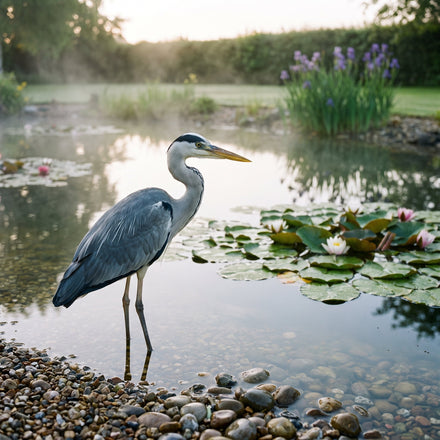
Heron, cat, kingfisher, or cormorant, most pond predators are protected by law and can only be deterred using passive devices. This guide brings together the figures that work, the devices that have proven effective,

Read the article
Raising perch in aquaponics

Raising perch in aquaponics

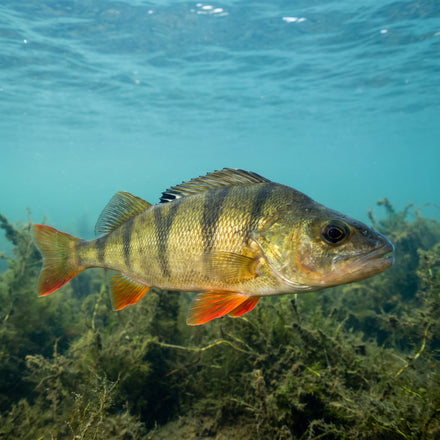
The common perch is the predatory fish of European temperate waters: hardy, with sought-after flesh, and perfectly suited to aquaponic systems in temperate climates. Here is how to raise this fish, the temperatures to

Read the article
Sturgeon in a garden pond

Sturgeon in a garden pond

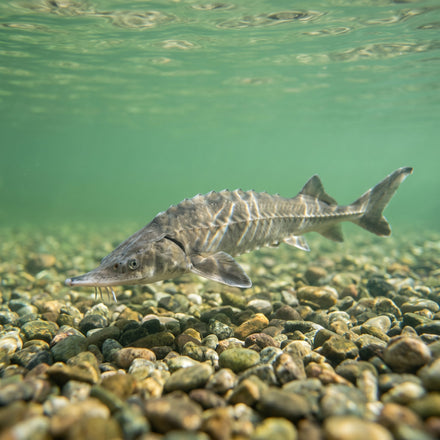
As prehistoric as it is elegant and demanding, the sturgeon can thrive in a large garden pond provided its particular needs are met. This European-focused guide covers the suitable species, the pond size required,

Read the article

Discover our aquaponics greenhouses and kits:

View all
Produits du rayon Kits d'aquaponie chez Univers Aquaponie

Aquaponics kits

Aquaponics kits ready to install in the garden, on a patio or in a greenhouse, with fish tank, grow beds and pump.

Discover
Produits du rayon Univers Plantes chez Univers Aquaponie

Plants

Seeds, grow media, fertilisers and aquatic plants for successful growing in aquaponics, hydroponics and the vegetable garden.

Discover
Produits du rayon Univers Équipements chez Univers Aquaponie

Equipment Universe

The equipment that keeps a system running: soilless growing, water circulation and aeration, filtration, temperature, plumbing and lighting.

Discover
Produits du rayon Serres d'aquaponie chez Univers Aquaponie

Aquaponics greenhouses

Greenhouses designed for aquaponics, supplied with their fish tank and grow towers.

Discover
Produits du rayon Univers Poissons chez Univers Aquaponie

Fish

Feed, monitor the water and care for your pond, aquarium or aquaponic fish.

Discover
Produits du rayon Univers Formation chez Univers Aquaponie

Learning

Books and practical courses on aquaponics, hydroponics and food self-sufficiency.

Discover