
Sold out
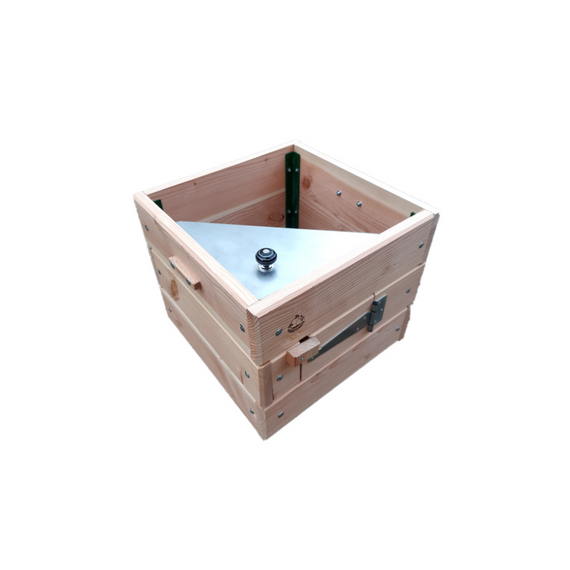
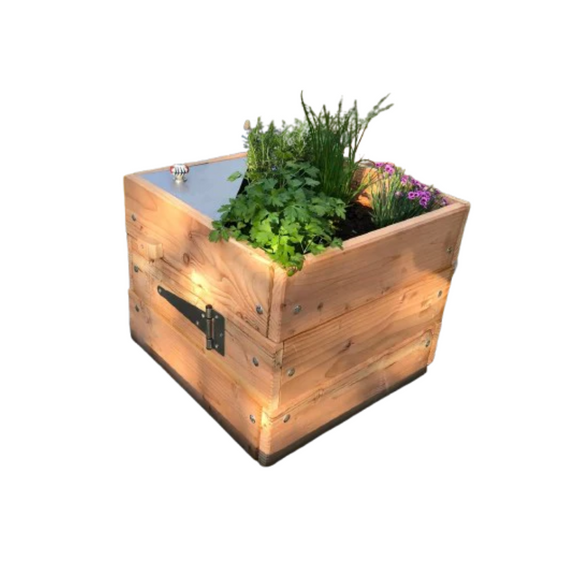
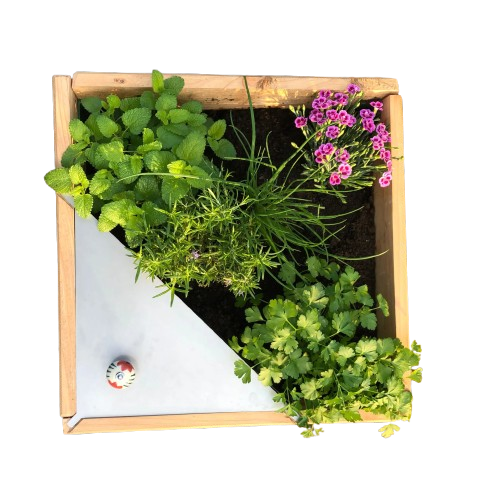
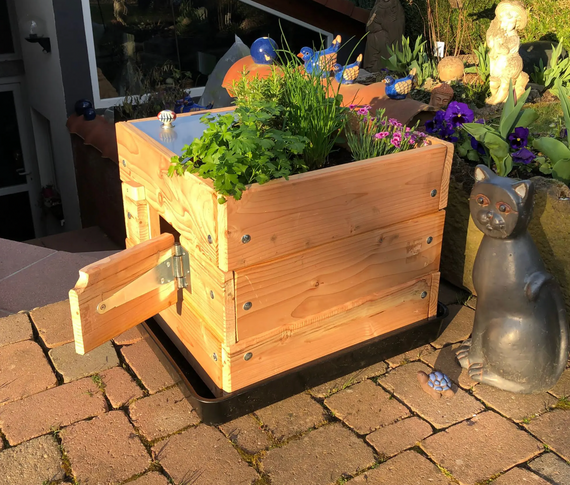
This unit combines a raised bed in Douglas fir with a stainless steel composter fitted into one corner: you drop your peelings in through the lid, grow in the rest of the box, and the nutrients from the compost feed the planter.
The whole unit fits within a 50 cm square, takes in around 2 kg of food waste per month, and arrives fully assembled with its worms and starter kit.
 Customer support 7 days a week by email
 Delivery within 2 to 15 business days
The Balcony combines a Douglas fir raised bed and a stainless steel composter in a single unit, with the composter tucked into one corner of the planter. You add your kitchen scraps through the composter lid, grow your crops in the rest of the bed, and the whole thing fits into 50 cm square, standing on legs in a plastic drip tray. It arrives fully assembled, complete with worms and everything you need to get composting started.
The two sections work together: as the worms break down your peelings, the nutrients from the compost make their way into the soil of the planter, so you won't need to add fertiliser to the plants growing there. The finished compost can be collected roughly once a year through a side hatch at the bottom of the unit, without emptying the planter. This system suits a balcony or terrace, where you can garden in a raised bed whilst processing a portion of your kitchen food waste.
The timber used for the crate is untreated Douglas fir, sourced from the Vosges forests, a naturally rot-resistant species that holds up outdoors without any stain or preservative, and which takes on a silver-grey tone over time. It is also an insulating material that protects the worms from the intense heat of summer. The composter is made from stainless steel, a metal that does not rust under constant contact with moist matter and is fully recyclable. The base of the planter is lined and fitted with an overflow, and excess irrigation water drains into the retention tray, which protects the balcony floor and extends the plants' water autonomy slightly.
A lightweight compost to fill the planter
The planter section arrives empty, ready for your compost. The lightweight peat-free compost in 50 L bags is well suited to herbs, salads, or flowers, and its low weight matters on a balcony where every kilogram adds to the load. Ordered with the unit, it lets you plant on the very day of delivery, while the composter receives its first contributions.
The composter holds approximately 15 L and takes in around 2 kg of food waste per month. Lift the stainless steel lid, add the day's peelings cut into small pieces, then a handful of sawdust, and replace the lid. The worms from the starter kit settle in from the very first addition and turn the material themselves, so there is no need to mix anything. The volume reduces continuously, it takes around 20 kg of peelings to produce 1 kg of compost, so you can keep adding every week.
80 kg over a quarter of a square metre
The unit weighs 15 kg empty, but around 80 kg when in use, once the planter is filled with watered soil and the composter is loaded. Choose its spot before filling it, on a level surface, and check that your balcony can take this load concentrated over half a metre on each side.
Add your raw or cooked peelings, provided they carry no sauce or dressing, along with coffee and tea grounds, split tea bags, crushed eggshells, mushroom trimmings, and wilted leaves and flowers. Keep out of the composter all meat and fish, pasta, bread and brioche, oil, milk, citrus fruit, garlic, onion, and leek, as these act as vermifuges; also exclude walnut and rhubarb leaves. Lawn clippings have no place here either: the volume exceeds what the composter can handle, and this nitrogen-rich material will rot through lack of oxygen unless mixed with dry matter.
The plants in the planter require regular watering, more frequently during heatwaves, when you can also fill the water reservoir. An olla planter buried in the planter releases water through its walls and extends the time your crops can go between waterings. As for the composter, worm activity slows outside the 15–25 °C range; position the unit against a house wall rather than a balcony railing, as this buffers the cold in winter, and continue adding material during the cold season, just in smaller quantities.
The planter is grown like a raised bed: herbs, salad leaves, strawberries or flowers all establish easily, and you arrange them from tallest at the back to shortest at the front so each plant receives adequate light. Replace each plant as soon as you harvest it, so the planter stays well stocked and produces throughout the season. A seed kit for salad leaves and organic chard lets you sow several successive batches, and the compost made alongside maintains the fertility of the soil from one batch to the next.
The composter is emptied approximately once a year, via the side hatch provided for this purpose. The compost is ready when you can barely find any worms in it, a sign that decomposition is complete. Allow around 6 months at start-up while the colony multiplies, then 3 months once it has spread throughout the composter. When the composter is full, a compost activator speeds up decomposition by approximately 30% over one month, and the annual accessories pack includes two sachets along with the year's supply of wood shavings. The harvested compost can be added to planters when replanting, or to your other balcony pots.
The Balcony arrives pre-assembled from the workshop: the wooden planter box pre-assembled with its lined base and overflow, the stainless steel composter and its lid, all sitting on the drip tray. The starter kit includes 2 bags of woodchip at 400 g each, a batch of composting worms, the composting guide, and a user manual. The unit is made in Alsace, simply place it, fill the planter, and make your first deposit.
The essentials
To budget for separately
In the box
Materials, dimensions, empty and operating weight, volume, monthly capacity and kit composition: manufacturer's figures from Agrotonome, recorded on 07/10/2026.
Balcony vegetable planter, kitchen pot, or stacking tray bin
| Composting volume (L) | Location | Material | Integrated planter | Worm tea tap | Stated capacity | Price | |
|---|---|---|---|---|---|---|---|
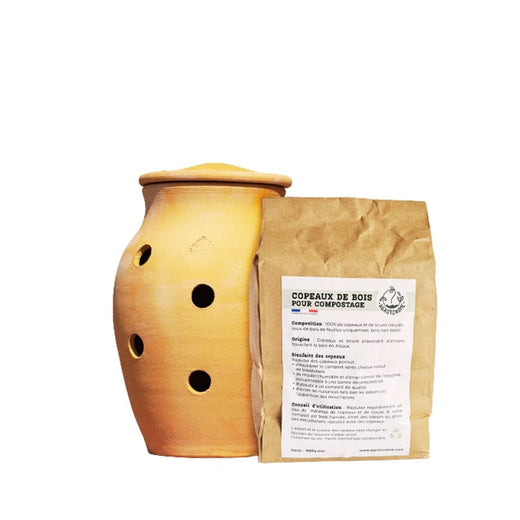
| Indoor terracotta worm composterYour choice | 8 L | Work surface | Clay | No | No | 1 to 2 people, 3 to 4 with a second ring | ¥45,100 |
| Wormery with 2 stackable trays and a tapYour choice | 28 L | On the floor, indoors or outdoors under shelter | Recycled plastic | No | Yes | Up to 6 people | ¥25,400 |
| Recommended Wooden balcony planter-composter, 50 x 50 cmYour choice | 15 L | Balcony or terrace | Douglas fir and stainless steel | Yes | No | 2 kg of organic waste per month | ¥56,100 |
Volumes, materials, equipment and capacities recorded from the manufacturers' product pages on 07/10/2026. For the tray tank, the volume given is that of the 2 trays supplied.
Help choosing
Which composter suits your home?
Your estimate
It covers preparing your order and then the transit time quoted by the carrier, counted in working days.
It is not a guaranteed delivery date: public holidays, peak periods, customs or a carrier delay can extend it. The exact amount, in your currency, is worked out in the cart once your address is entered.
The unit is delivered assembled, weighing 15 kg with dimensions of 50 x 50 x 42 cm: shipping is charged on bulk as much as on weight. The live worm kit travels with the unit and follows the same lead time. The exact delivery costs are shown at checkout once your address has been entered.
12 questions
6 key questions, 12 in the detailed view

What worm castings bring to the soil, and how to apply them without scorching young seedlings.

What a system already provides, and what needs to be added as a supplement.

What half a square metre of growing space genuinely puts on the plate.

Short-rooted species that do well in a shallow tray.

What you do with the harvest, and what goes back down into the composter afterwards.

The schedule of seedlings and harvests, month by month.
A question about this product or your setup? Our team will answer and advise you.

Interest-free instalment payments
Offered depending on the cart amount, at checkout.

Delivery in 2 to 15 working days
Depending on the products and shipping sites. Estimate by destination in the estimator on this page.

After-sales service 7 days a week by email or chat
Our team answers all your questions.

Shop responsibly
Become part of the change.