Raising tilapia in aquaponics

Written by Tristan Ulrich · September 5, 2026
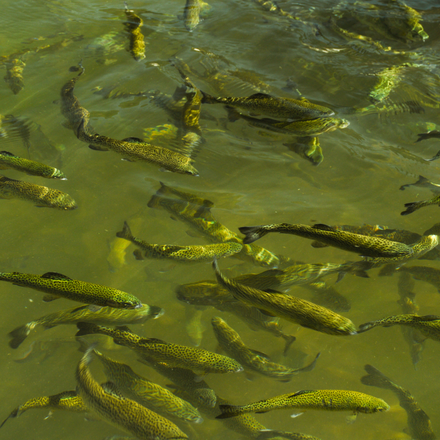
Tilapias dans un bac rond d'aquaponie sous serre, avec bacs de culture en billes d'argile plantés de basilic et de tomates

Tilapia is the most widely farmed fish in the world in aquaponics, renowned for its hardiness and rapid growth. Understanding its actual requirements in terms of temperature, volume and feeding is the key to successful rearing, whatever country you are in.

The tilapia, the world's number one

If tilapia has established itself as the flagship fish of aquaponics on every continent, it is no coincidence. Its rapid growth, tolerance of beginner mistakes, and well-regarded white flesh make it a first-rate candidate for producing your own protein at home. It currently ranks second in the world by farming volume, across all species.

This guide covers the subject in full, from the biology of the fish through to its feeding, reproduction, and health. We will look at what really matters for success, starting with temperature, which remains the decisive factor at European latitudes, and we will clarify what the law actually says, separating what applies to private individuals from what applies to commercial production.

Nile tilapia in profile showing its long spiny dorsal fin

A cichlid from Africa

Native to Africa and the Near East, the Nile tilapia (Oreochromis niloticus) belongs to the cichlid family. It is sometimes nicknamed the "aquatic chicken," so efficiently does it convert feed into edible flesh. It is this productivity that explains its dominance in fish farms worldwide.

It is recognisable by its laterally compressed body, the long spiny dorsal fin that runs along almost the entire back, and the more or less pronounced dark vertical bars on its flanks. A farmed adult commonly reaches 400 to 600 grams, sometimes more.

Its reputation rests above all on an uncommon hardiness. It tolerates fluctuations in water quality that would prove fatal to other species, which reassures beginners. For a comparison with other options, our guide on choosing species reviews the most commonly used fish.

Genuinely hardy, but don't overestimate it

The legend of the indestructible tilapia persists, and it sometimes leads to disappointment. While it does tolerate low oxygen levels and moderate ammonia spikes, that does not mean it thrives under those conditions. A fish that survives is not a fish that grows. Below a certain level of comfort, its growth slows, its immune system weakens, and disease takes hold.

In practical terms, tilapia prefers water with a pH generally between 6.5 and 8.5 — a wide range that makes balancing the system with plants straightforward. Dissolved oxygen should remain above 5 mg/L to support good activity, even if the fish can cope with lower values for short periods. The real key is consistency. Stable parameters are worth more than perfect water one day and degraded water the next.

In other words, its hardiness should serve as a safety margin, not as an excuse to neglect maintenance. Regular water monitoring, which you can make more reliable with suitable water test kits, remains the best insurance against unpleasant surprises.

Insulated fish tank in a heated aquaponic greenhouse in winter Aquarium heater (50-300w)

Temperature: the real challenge

tilapia is a tropical fish, and that is where the key challenge lies in a temperate climate. Its comfort zone generally falls between 24 and 30 °C, with peak growth at around 28 °C. Within this range, it feeds eagerly and maintains good disease resistance. Once water drops towards 20 to 23 °C, growth falls off sharply.

Below 15 °C, the fish stops feeding and enters the danger zone. Sources consistently place the lethal temperature at around 11 to 12 °C — a threshold quickly reached in an unheated garage or conservatory in winter, across northern and central Europe alike.

This thermal constraint is far from trivial: it affects both your energy bills and the success of the rearing operation. Keeping tilapia year-round therefore requires reliable heating and good insulation, or management limited to the warmer months. In southern Europe, the natural window is logically much wider.

How much water to allow per fish

The question of volume comes up constantly among beginners, and with good reason. Overcrowding overloads the biological filter, sends nitrites climbing and ultimately stunts the growth of the fish. It is therefore better to be generous at the outset rather than packing them in too tightly.

A commonly cited rule of thumb is to allow 20 to 30 litres of water per adult fish, which amounts to a moderate stocking density of around 10 to 30 kilograms per cubic metre in a well-filtered domestic system. For a 500-litre tank, starting with around ten fish leaves a comfortable margin. You can always increase the stocking density later, once the nitrogen cycle is fully established.

Rather than chasing a theoretical figure, keep an eye on the following signals over the weeks.

  • Ammonia and nitrites remain undetectable once the cycle is established
  • Fish are not gathering at the surface with their mouths open
  • Growth remains steady from one month to the next
  • The water does not cloud over between maintenance sessions

If any of these points deteriorates, your system is loaded beyond what it can handle. Reducing the population or reinforcing the filtration will resolve the situation more durably than repeated water changes.

A mat of duckweed, a natural protein-rich dietary supplement

Feeding Your Tilapia Properly

Omnivorous and voracious, tilapia accepts a varied diet, which makes life considerably easier for the aquaponics grower. For steady growth, the foundation remains a balanced pellet containing around 30 to 35% protein. As a general rule, juveniles are fed roughly 3% of their body weight per day, slightly less for adults, spread across two or three meals to avoid ammonia spikes.

Where tilapia truly excels is in its ability to make use of free supplements. Duckweed, which is very high in protein, grows on its own in a separate tank and is eaten with great enthusiasm. Surplus lettuce leaves or other greens from the vegetable garden round out the menu.

These additions reduce costs and close the resource loop neatly, without ever fully replacing a quality complete feed, which alone guarantees a balanced nutritional profile over time.

Filtration: the other side of a productive fish

If tilapia demands warmth, it more than repays that debt in the kitchen garden. Its active metabolism produces a large volume of waste rich in nitrogen and phosphorus — a genuine fuel source for plants. In a well-balanced system, that richness translates into vigorous vegetables and generous harvests.

That generosity comes with a direct trade-off. tilapia is often described as a messy fish, because it quickly loads the water with organic matter. Solid filtration becomes essential, and it needs to be thought of in two stages. Mechanical filtration captures particles before they break down; biological filtration houses the bacteria that convert ammonia into assimilable nitrates.

It is this balance between load and treatment capacity that separates a healthy system from water that turns. Our range of filtration media and bacterial supports covers both requirements, and sizing should always be worked out on the basis of the amount of feed distributed each day, not on water volume alone.

Tomatoes, peppers, and basil grown on clay pebbles in warm aquaponics Red Tomato Seeds "Jupiter"

Crops that thrive in its warmth

The warmth that tilapia requires directly benefits certain crops — and this is an argument that is too often overlooked. Vegetables that love heat and warmth thrive in water at 24 or 26 °C. Tomatoes, peppers, aubergines and cucumbers are among the best partners, as are basil and many other herbs that quite literally explode under these conditions.

The idea is to match the thermal requirements of the fish with those of the plants. There is no point heating the system for lettuces that prefer cooler conditions — you would be paying twice over. Far better to focus on productive summer varieties that convert the tilapia's nutritional output into abundant harvests.

This approach changes the entire economic balance of the installation. A heated tank producing tomatoes and basil for six months makes far better use of its energy than a heated tank growing lettuces. Choosing suitable seeds saves a great deal of time.

Oxygen and circulation: don't overlook them

Tilapia is often associated with low oxygen requirements, and that's partly true. It tolerates water with low dissolved oxygen better than trout does. That tolerance should not, however, lead to complacency, because warm water naturally holds less oxygen than cool water. The higher the temperature climbs, the greater the risk — especially at night, when plants are consuming oxygen themselves.

Good circulation and supplementary oxygenation keep the whole system on safe ground. An air pump feeding diffusers maintains a comfortable level and prevents dead zones at the bottom of the tank. In summer, or during population peaks, that supplementary aeration becomes genuinely essential. You will find suitable solutions in our range of air pumps and diffusers.

Bear in mind that an oxygenation failure is one of the fastest causes of mass mortality. A simple battery-backed backup air pump, or an alarm connected to a probe, can save an entire stock during a summer power cut. It is a modest investment given what it protects.

Female tilapia mouth-brooding, throat distended with eggs

Reproduction: asset or headache

Tilapia is a remarkably efficient breeder. From as early as four to five months, pairs form and the females, which are mouthbrooders, hold their eggs and then their fry inside their mouths to protect them. This fascinating behaviour can be captivating to observe, but in a closed system it quickly becomes a headache.

The problem is demographic. A population left unchecked produces hundreds of young that overload the filter, exhaust the food supply, and end up stunted through lack of space. Females in incubation also stop feeding, which impairs their own growth.

Two approaches help keep this in check. The first is to raise exclusively male populations, purchased from a specialist supplier. The second uses stocking density and tank layout to slow spawning. If you do want to produce your own fry, a separate nursery will allow you to sort the young and keep them safe from the adults.

Is tilapia permitted in France?

The subject is surrounded by a great deal of imprecision, pulling in both directions. You will find claims that tilapia is flatly prohibited, and equally that it can be farmed without restriction. Neither is accurate, and the answer must be pieced together text by text.

Let us start with what is not in question. Nile tilapia does not appear on the list of invasive alien species of concern for the European Union, nor on the lists in the order of 14 February 2018 for metropolitan France, nor in Article R432-5 of the Environment Code, which lists species liable to cause biological imbalances and is limited, for fish, to the catfish and the pumpkinseed sunfish. There is therefore no general prohibition on keeping it, which explains why aquarists keep it without any particular formality.

It is, however, absent from the order of 17 December 1985, which sets out the list of fish species represented in French waters. Article L432-10 of the Environment Code provides for a fine of 9,000 euros for introducing, without authorisation, fish not represented in waters falling under Title III of Book IV. According to administrative doctrine, those waters are not limited to watercourses; they also cover lakes, enclosed waters and fish farms. The authorisation provided for in Article R432-6 can only be granted by the prefect for scientific purposes, except for the few species listed in the order of 20 March 2013 — certain sturgeons and grass carp — among which tilapia does not feature. Placing tilapia in an outdoor pond, a lake, or an exterior bassin should therefore be ruled out without hesitation. The case of an indoor aquarium or a freestanding above-ground tank is less clear-cut: no text consulted expressly addresses them, and no published decision appears to have settled the matter.

For farming purposes, the central text is European Regulation 708/2007 on the use of alien species in aquaculture. Article 2 states that it applies to any aquaculture activity, regardless of scale, and excludes from its scope only the keeping of ornamental animals in pet shops, garden centres, confined garden ponds, or aquaria. Annex IV exempts from the permit requirement a list of well-established species in Europe — rainbow trout, common carp, wels catfish, pike-perch, and a few others. Nile tilapia is included, but only in Part B, which is reserved for overseas departments. In metropolitan France, it therefore remains subject to the permit procedure, handled by the departmental prefect's services.

Since 2011, the permit has no longer been required where the fish are destined for a closed aquaculture facility — that is, a land-based, recirculating installation whose discharge has no connection whatsoever with open waters. The counterpart is that the facility must be registered on a published national list. On paper, farming tilapia in a closed-loop system or in aquaponics in France is therefore neither prohibited nor unrestricted: it is regulated. In practice, this route appears to be very rarely taken. The French list of closed aquaculture facilities published by the Ministry of Agriculture — in its version updated to 31 August 2017 and still available online — contains not a single name, and the permit application register holds only a fictitious example entry, which, as it happens, relates to tilapia. These documents may no longer be kept up to date, and their silence does not prove that no farm exists, but no authorised facility appears publicly.

In plain terms, if you are in metropolitan France: introducing tilapia into an outdoor pond should be avoided entirely; keeping them in an indoor aquarium falls into a grey area that no one appears to be pursuing; and any production project requires prior contact with the departmental directorate for territories (DDT) and the departmental directorate for the protection of populations (DDPP), before purchasing so much as a single fry. In the overseas departments, tilapia is expressly exempt from the permit requirement. Elsewhere in Europe, the regulatory framework is often more open and closed-loop farming is common practice, notably in the Netherlands and Belgium. And everywhere, one rule admits no exception: the installation must produce no discharge whatsoever into the natural environment, including overflow and drainage.

Outside France, the answer changes. The analysis above is based on French law. Elsewhere in Europe, two levels apply simultaneously. European Regulation 1143/2014 on invasive alien species applies throughout the Union, but each member state also maintains its own lists and its own authorisation regimes, and several require a declaration or prior approval for keeping non-native aquaculture species. Rules also differ regarding water discharge and the transport of live animals.

Before acquiring tilapia, contact the competent authority in your country — generally the ministry or regional department responsible for fisheries and aquaculture. An email is sufficient, and the response you receive is what binds you: it is the only check that counts, and it takes less time than having to return a stock you should never have bought.
Heating, and above all choosing the right climate

Let's set the scene, because it changes everything. In temperate zones, tilapia requires heating during winter, when water temperatures would drop well below their vital threshold. This is not a minor setup detail — it is a permanent constraint that weighs on your energy bills.

In these regions, the ideal solution is to install the tank under a greenhouse. Solar radiation already warms the air and water for a good part of the year, and you simply need to make up the difference. Add careful insulation — insulating panels on the walls, wind protection and a cover at night — because every degree gained passively is a degree you won't have to pay for.

On the equipment side, a standard aquarium heater quickly reaches its limits beyond a few hundred litres. For a proper rearing tank, you need to move to a model designed for large aquariums or ponds, controlled by a thermostat and sized to the actual volume. Monitor the temperature with a reliable thermometer — a faulty sensor can ruin a stock in a single night.

That said, this is not the ideal setup, and it is worth being straightforward about it. Tilapia reaches its full potential where the climate does the work for you — in semi-arid, warm Mediterranean or tropical regions, where the water naturally stays within its comfort range for most of the year, sometimes year-round. This explains its dominance in fish farms worldwide, and it is also why, in a temperate climate, a cold-water species often remains the more rational choice. You will find everything you need in our selection of heaters and thermometers.

Tilapia or trout — how do you choose?

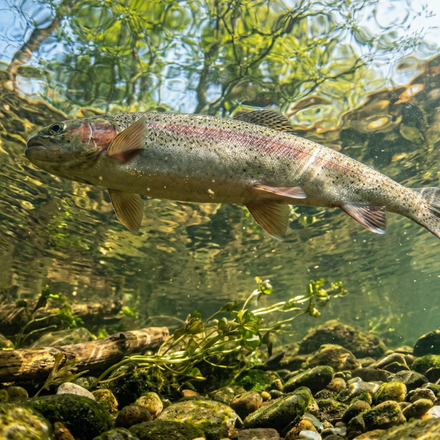
The choice often comes down to a question of climate and temperament. Tilapia needs warmth and forgives mistakes, making it an excellent indoor fish for beginners who are prepared to run a heater. Trout, by contrast, thrives in cool water between 12 and 18 °C, tolerates low oxygen levels poorly and is more demanding — but it offers outstanding flesh and requires no heating in temperate climates.

For an outdoor pond in northern or central Europe, trout is often the most logical and energy-efficient choice. We have dedicated a full guide to it on salmonid aquaponics. For an indoor system or a heated greenhouse in a warm climate, tilapia retains the advantage of simplicity and fast growth.

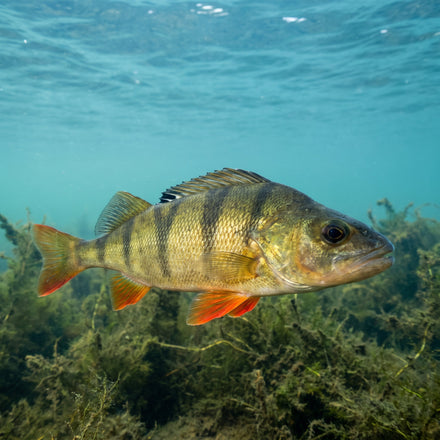
Other species are also worth considering, from common perch to hardy carp, and goldfish for smaller volumes. The most important thing is to match the species to your setup, your climate and the legal framework of your country, rather than the other way round. It is that initial choice — far more than technique — that determines long-term success.

Tilapia in aquaponics: the key takeaways

Tilapia is not a demanding fish, and that much should be said in its favour. It forgives beginner mistakes, tolerates highly variable water parameters, eats almost anything, and grows quickly. In terms of husbandry, it is one of the most accessible fish there is, and its position as the world's number one aquaculture species is well deserved.

Its two genuine constraints have nothing to do with the animal itself — they come from its environment. The first is thermal: in a temperate climate, it requires a greenhouse, serious insulation, and a heating setup you are prepared to commit to. The second is regulatory, and it must be addressed before you buy, not after. Where the climate is suitable and the legal framework permits it, both obstacles disappear, leaving you with an excellent aquaponics fish.

Everything else comes down to a few fundamentals: filtration capable of keeping pace with its appetite, a reliable oxygen supply, controlled breeding, and a system designed with absolutely no discharge into natural waterways.

If your climate or legal framework rules tilapia out, do not give up on aquaponics. Cold-water species such as trout and perch, or hardy fish like carp and goldfish, open equally productive avenues — no heating required and no special authorisation needed.

Sources

FAO, Cultured Aquatic Species Information Programme, Oreochromis niloticus (Linnaeus, 1758), Lethal temperatures of 11 to 12 °C, optimum thermal range, feeding rate, and market size of 400 to 500 g reached in five to eight months.

FishBase, Oreochromis niloticus, Nile tilapia, Species profile, natural temperature range, omnivorous diet and maximum size.

Decree of 17 December 1985 establishing the list of fish species represented in French waters, Full species list in which no Oreochromis or cichlid appears, which triggers the application of Article L432-10.

Code de l'environnement, article L432-10, A fine of 9,000 euros for introducing unauthorised fish species into waters covered by Title III of Book IV, without prior authorisation.

Ministerial note of 22 October 2013 concerning the application of articles L432-10 and R432-6, Specifies that the waters covered include enclosed waters and fish farms, and that the prefectoral authorisation can only be granted for scientific purposes, excluding species listed in the order of 20 March 2013.

Council Regulation (EC) No 708/2007 concerning use of alien and locally absent species in aquaculture, Article 2, application to all aquaculture activities regardless of size, exclusion limited to ornamental animals in pet shops, garden centres, enclosed garden ponds or aquariums, and definition of a closed aquaculture installation.

Regulation (EC) No 506/2008 replacing Annex IV of Regulation 708/2007, Current Annex IV, where Oreochromis niloticus appears only in Part B, reserved for French overseas departments, and not in Part A applicable to metropolitan France.

Regulation (EU) No 304/2011 amending Regulation 708/2007, Permit exemption for movements to closed aquaculture facilities, subject to inclusion on a published national list.

Ministry of Agriculture, Use of Exotic and Locally Absent Species in Aquaculture, French procedure, competent authority at departmental prefect level, and publication of the list of closed aquaculture installations as well as the permit register.

Consolidated Commission Implementing Regulation (EU) 2016/1141, list of invasive alien species of concern for the Union, A list on which Nile tilapia does not appear, contrary to what is often written.

Office International de l'Eau and OFB, Fish Farms and Invasive Alien Species, Confirms that tilapia is classified as an exotic species whose farming is permitted subject to approval of an application, rather than being an outright ban.

MDPI Horticulturae, Nutrient Use Efficiency and Sustainable Productivity in Tilapia-Catfish and Lettuce-Spinach Aquaponic Polyculture, Stocking densities and nutrient use efficiency in aquaponics.

University of Florida IFAS Extension, Tilapia Lake Virus (TiLV), a Globally Emerging Threat to Tilapia Aquaculture (FA213), TiLV virus, replication range, observed mortality rates, and absence of risk to humans.

ITAVI and the APIVA programme, regulations and aquaponics, Thresholds applicable to all freshwater fish farms: water law notification below 20 tonnes and ICPE authorisation beyond that.

Frequently asked questions

The FAO places the market weight of 400 to 500 grams at between five and eight months of rearing, under professional conditions and with controlled water temperature. This benchmark assumes water close to the thermal optimum throughout the entire cycle, a complete feed distributed several times a day and a reasonable stocking density.

In a domestic system, allow more time. Every week spent below 22 °C costs lost growth, and a seasonal approach without heating mechanically extends the cycle. Many European aquaponists harvest portion-sized fish after a full season, sometimes two if the winter forces a pause.

A handful of specialist hatcheries and aquaponic farms sell them, most often in batches of male juveniles to prevent breeding. Always ask for the origin, health status and exact size of the fish before ordering.

Problems almost always stem from unstable water or a fish weakened by cold. Three categories of issue recur.

  • Opportunistic bacterial infections, encouraged by poor water quality and overfeeding
  • External parasites, causing flashing behaviour and ragged fins
  • TiLV virus, specific to tilapia, which replicates between 15 and 30 °C with an optimum around 25 °C and causes cumulative mortality rates of 10 to 90 % depending on the stock

This virus poses no risk to humans, but it justifies sourcing fish exclusively from known origins and never mixing two batches without a quarantine period.

This is possible, provided two constraints are respected. The first is thermal: any tankmate must tolerate water maintained at around 25 to 28 °C, which rules out trout, perch, and goldfish from the outset. The second is behavioural: tilapia become territorial during spawning, and a dominant male will readily harass slower neighbours.

The combinations that work in aquaculture are those involving tropical fish of comparable size — for example, a bottom-dwelling catfish that occupies a different water layer. For a first system, a single-species stock remains far simpler to manage, as the filter load and feeding rations can be calculated straightforwardly.

The flesh is white, firm and very mild in flavour, with bones that are easy to remove. It is a neutral fish that takes on the taste of whatever it is paired with, which explains both its commercial success and the criticism it sometimes attracts.

Eating quality depends far more on rearing conditions than on the species itself. Clean, well-oxygenated water that is regularly refreshed produces a fish with a clean taste. Conversely, an overloaded pond, a silted bottom or an algae bloom impart a muddy aftertaste that cooking cannot remedy.

A useful step is to starve the fish for a few days in clean water before slaughter. This purging empties the digestive tract and noticeably improves the end result.

This is a serious question and it explains much of the regulatory framework surrounding the subject. Nile tilapia is a non-native species in Europe, covered by EC Regulation 708/2007 on the use of exotic species in aquaculture, and the French list of species permitted in metropolitan France falls under the arrêté of 17 December 1985.

In practice, a domestic closed-circuit indoor system presents no risk as long as the water is never discharged into a watercourse or ditch. In our latitudes, the animal would not survive a winter in open water in any case. That said, check with your local authority before purchasing — the rules vary from country to country.

Read next

Raising perch in aquaponics

Raising perch in aquaponics

The common perch is the predatory fish of European temperate waters: hardy, with sought-after flesh, and perfectly suited to aquaponic systems in temperate climates. Here is how to raise this fish, the temperatures to

Read the article
Goldfish in aquaponics

Goldfish in aquaponics

The goldfish remains the most popular species for starting an aquaponic system, and not without reason. Its hardiness, tolerance of cool water and high waste output make it a surprisingly effective partner for your

Read the article
Salmonponics: aquaponics in cold water

Salmonponics: aquaponics in cold water

Aquaponics is often associated with pond fish like goldfish and koi. However, there is a variant perfectly suited for our temperate regions, cool climates, and winters : salmoponics. Trout, char, brook trout, these iconic

Read the article
Is aquaponics suitable for animal welfare ?

Is aquaponics suitable for animal welfare ?

We often talk about what aquaponics produces. But rarely about what the fish that make it work experience. Are they simply tolerated in a system designed for production, or can aquaponics truly respect their

Read the article
What to sow in autumn in aquaponics

What to sow in autumn in aquaponics

Autumn is not the end of the growing season — it is the start of the most peaceful one. Here is what to sow, when to do it and how to achieve leaf harvests

Read the article
Growing pots for aquaponics

Growing pots for aquaponics

The net pot is an unassuming but decisive accessory in aquaponics: it supports the plant, houses the grow medium and allows water and oxygen to circulate freely. This guide explains how to choose the

Read the article