Maintaining your aquaponic system in summer

Written by Tristan Ulrich · July 1, 2025
Entretien estival d'un système aquaponique

Aquaponics is an effective solution to water shortages and increasingly hot summers, where traditional agriculture is struggling. Yet, the summer season remains a challenge : intense heat, rapid evaporation, and strained plants. Fortunately, with the right practices, your fish-plant ecosystem can not only survive, but also thrive under the sun.

Aquaponics and the challenges of summer

Summer is a season full of promise for aquaponics: plants grow quickly, sunlight drives photosynthesis, and outdoor setups become a natural playground for enthusiasts. But this period also brings heat stress, increased evaporation, and potential imbalances within the system.

Water warms up, dissolved oxygen drops, and both fish and plants can suffer if no adjustments are made. This article helps you understand how to respond to the specific demands of the summer season, so you can keep your aquaponic system healthy, productive — and a comfortable environment for your fish and plants alike.

The effect of heat on water and fish Floating pond thermometer

Impact of heat on water and fish

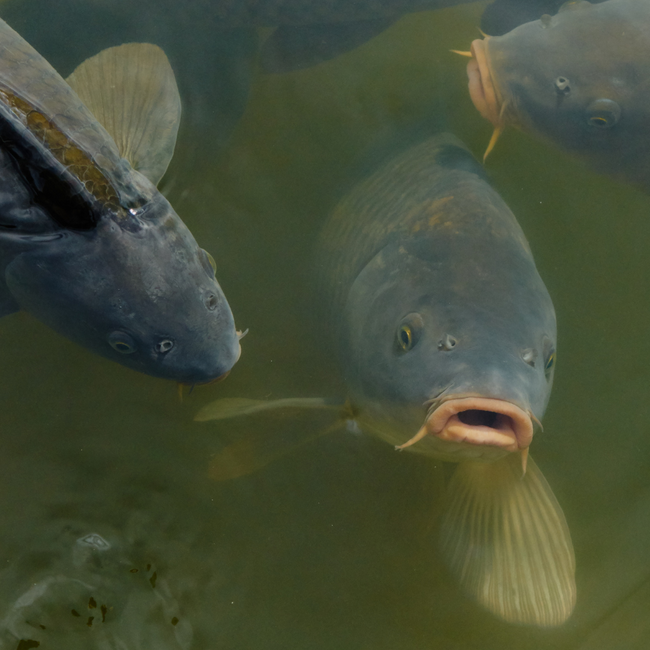
In summer, rising water temperatures can become problematic in aquaponics : beyond a certain threshold, specific to each species, the fish suffer and can even die if the heat persists. Moreover, the warmer the water, the less dissolved oxygen it contains, which further aggravates the situation. As a result, the fish gasp at the surface, feed less, and their metabolism is disrupted.

When designing your aquaponics system, consider choosing species that are suited to the local climate and temperature variations. Alternatively, consider a water heating or cooling system.

In summer, if possible, place your fish tank in the shade (using a tarpaulin or shade canopy) to limit direct sunlight. If, despite these precautions, the temperature exceeds acceptable limits, it would be best to transfer your fish to a cooler location.

Risk of evaporation and water level management Float valve for automatic refilling

Risk of evaporation and water level management

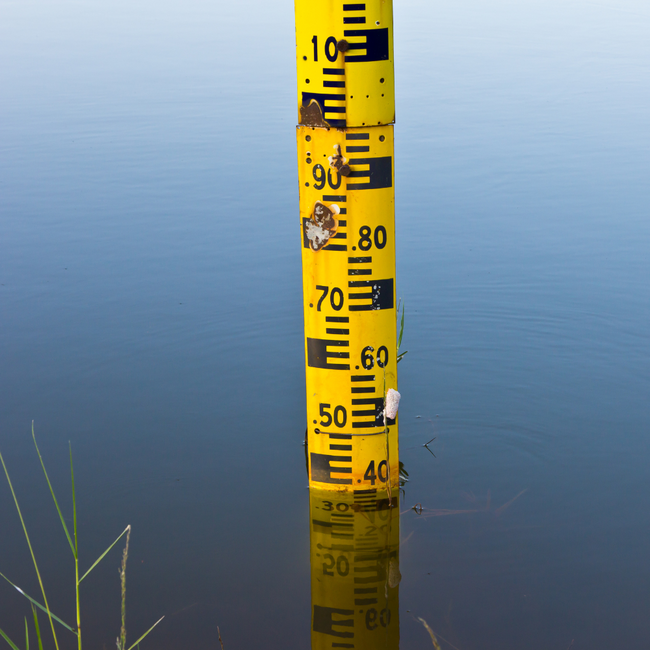
In summer, an aquaponic system can lose between 1 and 5% of its water volume per day through evaporation and plant uptake. This loss is even greater if the system is exposed to wind or housed in a greenhouse without ventilation. Without regular topping up, the water level drops, which can concentrate waste, disrupt the chemical balance… and even run the pump dry.

To limit these effects, check the water level every day and top it up with fresh water as soon as necessary. Use good-quality water: filtered rainwater or tap water left to stand for at least 24 hours to allow the chlorine to off-gas. Adding chlorinated water directly can stress the fish and destroy the beneficial bacteria in the filter.

Cover as much of the water surface as possible to reduce evaporation: boards, floating lids, spreading aquatic plants (such as duckweed), or a shade net above the tank. These solutions offer a double benefit: they cut water loss and help maintain a more stable temperature. Finally, keep an eye on pH and salt concentration after significant evaporation: regularly topping up with fresh water dilutes nitrates and preserves the balance of your ecosystem.

Plants suited to summer in aquaponics

Plants suitable for summer in aquaponics

Choose plants that thrive in warmth and abundant sunlight. For example, basil is ideal for summer aquaponics : it thrives in nutrient-rich water and warm temperatures, conditions that are common in a summer system. Similarly, tomatoes thrive in plenty of light and warmth ; summer is the perfect season for them.

Peppers, cucumbers, eggplants, and zucchini also thrive in the summer heat. These fruiting plants consume more nutrients, so make sure your biofiltration system keeps pace. During heatwaves, consider protecting your most sensitive crops : even robust plants can suffer from blazing sun.

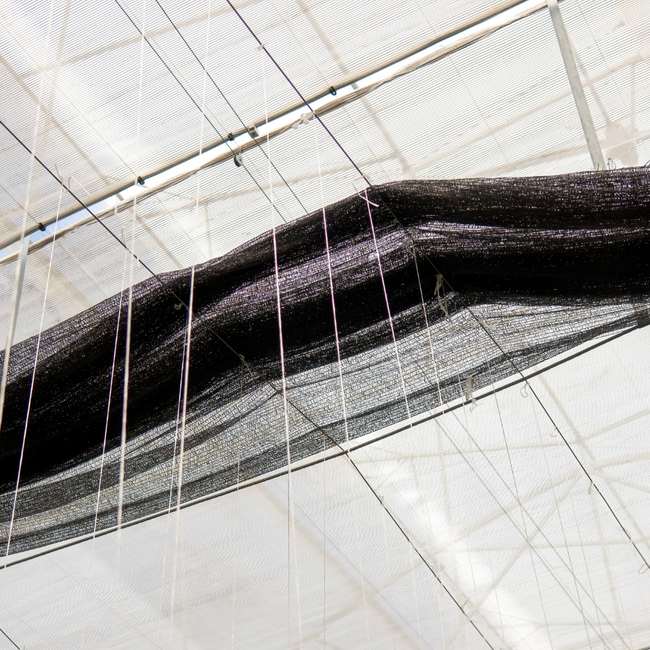
Shade netting protecting crops during a heatwave

Fitting a light shade cloth or ventilating the greenhouse during heat peaks prevents leaf scorch. You can also combine plants with different growth cycles: interplant lettuces or spinach between larger tomato or courgette plants. The taller plants will then cast shade over the more delicate ones, preventing the lettuce from bolting too quickly.

Small-fruited melons or mini watermelons can also be worth attempting in a vertical system or a deep grow bed, provided they receive plenty of sun, adequate trellising, and good air circulation.

For growers who want to combine productivity with aesthetics, nasturtiums are also an excellent choice at this time of year: edible, they add colour to your system while attracting pollinators.

How to optimise water oxygenation OXYBOOST 100 & 200 PLUS Aerator

How to optimize water oxygenation

The warmer the water, the less oxygen it can hold: at 30 °C, natural oxygenation is significantly lower than at 20 °C. During summer, you will therefore need to boost aeration in your aquaponic system.

First step: ensure good water circulation. Water in continuous movement (fountains, waterfalls, drip systems) promotes gas exchange. Keep the circulation pump running at maximum flow rate at all times.

Next, fit your ponds with powerful air diffusers (airstones), running 24h/24 throughout the warm season. Check that each tank has its diffuser correctly submerged for optimum micro-bubble diffusion.

Air pump oxygenating pond water during warm periods

It can also be worth adding a second air compressor or airstone during heatwaves, especially if you have a lot of fish.

Another tip: you can fit a surface agitator pump, which injects air into the water flow of the pond, combining circulation and oxygenation.

Finally, keep an eye on your fish's behaviour: if they are gulping air at the surface, the water is low in oxygen. You can then reduce their feed slightly. In short, during periods of intense heat, maintain water oxygenation without let-up to compensate for the natural drop and avoid any stress to the organisms in the system.

Mistakes to avoid in aquaponics during hot weather Automatic food dispenser for aquariums and ponds

Mistakes to avoid in aquaponics during the heat

Overfeeding fish : In high heat, fish appetites may decrease. Any uneaten food will rot in the tank, consuming oxygen and degrading the water. Distribute smaller rations and remove leftovers after 5-10 minutes.

Forget about shade : Direct sunlight on your fish tank heats it up quickly. Don't leave your system unprotected in the blazing sun. Install a shade or cover over at least part of the tank. This will keep your fish cool and the water will turn green less quickly.

Overstocking with fish : In summer, oxygen is limited, so an excess population is even more risky. Maintain a reasonable density (e.g., ~20 kg of fish per 1000 L of water) to avoid a mass die-off during heat waves.

Water level in an aquaponic pond to monitor during summer

Neglecting the water level : With rapid evaporation, the level can drop by several centimeters in a few days. Not topping up exposes the pump to air suction and concentrates waste. Check the level daily in hot weather and add water as needed.

Adding ice water suddenly : Trying to cool it too quickly can shock the fish. Never add a large amount of very cold water at once, and don't throw in ice cubes.
directly into the fish tank. Thermal shock can kill them. If necessary, perform small water changes spread out over the day.

Forget emergency ventilation : A power outage of a few hours on a hot day without a backup air conditioner is tragic. If possible, plan for a battery-powered backup system.
(solar air pump, oxygenation by gravity waterfall) in order to deal with unforeseen events and maintain oxygen if the main pump stops.

Conclusion: fewer mistakes, more harvests

In short, maintaining an aquaponic system in summer requires a little adaptation, but it is entirely achievable with common sense and forward planning. By keeping your water at the right temperature, well oxygenated, and at the correct level, choosing seasonal plants, and avoiding common mistakes, you will get through the warm season without any trouble. Better still, you can harness the power of summer to achieve abundant harvests and enjoy some wonderful moments around your setup.

Aquaponics in summer can be just as rewarding for you as it is for your plants and fish, so do not hesitate to apply this advice and make the most of this season that is so favourable to growth!

Sources

Oklahoma State University Extension, Nitrification and Maintenance in Media Bed Aquaponics, pH ranges and ammonia and nitrate thresholds used for summer monitoring.

New Mexico State University, Circular 680, Aquaponics, Dissolved oxygen threshold, ammonia nitrogen and nitrite limits, and the effect of temperature on oxygen levels.

University of Florida IFAS, HS1252, A Practical Guide for Aquaponics as an Alternative Enterprise, Orders of magnitude for daily feed ration, fish stocking density, and water turnover.

Oklahoma State University Extension, Recirculating Aquaculture Tank Production Systems, Aquaponics, Feed load expressed per unit of growing area and alternating alkaline correction.

Goddek et al., Challenges of Sustainable and Commercial Aquaponics, Sustainability 2015, Compromise pH between nitrification and plant nutrition.

SMIDAP, rapport OPRA 2, aquaponie en France, French practical experience on water exchange rates and species selection by season.

Frequently asked questions

Yes, but gradually. In warm water, appetite drops before metabolism does, and any uneaten pellets decompose in the tank, consuming oxygen that is already in short supply. Aquaculture guidelines place the daily ration at around 1 to 3% of biomass depending on species and fish size, and it is wise to aim for the lower end of this range during a hot spell.

The most reliable method remains observation. Distribute a small amount, time it, and remove whatever remains after five to ten minutes. Two consecutive refusals mean the ration should be halved the following day. Return to the normal feeding pattern only once the temperature has dropped durably and the fish come to the surface of their own accord at feeding time.

Greening itself is not toxic — it is the rate at which it occurs that causes problems. Phytoplankton produces oxygen in full light and consumes it at night, which creates a trough in the early hours of the morning, precisely when warm water retains the least oxygen. A heavily green tank therefore requires uninterrupted aeration and shading of the tank, rather than reaching for an algicide that would trigger a mass algae die-off and a sudden drop in oxygen levels.

Under normal conditions, a weekly check is sufficient. During a heatwave, move to a check every two days, and daily as soon as you have observed surface gasping or any mortality. The reference values commonly used for a production system are as follows.

  • Dissolved oxygen above 5 mg/L, measured early in the morning and not in the afternoon.
  • Total ammonia nitrogen and nitrites below 1 mg/L, ideally close to zero.
  • pH kept within the range 6.5 to 8.5, with a compromise often around 6.8 to 7.0.
  • Alkalinity maintained above 100 mg/L to buffer pH fluctuations.

The most common mistake is measuring oxygen in the middle of the day, when plants and algae are still producing it. You then obtain a reassuring reading that masks the true low point, which occurs between four and seven in the morning. Make a habit of taking at least one measurement at dawn during the three hottest days of the year — it is that reading which determines whether or not a second air stone is needed.

A short fast is perfectly normal in warm water. Measure oxygen and ammonia first, remove any uneaten food, and never force the ration.

It is most relevant when nitrates are reaching their ceiling or when the water becomes salt-laden after several weeks of top-ups. Aquaculture guidelines suggest water exchange rates in the region of 5 to 10% of volume per day for heavily stocked systems, while feedback from French growers tends to put it at 2 to 10% depending on the season and stocking density.

In domestic aquaponics, these figures serve as an upper limit, not a target. A lightly stocked system in which the plants are feeding well often needs nothing more than topping up for evaporation. Change water if your nitrates remain persistently high, and do so in several small doses rather than a single partial drain-down.

This is photosynthesis. Plants and algae consume dissolved carbon dioxide during daylight hours, which causes the pH to rise, then release it overnight through respiration. The amplitude of this swing is greater when alkalinity is low.

The right response is therefore not to correct the pH twice a day, but to raise the buffering capacity. Keeping alkalinity above 100 mg/L dampens the oscillation. If adjustment is still necessary, practitioners recommend alternating between calcium- and potassium-based alkalising agents rather than always using the same one, so as not to upset plant nutrition.

Read next

Aquaponics and Summer Holidays

Aquaponics and Summer Holidays

You're going away for two weeks in July and your aquaponics system will be running without you : this thought rightly makes you anxious, because heatwaves, evaporation, and fish feeding raise practical questions. Good

Read the article
Build your aquaponic system

Build your aquaponic system

Do you dream of growing your own fresh vegetables and fish at home, in just 2 m² of garden, without pesticides, without weeding, and using roughly 90% less water than in the ground? It

Read the article
Regulating pH in an aquaponics system

Regulating pH in an aquaponics system

pH is one of the most sensitive and critical parameters in aquaponics. It directly influences the health of the fish, the effectiveness of nitrifying bacteria, and the plants' ability to absorb nutrients. An improperly

Read the article
Getting Started with an Aquaponic System

Getting Started with an Aquaponic System

Do you dream of growing your own vegetables while raising fish, but don't know where to start ? Aquaponics is a sustainable, accessible, and exciting solution for producing food independently at home. In this

Read the article
Recognizing deficiencies in aquaponics

Recognizing deficiencies in aquaponics

In aquaponics, plants can show signs of weakness even when the system appears balanced. Pale leaves, slowed growth, or deformities are often linked to subtle yet critical micro-deficiencies. These deficiencies involve essential elements such

Read the article
A practical calendar for success in aquaponics

A practical calendar for success in aquaponics

In aquaponics, the success of a season depends mainly on good upstream calendar management : periods of sowing, planting, ramp-up… and times when it is better not to intervene. Unlike a traditional vegetable garden,

Read the article