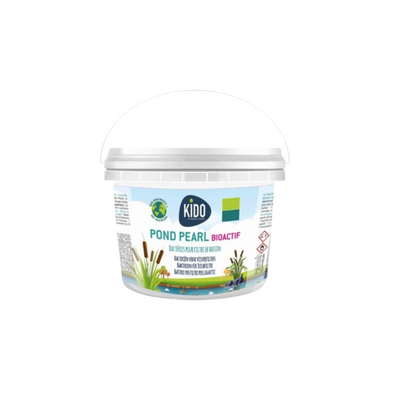


Liquid pH corrector pH-
Regular price
$15.00
Regular price
Sale price
$15.00
Unit price
/
per
| Capacity | Price | Price per L | vs 500 ml |
|---|---|---|---|
| 500 ml | $15.00 | $30.00 | — |
| 1 L | $27.00 | $27.00 | −10 % |
| 5 L | $94.00 | $18.80 | −37 % |
| 10 L | $160.00 | $16.00 | −47 % |
| 60 L | $855.00 | $14.25 | −53 % |
$5.00 × 3 with no fees
Klarna.
This liquid pH corrector — a blend of nitric, phosphoric and citric acids — lowers the pH of a nutrient solution and stabilises it between 5.5 and 6.5, the range at which iron, manganese and phosphorus remain available to plants. It is suitable for hydroponics, coco fibre and soil, and it is corrosive (H314).
 Customer support 7 days a week by email
 Delivery within 2 to 15 business days
100 % secure payment
The summary
- What it is: a liquid pH corrector based on nitric, phosphoric and citric acids, for use in hydroponics, coco fibre and soil.
- Why three acids: two lower the value immediately upon addition, while citric acid maintains it over time.
- How much to use: 4 ml per 50 L to start, then add in small increments while measuring.
- Warning: concentrated corrosive, H314, causes severe burns to skin and eyes. Gloves and eye protection are mandatory.
- Target ranges: pH 5.5 to 6.5 during growth, 6.4 to 6.8 during pre-flowering and flowering.
- Sizes and dispatch: 500 ml, 1 L, 5 L, 10 L or 60 L, dispatched from France.
Nitric, phosphoric and citric acids to lower and then stabilise the pH of the solution
This liquid corrector lowers the pH of a nutrient solution and stabilises it, whether in hydroponics, on coco fibre, or in soil. pH governs the uptake of nutrients: a perfectly dosed solution left at pH 7.5 puts iron, manganese, and phosphorus out of reach of the roots, so the plant shows deficiencies even though the solution contains everything it needs.
🧬 Three combined acids
The formula combines three acids: nitric, phosphoric and citric. The first two lower the value as soon as they are added, and the effect is immediate, allowing you to take a reading as soon as the solution has been mixed. Citric acid acts as an organic buffer: it maintains the pH over time and limits the effect of excess calcium, which is particularly useful with hard water. Since nitric and phosphoric acid are also nutrients, each correction adds a small amount of nitrate nitrogen and phosphorus to your solution.
🎯 The targets and the first dose
Root development and growth
Aim for a pH of 5.5 to 6.5, the range where most nutrients remain available for uptake.
Pre-flowering and flowering
The TriPart system application chart sets the target at 6.4 to 6.8.
The first addition
Start with 4 ml per 50 L of solution, mix, measure, then add more in small increments.
The right moment
Adjust after adding the fertilisers, since each one changes the value as it dissolves.
Reading pH to one decimal place in hard water
With hard tap water, you'll need to adjust the pH each time you fill the reservoir, and often again between refills. The pocket electronic pH meter reads values to one decimal place within seconds, with temperature compensation, making repeated checks quick and straightforward. You can see exactly what each millilitre of corrector does, and note once and for all the amount your water requires.
The total quantity does not appear in any table, because it depends on the buffering capacity of your water, that is, its bicarbonate content, not on the volume being grown. Tap water often has a pH of 7 to 8, and hard water requires considerably more than rainwater to reach the same value. With a 50-litre reservoir, start with the recommended 4 ml, take a measurement, add 1 ml at a time, and note the total: as long as you use the same water and the same fertiliser, that figure will hold from one preparation to the next. Our article on pH regulation explains the method step by step.
Acid is always added to water, never the other way round
Never pour water into the acid, nor pour the neat concentrate into a tank without agitation: always add the acid to a large volume of moving water. The concentrate is at pH 1 and classified H314; it causes severe skin burns and serious eye damage: wear gloves and eye protection, and rinse thoroughly if contact occurs. Store the container upright, sealed, in its original packaging, between 5 and 30 °C and out of reach of children.
➕ What each correction does
The guaranteed analysis states 1% nitric nitrogen and 5% phosphoric anhydride. Adding 4 ml to a 50-litre reservoir, approximately 4.5 g of product, given a density of 1.12, delivers around 0.9 mg of nitrogen and 4.5 mg of phosphoric anhydride per litre. These amounts are modest compared with those of a complete fertiliser such as TriPart Grow, but they increase with your water hardness: hard water requiring ten times more corrector will deliver ten times more. In soil, the corrector works in the same way on irrigation water, which is particularly useful when your water is hard.
Technical specifications
The essentials
- Function
- Lowers and stabilises pHImmediate effect on the value, then pH maintenance via citric acid.
- Composition
- Nitric, phosphoric and citric acidsPhosphoric acid 5 to 10%, nitric acid 1 to 3%. Citric acid acts as an organic buffer.
- pH of concentrate
- 1Highly acidic concentrate. Never pour it neat into a tank without mixing.
- Target pH range
- 5.5 to 6.5During rooting and growth. At pre-flowering and flowering stages, the target shifts to 6.4 to 6.8.
Use
- Appearance
- Yellowish liquidThe pH+ from the same range is pale blue: no risk of mixing them up.
- Compatible
- Hydro, coco and soilSame product for all three growing methods. In soil, it acts on the irrigation water — useful in chalky ground — but does not have a lasting effect on soil pH.
- First addition
- 4 ml per 50 LThen add in small doses while measuring: the total quantity depends on your water's buffering capacity.
- Relative density
- 1.12One litre weighs approximately 1.12 kg.
Safety and storage
- Classification
- Danger, H314Causes severe skin burns and serious eye damage. Corrosive, category 1A.
- Essential equipment
- Gloves and gogglesPrecautionary statements P264 and P280. Wash your hands thoroughly after handling.
- If swallowed
- Do not induce vomitingRinse your mouth and call a Poison Control Centre (precautionary statements P301, P330 and P331).
- Storage
- Upright, sealed, between 5 and 30 °CIn its original packaging, away from bases and foodstuffs. Shelf life of 5 years after opening.
To budget for separately
- pH measurement
- Drop test kit or pH meterTo the naked eye, nothing distinguishes a solution at 6.0 from one at 7.2.
- Dosing syringe
- Graduated to the half-millilitreIt is used once and for all to determine the quantity your water requires.
6 further specifications are available in the detailed view.
In the box
- 1 bottle of liquid pH- corrector in the chosen size: 500 ml, 1 L, 5 L, 10 L or 60 L.
Classification H314, composition, pH, density, appearance and storage: French safety data sheet dated 22/11/2023. Three acids, starting dose, guaranteed analysis and shelf life: official French data sheet retrieved on 07/10/2026. pH targets: 2025 application table.
pH- or pH+: which one your water needs
Both correct the pH, but in opposite directions. The choice depends on your source water.
pH- is only needed if your pH is too high
Rainwater or osmosis water requires exactly the opposite approach. Three measurements are enough to know which camp you are in.
| Effect on the solution | Water concerned | Active base | pH of concentrate | Liquid colour | Supplies phosphorus | Provides potassium | Silica source | Classified corrosive H314 | Gloves and goggles must be worn | Never to be mixed with the other | |
|---|---|---|---|---|---|---|---|---|---|---|---|
| Recommended pH- correctorYour choice | Lowers pH | Hard tap water | Nitric, phosphoric, citric acids | 1 | Yellowish | Yes | No | No | Yes | Yes | Yes |
| pH+ correctorYour choice | Raises pH | Reverse osmosis or rainwater | Potassium carbonate | 12 | Pale blue | No | Yes | Yes | Yes | Yes | Yes |
pH- correctorRecommended
What each one does
Effect on the solutionLowers pH
Water concernedHard tap water
Active baseNitric, phosphoric, citric acids
pH of concentrate1
Liquid colourYellowish
What it adds on top
Supplies phosphorusYes
Provides potassiumNo
Silica sourceNo
Safety
Classified corrosive H314Yes
Gloves and goggles must be wornYes
Never to be mixed with the otherYes
pH+ corrector
What each one does
Effect on the solutionRaises pH
Water concernedReverse osmosis or rainwater
Active basePotassium carbonate
pH of concentrate12
Liquid colourPale blue
What it adds on top
Supplies phosphorusNo
Provides potassiumYes
Silica sourceYes
Safety
Classified corrosive H314Yes
Gloves and goggles must be wornYes
Never to be mixed with the otherYes
Compositions, pH values of the concentrates and classifications: French safety data sheets, version dated 22 November 2023 for pH- and 8 January 2024 for pH+. Descriptions taken from the 2025 French catalogue. Values recorded on 10 September 2026.
Help choosing
Lowering or raising your pH
Documents & manuals
Safety data sheet for pH-, in French
Version dated 22 November 2023. H314 classification, declared composition, personal protective equipment, and what to do in the event of contact or ingestion.
Safety data sheet pH-, in English
Safety data sheet, version 8 dated 22 November 2023. Same content as the French version: H314 classification, declared composition, protection and procedure to follow. Document in English.
TriPart application chart, with pH targets by growth stage, multilingual document
The official TriPart system chart: target pH and conductivity ranges at each growth stage, which this corrector is used to maintain. A multilingual document, with French and English presented side by side.
Document not showing? Some publishers block display inside a frame, so open it in a tab.
Estimate your
delivery time
Your estimate
Delivery
Estimated time
It covers preparing your order and then the transit time quoted by the carrier, counted in working days.
It is not a guaranteed delivery date: public holidays, peak periods, customs or a carrier delay can extend it. The exact amount, in your currency, is worked out in the cart once your address is entered.
A corrosive product under CLP classification, dispatched in its original packaging by tracked parcel from France. Weight ranges from approximately 550 grams for the 500 ml to approximately 5.5 kg for the 5 L. Exact shipping costs and delivery times are shown at checkout once your address has been entered. Outside the European Union, import duties and taxes remain the responsibility of the recipient.
Frequently asked questions
6 questions
6 key questions
You may also like


Related articles

Technique
Regulating pH in an aquaponics system
The key article on the subject: measuring, correcting, and understanding why an adjusted value rises again on its own when the corrector is not buffered.
Read the article

Getting started
How to get an aquaponic system off to a good start
pH is adjusted from the initial fill, before the first plantings. The article pinpoints the exact moment when this corrector comes into play during start-up.
Read the article

Diagnosis
Iron deficiency in aquaponics: what should you do?
A pH that is too high locks out iron long before it is actually in short supply. Bringing it back down to 6.0 with this corrector often resolves the deficiency without adding anything else.
Read the article

Diagnosis
Cloudy water in aquaponics: the causes
A solution that turns cloudy after a correction is always a worry. The article covers the possible causes and avoids wrongly blaming pH-.
Read the article

Getting started
Common mistakes in aquaponics
Correcting pH before adding fertiliser is the most common mistake, and the one that wastes the most corrector for no reason.
Read the article

Technique
The nitrogen cycle in aquaponics
In a stocked pond, nitrifying bacteria acidify the water on their own. Knowing this prevents you from adding pH- to a value that was already going to drop by itself.
Read the article
Let us talk about your project
A question about this product or your setup? Our team will answer and advise you.

Interest-free instalment payments
Offered depending on the cart amount, at checkout.

Delivery in 2 to 15 working days
Depending on the products and shipping sites. Estimate by destination in the estimator on this page.

After-sales service 7 days a week by email or chat
Our team answers all your questions.

Shop responsibly
Become part of the change.
