
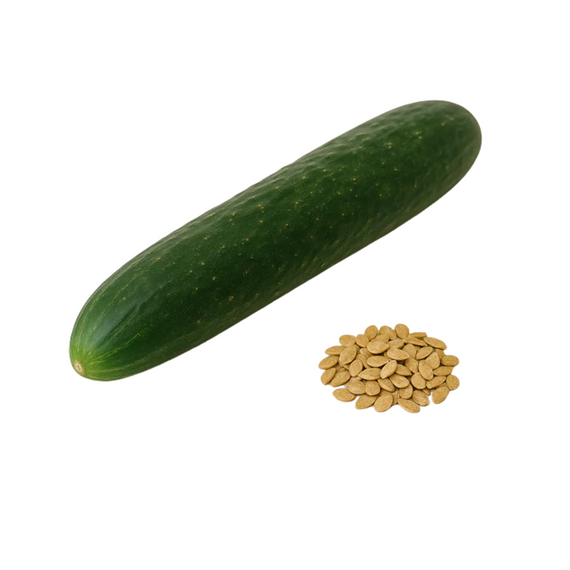
Long Chinese cucumber seeds
Regular price
$7.00
Regular price
Sale price
$7.00
Unit price
/
per
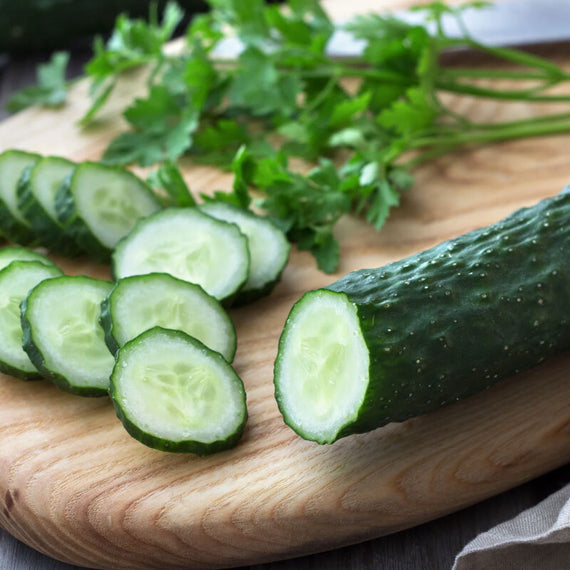
An old and vigorous variety, the Long de Chine cucumber crops abundantly, producing slender, ribbed fruits of about 50 cm, which can reach 1 m when trained up a trellis.
The packet contains 25 seeds, organic and open-pollinated. Sow under cover from March to May, at 18 to 20 °C, and harvest runs from July to October.
 Customer support 7 days a week by email
 Delivery within 2 to 15 business days
100 % secure payment
The summary
- What you receive: 25 organic, open-pollinated seeds of Long de Chine cucumber.
- Sowing: under cover from March to May, in pots, at 18 to 20 °C.
- The fruit: slender and ribbed, about 50 cm, up to 1 m when hanging.
- Ground space: one plant per metre, trained up a trellis in damp regions.
- Harvest: from July to October, every 2 or 3 days at the height of the season.
- What decides the crop: regular watering, which prevents bitter fruit.
Heirloom cucumber with slender, ribbed 50 cm fruits, 25 heirloom seeds
Chinese Long cucumber seeds, an heirloom and vigorous variety, produce slender, ribbed fruits of about 50 cm, which can reach 1 m when hung from a trellis. The packet contains 25 organic, open-pollinated seeds. Sow under cover from March to May, at 18 to 20 °C, for a harvest from July to October.
Long de Chine is an old, vigorous cucumber variety that produces an abundance of slender, ribbed fruits of about 50 cm. Hung from a trellis, they can reach 1 m. The flesh is firm, crunchy and mild, with few seeds, so you can slice them without deseeding.
🧗 Train it up or let it trail
How you train it depends on your climate. In a dry region, the stems can trail along the ground, where mulch keeps moisture at the base. In a wetter region, train them up a trellis or netting: the foliage dries faster after rain, and the fruits no longer rest on wet soil. A hanging fruit also forms straighter and longer, hence lengths close to 1 m on trained plants. To tie the stems back over the course of the season, a tape tying tool fixes each tie with a single squeeze of the hand.
An 80-litre tank beneath the grid
For a cucumber in an aquaponic system, choose the aquaponic grow bed in its 80 L size, the one for fruiting plants whose roots search for depth. Fill it with rinsed clay pebbles, then fix the trellis to a structure independent of the bed, which will carry the weight of the stems laden with fruit. Allow one plant per bed, which respects the 1 m spacing this variety requires.
☀️ From seedling to harvest
Cucumber loves warmth and rich soil. Sow in pots at 18 to 20 °C, from March to May under cover, then transplant the whole root ball after the last frosts. Direct sowing in place remains possible in May and June, once the soil has warmed up well and nights are above 15 °C. Mulch after planting, which retains water and protects the plant from the cold. Watering must stay regular throughout the growing period, because sudden swings make the fruit more bitter. You will find more seasonal pointers in the guide to succeeding with spring sowings.
Sow
Sow in small pots from March to May, at 18 to 20 °C, 6 weeks before planting out.
Planting
After the frosts, transplant the root ball into a hole enriched with compost, 1 m apart in every direction.
Harvest
From July to October, cut the fruits while they are still firm, every 2 or 3 days.
In a tub as in the vegetable garden, you pick every 2 or 3 days in peak season, with secateurs, leaving a short piece of stalk. A forgotten fruit grows larger, hardens and turns yellow, and the plant then slows its production for the rest of the season. On a water-based system, this regularity matters all the more because growth is fast in summer, when the water is warm, and a fruit quickly gains several centimetres between one visit and the next.
💧 On a water-based system
In aquaponics, the cucumber is managed like other fruiting plants: it needs a system that has already cycled, rich enough in nutrients to carry fruit, and a deep growing bed filled with clay pebbles, because deep water culture holds a plant of this vigour poorly. Vertical training is even more worthwhile here than in open ground, since a trellis fixed above the bed gives you back the surface the stems would have taken up by trailing. The guide to the nitrogen cycle helps you know when your tank is ready.
Technical specifications
The sachet
- Number of seeds
- 25One plant spreads 1 m in every direction: the packet covers several seasons.
- Seed origin
- Kokopelli associationOrganic seeds, royalty-free.
- Seed type
- Open-pollinated, non-hybridReproducible: seed from your own harvest will give the same variety.
- Seed storage
- About 10 yearsStore in a dry, cool, dark place.
The variety
- Botanical name
- Cucumis sativus
- Fruit
- Slender and ribbed, about 50 cmUp to 1 m when hanging from a trellis.
- Flesh
- Firm, crisp, few seeds
- Pipe
- Trained up supports or on the groundTrained up supports in damp regions, along the ground in dry regions.
Seedling and harvest
- Seedlings under cover
- March to MayIn small pots, 6 weeks before planting out.
- Seedling temperature
- 18 to 20 °C
- Direct seedling
- May to JuneWarmed soil, nights above 15 °C.
- Germination time
- 8 to 10 days
- Spacing
- 1 m in every direction
- Harvest period
- July to October
To budget for separately
- Trellis or netting
- A sturdy structure for training
- Growing medium
- Clay pebbles or coco fibre
8 further specifications are available in the detailed view.
In the box
- 1 paper packet of 25 Long de Chine cucumber seeds, harvested from organic farming
- 1 variety label: botanical name, sowing period, and year of seed harvest
Variety sheet from the seed supplier Kokopelli (contents, sowing, harvest, sizes), checked on 11/10/2026; the number of seeds may vary from one batch to another. Temperatures, germination times and storage periods are approximate figures for mainland France.
Manufacturer and product safety
- Manufacturer
- Association Kokopelli (SIREN 433481124, TVA FR80433481124)
- Postal address
- 7 route de Sabarat, Forêt de Castagnès, 09290 Le Mas-d'Azil, France
- Contact
- Formulaire de contact : https://kokopelli-semences.fr/fr/faq/ (aucune adresse e-mail publique) ; téléphone 05 61 67 69 87
- Website
- kokopelli-semences.fr
Information provided under Regulation (EU) 2023/988 on general product safety.
Estimate your
delivery time
Your estimate
Delivery
Estimated time
It covers preparing your order and then the transit time quoted by the carrier, counted in working days.
It is not a guaranteed delivery date: public holidays, peak periods, customs or a carrier delay can extend it. The exact amount, in your currency, is worked out in the cart once your address is entered.
A packet of seeds ships as a small parcel. It can be grouped at no extra cost with the rest of your order, and the exact amount is calculated at checkout.
Frequently asked questions
6 questions
6 key questions
Growing calendar
Guidelines for mainland France, to be shifted by about 2 weeks depending on your region.
| Stage | ||||||||||||
|---|---|---|---|---|---|---|---|---|---|---|---|---|
| Seedlings under cover3 months | Seedlings under cover: no | Seedlings under cover: no | Seedlings under cover in March | Seedlings under cover in April | Seedlings under cover in May | Seedlings under cover: no | Seedlings under cover: no | Seedlings under cover: no | Seedlings under cover: no | Seedlings under cover: no | Seedlings under cover: no | Seedlings under cover: no |
| Seedling or planting out2 months | Seedling or planting out: no | Seedling or planting out: no | Seedling or planting out: no | Seedling or planting out: no | Seedling or planting out in May | Seedling or planting out in June | Seedling or planting out: no | Seedling or planting out: no | Seedling or planting out: no | Seedling or planting out: no | Seedling or planting out: no | Seedling or planting out: no |
| Training2 months | Training: no | Training: no | Training: no | Training: no | Training: no | Training in June | Training in July | Training: no | Training: no | Training: no | Training: no | Training: no |
| Harvest4 months | Harvest: no | Harvest: no | Harvest: no | Harvest: no | Harvest: no | Harvest: no | Harvest in July | Harvest in August | Harvest in September | Harvest in October | Harvest: no | Harvest: no |
KeySeedlings under coverSeedling or planting outTrainingHarvest
This month
November
Growing guidance
- Seedling depth
- 2 cmSeed laid flat, then covered over
- Seedling temperature
- 18 to 20 °C
- Germination time
- 8 to 10 daysOn a surface that stays warm
- Direct seedling
- Nights above 15 °C
- Spacing
- 1 mIn all directions
- Fruit length
- Approximately 50 cmUp to 1 m hanging from a trellis
- Harvest period
- July to October
- Aspect
- Sunny
- pH in aquaponics
- 6.5 to 7.5The usual balance between fish, bacteria and plants
- Seed storage
- About 10 yearsDry and away from light
What you need to know
- Install the trellis at the same time as the plant. A structure added 3 weeks later means handling a stem that is already long, and the tendrils snap at the slightest strain.
- A hanging fruit grows straight and can reach 1 m, whereas a fruit resting on the ground curves and gets marked. Training therefore changes the shape of the harvest.
- Bitterness comes mostly from irregular watering. Water regularly rather than in fits and starts, and mulch around the base in open ground.
- Never let a fruit turn yellow on the plant. The plant then puts its resources into ripening its seeds and slows down its production for the rest of the season.
- Mulch after planting: mulch retains water and protects the plant from the cold early in the season.
- In aquaponics, growing vertically has an extra benefit: a grow bed is expensive per square metre, and a trellis gives back the surface the plant would have taken up by sprawling.
You may also like



Related articles

Equipment
Which grow medium to choose for aquaponics?
Clay pebbles, coco fibre, rockwool: what each grow medium actually holds in terms of root volume.
Read the article

Understanding
The nitrogen cycle in aquaponics
Why a hungry plant yields nothing on a new system, and how to tell when the cycle is properly established.
Read the article

Guide
Successful spring seedlings in aquaponics
When to start seedlings, at what temperature, and how to move from cell to grow bed without losing plants.
Read the article

Equipment
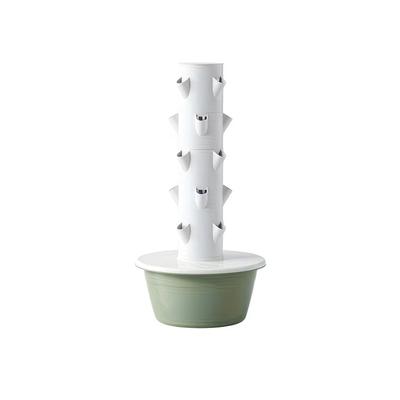
How a hydroponic growing tower works
What vertical growing lets you cultivate, how many plants per square metre, and where it reaches its limit.
Read the article

Maintenance
Maintaining your aquaponic system in summer
Heat, evaporation, dropping oxygen: the seasonal adjustments that save a crop in July.
Read the article

Cooking
Summer recipes from the kitchen garden
What to do with a glut harvest, without throwing anything away or freezing half of it.
Read the article
Let us talk about your project
A question about this product or your setup? Our team will answer and advise you.

Interest-free instalment payments
Offered depending on the cart amount, at checkout.

Delivery in 2 to 15 working days
Depending on the products and shipping sites. Estimate by destination in the estimator on this page.

After-sales service 7 days a week by email or chat
Our team answers all your questions.

Shop responsibly
Become part of the change.
