



Complete pond aerator, 540 or 1,000 L of air per hour
Regular price
$115.00
Regular price
Sale price
$115.00
Unit price
/
per
This twin-outlet pond aerator delivers 540 or 1,000 litres of air per hour, drawing 5 or 8.5 watts. It pushes air down to 2.2 or 2.8 metres of depth.
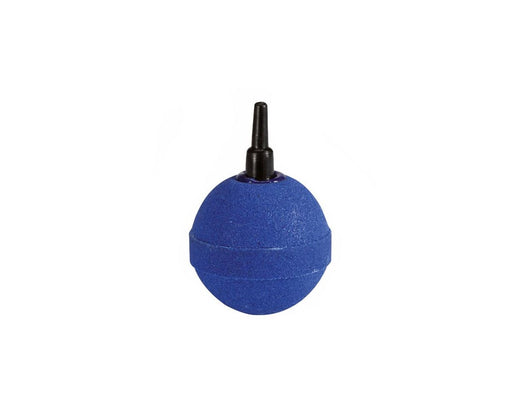
The box includes both diffusers, two 5 m lengths of pipe, and two non-return valves, and the unit carries a 3-year guarantee.

7/7 customer service by e-mail

Payment in instalments, free of charge
The summary
- What you receive: the pump, 2 diffusers, 2 x 5 m pipes, 2 fittings and 2 non-return valves.
- What determines the choice: the depth of your pond, 2.2 m on the 540 version and 2.8 m on the 1,000 version.
- How to choose: this one for an outdoor pond, an aquarium pump for an indoor tank.
- Where to position it: above the waterline, sheltered, with the non-return valve fitted on the pipe.
- Power consumption: 5 or 8.5 watts running continuously, all year round.
- Warranty: 3 years, manufacturer.
A pond aerator supplied complete, pushing air to a depth of 2.8 m
An air pump does not produce oxygen, it pushes air down to a given depth, where a diffuser breaks it into bubbles. Two figures therefore determine everything: the air flow rate and the depth reached. It is the second that rules out most units as soon as you are dealing with a garden pond rather than an aquarium.
📏 Two flow rates, two depths
Version 540
It delivers 540 litres of air per hour at 5 watts, and reaches a submersion depth of 2.2 m.
Version 1,000
It delivers 1,000 litres of air per hour at 8.5 watts, and reaches a submersion depth of 2.8 m.
⬆️ Mounting at height
When placed below the water surface, this type of unit siphons when switched off, because as soon as the motor stops, water runs back down the pipe, enters the pump and destroys it. The solution comes down to two steps. Place the unit above the waterline, on a coping stone or a stand, away from splashing. And fit the non-return valve onto each pipe, that small cylinder which only allows air through in one direction, and of which the box contains two. It's the component that decides whether your pump makes it through winter. Both steps go hand in hand, because a valve alone will eventually wear out on a poorly positioned pump, and mounting the unit up high without a valve lets water back-flow at the slightest siphon effect.
Three installation mistakes
Never place the unit at the edge of the pond, right at the waterline, as it will siphon at the first power cut. Do not let the diffusers rest in the silt, or the water will cloud every time it starts up. And do not install it directly on the ground in a damp corner, as the housing draws in ambient air and you would be feeding it rainwater.
What extends an aerator's life
Keep a spare diffuser to hand, as a clogged airstone raises the back pressure and wears out the pump diaphragm well before it stops producing bubbles. Also have a look at the diffusers and airstones to cover a larger surface area with the same two outlets. An airstone can be rinsed under clean water every two to three months, and should be replaced when rinsing no longer restores its flow rate, which generally happens after one to two seasons.
The unit delivers air through two 5 m pipes, each with its own diffuser and two-in-one fitting. You distribute the aeration rather than concentrating it at a single point, and the difference is noticeable: a single column of bubbles draws water up from the bottom over a small area, whereas two well-placed columns circulate the entire pond. Position the diffusers slightly above the bottom rather than directly on the silt, otherwise every start-up stirs up your sediment and clouds the water for the rest of the day. A flat brick, a tile, or a weighted basket placed under each stone is enough to hold them a few centimetres above the deposit, and that small detail does more for water clarity than many treatments.
💨 Position both diffusers
Two simple adjustments make a real difference once the unit is up and running. The first is the spacing of the diffusers: rather than placing them at each end, position them two-thirds of the length apart so that the two rising currents meet at the surface instead of passing each other by. The second is bubble size, which depends on the diffuser rather than the pump, a fine airstone agitates the surface far more than a coarse one, and it is at the surface that gas exchange actually occurs. You will notice the difference by ear too, as a coarse stream makes considerably more noise for a lesser effect. Finally, revisit the position of your diffusers after a few days, since watching where the water actually moves is the surest way to find the right spot.
🐟 Oxygen in summer
Warm water holds less dissolved oxygen than cold water, and it is precisely in summer that your fish consume the most and that the organic load is at its highest. Aeration then becomes a safety net, especially in the early hours of the morning, when plants have stopped producing and everything is still respiring. It is that hour that kills, not the middle of the afternoon. On an aquaponic circuit, oxygen serves the fish, the bacteria in the biofilter, and the roots simultaneously, so there is no reason to wait for an incident before adding it. Our article on summer maintenance covers what changes when the water warms up.
🧊 Winter and the ice hole
In winter, aeration serves a different purpose. A column of bubbles keeps one area of the surface free of ice, allowing decomposition gases to escape rather than building up beneath a sealed surface, and it is precisely that build-up that causes winter losses in a pond that has been completely iced over for several weeks. Raise the diffusers to mid-depth rather than leaving them on the bottom, because the aim is no longer to circulate the full volume but to maintain an open hole; full circulation would bring the cold surface water down towards the deeper zone where your fish are overwintering. That deeper zone is in fact the warmest part of the pond throughout winter, and it should be left undisturbed. Our guide on setting up a system at home covers the role of aeration within a complete circuit.
🔌 Power consumption and noise
These two points affect everyday comfort far more than the spec sheet suggests. At 5 or 8.5 watts, an air pump runs continuously at a negligible annual cost, so there is no reason to switch it off at night, which is precisely when it is needed most. Noise comes less from the motor than from vibrations transmitted to the surface it sits on, so a foam mat or a simple board on rubber feet solves the problem. Avoid hollow supports and metal sheets, which act as resonating chambers; a solid slab or a full masonry ledge is far preferable if you have the choice. Finally, think about shelter: the unit is not designed to be left in the rain, and a ventilated box, a coping niche, or a simple canopy is all it takes, provided air can still circulate freely around the air inlet.
Technical specifications
Version 540
- Air flow rate
- 540 L per hourSplit across the two outlets of the unit.
- Power output
- 5 WApproximately 44 kWh over a year of continuous operation.
- Immersion depth
- 2.2 mThis is the maximum depth at which air is still being pushed through.
- Pressure
- 220 mbarIt is the probe that tells you how deep the reading goes.
Version 1,000
- Air flow rate
- 1,000 L per hourSplit across the two outlets of the unit.
- Power output
- 8.5 WApproximately 74 kWh over a year of continuous operation.
- Immersion depth
- 2.8 mSixty centimetres longer than the 540 version.
- Pressure
- 280 mbarEnough to travel through a water column of nearly three metres.
Common to both versions
- Air outlets
- 2Two diffusion points to distribute around the pond.
- Cable length
- 3 mTo be extended with an outdoor extension lead if needed.
- Position of the unit
- Above the water levelThe non-return valve complements this precaution; it does not replace it.
- Guarantee
- 3 yearsManufacturer's warranty, excluding misuse.
To budget for separately
- Outdoor socket
- Protected and shelteredThe cable is 3 m long, which rarely reaches the house.
- Replacement diffusers
- Porous stones and discsA clogged airstone puts strain on the pump's diaphragm.
6 further specifications are available in the detailed view.
In the box
- 1 air pump with 2 outlets
- 2 diffusers
- 2 aeration pipes of 5 m
- 2 two-in-one fittings
- 2 non-return valves
- 1 power cable of 3 m
Manufacturer figures recorded on 20/09/2026 from the technical datasheet for both versions. Annual consumption figures are calculated for continuous operation.
Which air pump for your water?
Three units whose real difference is not the air flow rate, but the depth they can reach.
Depth before flow rate
A unit that does not push air all the way to the bottom is useless, whatever its stated flow rate.
| Air flow of the entry-level model (L/h) | Air flow rate of the most powerful model (L/h) | Air depth reached (cm) | Adjustable airflow | Two air outlets | Non-return valve included | Diffusers and pipes included | Power of the entry-level model (W) | Price | |
|---|---|---|---|---|---|---|---|---|---|
| Aquarium air pump, one or two outletsYour choice | 100 L/h | 200 L/h | 70 cm | No | On the 200 PLUS version | No | No | 2,2 W | $25.00 |
| Adjustable air pump for aquariums, 150 L/h up to 2 mYour choice | 150 L/h | 150 L/h | 200 cm | Yes | No | No | No | 2 W | $64.00 |
| Recommended Complete pond aerator, 540 or 1,000 L of air per hourYour choice | 540 L/h | 1000 L/h | 280 cm | No | Yes | Yes | Yes | 5 W | $115.00 |
Aquarium air pump, one or two outlets
Air delivered
Air flow of the entry-level model (L/h)100 L/h
Air flow rate of the most powerful model (L/h)200 L/h
Air depth reached (cm)70 cm
Use
Adjustable airflowNo
Two air outletsOn the 200 PLUS version
Non-return valve includedNo
Diffusers and pipes includedNo
Consumption
Power of the entry-level model (W)2,2 W
Adjustable air pump for aquariums, 150 L/h up to 2 m
Air delivered
Air flow of the entry-level model (L/h)150 L/h
Air flow rate of the most powerful model (L/h)150 L/h
Air depth reached (cm)200 cm
Use
Adjustable airflowYes
Two air outletsNo
Non-return valve includedNo
Diffusers and pipes includedNo
Consumption
Power of the entry-level model (W)2 W
Complete pond aerator, 540 or 1,000 L of air per hourRecommended
Air delivered
Air flow of the entry-level model (L/h)540 L/h
Air flow rate of the most powerful model (L/h)1000 L/h
Air depth reached (cm)280 cm
Use
Adjustable airflowNo
Two air outletsYes
Non-return valve includedYes
Diffusers and pipes includedYes
Consumption
Power of the entry-level model (W)5 W
Manufacturer values taken on 20/09/2026 from the Aquael and EHEIM technical tables. The air depth reached is the maximum head height published.
Help choosing
Which air pump suits your setup
Estimate your
delivery time
Your estimate
Delivery
Estimated time
It covers preparing your order and then the transit time quoted by the carrier, counted in working days.
It is not a guaranteed delivery date: public holidays, peak periods, customs or a carrier delay can extend it. The exact amount, in your currency, is worked out in the cart once your address is entered.
Bulky parcel, handed to the carrier and delivered to your door. The exact amount depends on weight and volume, and is displayed before payment.
Frequently asked questions
10 questions
6 key questions, 10 in the detailed view
Vous aimerez aussi


Related articles

Maintenance
Maintaining your aquaponic system in summer
Why warm water holds less oxygen, and what that means overnight.
Read the article

Species
Koi carp in aquaponics
A pond species whose stocking density requires a separate aeration system.
Read the article

Species
Sturgeon in a garden pond
A fish with particularly high dissolved oxygen requirements.
Read the article

Troubleshooting
Green pond water: five solutions
What circulation does and doesn't do about green water.
Read the article

Season
Pond evaporation in summer
What an agitated surface loses more than a calm one in summer.
Read the article

Getting started
Common mistakes in aquaponics
The air pump placed at water level, and what happens to it when it stops.
Read the article
Let us talk about your project
Une question sur ce produit ou votre installation ? Notre équipe vous répond et vous conseille.

Paiement plusieurs fois sans frais
Proposé selon le montant du panier, au moment du paiement.

Livraison sous 5 à 15 jours ouvrés
Selon les produits et sites d'expédition. Estimation par destination dans l'estimateur de cette page.

SAV 7/7 par mail ou chat
Notre équipe répond à toutes vos questions.

Faire un achat engagé
Devenez acteurs du changement.
