



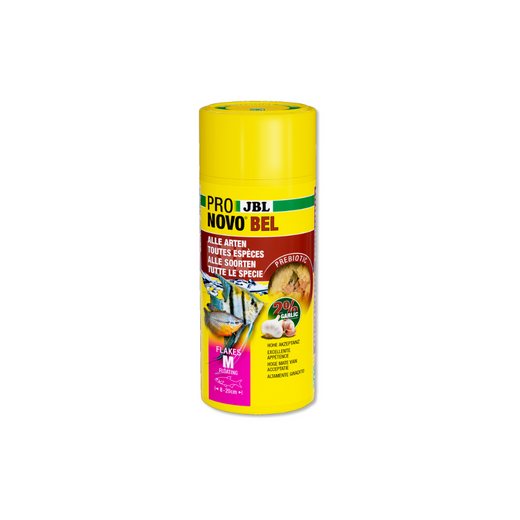


Tropical Welsi Gran sinking pellets for bottom-dwelling fish
Regular price
3,90 €
Regular price
Sale price
3,90 €
Unit price
/
per
| Contenance | Price | Price per L | vs 100 ml |
|---|---|---|---|
| 100 ml | 3,90 € | 39,00 € | — |
| 250 ml | 7,90 € | 31,60 € | −19 % |
| 1 L | 16,90 € | 16,90 € | −57 % |
1,30 € × 3 with no fees
Klarna.
Welsi Gran granules from Tropical sink to the bottom of the tank and soften quickly. They feed bottom-dwelling fish, such as corydoras, ancistrus, loaches and catfish, which cannot reach floating food, and they are sold in 100 ml, 250 ml or 1 L tubs.
 Customer support 7 days a week by email
 Delivery within 2 to 15 business days
100 % secure payment
The summary
- What size to choose: 100 ml, 250 ml or 1 L.
- What it contains: 45% protein, 8% fat.
- How it behaves: it sinks and softens quickly on the bottom.
- Which fish it suits: corydoras, ancistrus, loaches and catfish.
Sinking granules that soften, for corydoras, loaches and catfish
In a community aquarium, the fish that live on the bottom often get only what is left after the others have eaten. Corydoras, ancistrus, loaches and other catfish forage along the substrate, whereas floating food is eaten at the surface before it reaches them, so in the long run they grow poorly or lose weight. Tropical Welsi Gran granules are made for them: they sink straight to the bottom and stay there, within easy reach.
🫧 A pellet that softens
On contact with water, the pellets soften within a few minutes, which suits the ventral mouths of catfish, built for scraping and sucking rather than biting. The analysis shows 45% protein, 8% fat, 3.2% fibre and 10% moisture, with lecithin, vitamins and trace elements. Welsi Gran serves as a staple food for catfish and other bottom-dwelling fish, whether omnivorous or carnivorous, and as a supplement for species that feed close to the bottom. You can alternate it with other foods through the week.
A nitrite test when the substrate holds on to leftovers
Pellets left between the grains of gravel break down, and the nitrogen they release passes through nitrite before becoming nitrate. The NO2 nitrite drop test measures it from 0.025 to 1 mg/L in 5 minutes, the target value being zero. If a reading departs from this, you know the evening ration exceeds what the substrate and the filter can absorb.
🌙 Feeding at the right time
Many bottom-dwelling fish become more active at nightfall. Give the Welsi Gran shortly before the lights go out, when the other fish have already eaten: the catfish then come out of their hiding places and find the food without competition. In a 100 to 150-litre aquarium, a small pinch placed in 2 spots on the substrate each evening is enough for a group of corydoras. Young bottom-dwelling fish, which are growing fast, benefit from 2 small rations a day rather than a single, larger one.
Bottom-dwelling fish are not a uniform group. Corydoras live in shoals and sift through the sand for small invertebrates, whereas ancistrus and the other loricariids rasp at surfaces and eat plenty of plant matter: for them, Welsi Gran should be supplemented with blanched vegetables, such as courgette, and a piece of wood to rasp at. Loaches, such as botias, are omnivores that root about everywhere. For dwarf species, which have small mouths, lightly crush the pellets before adding them.
An hour after feeding, no pellets should be left on the floor of the tank; if any remain, reduce the next portion. On fine sand the grains stay visible and easy to find, whereas on coarse gravel they slip between the stones, out of reach. In that case, place them on a small saucer or a flat stone, which acts as a feeding dish and lets you check what is left. The 100 ml tub suits a small group of corydoras, the 250 ml tub a community tank, and the 1 L tub large aquariums or several tanks.
🌱 In aquaponics
Corydoras are among the small, peaceful fish that suit indoor aquaponic systems, where they root around the bottom of the tank beneath the surface fish. They pick up some of the leftover food there before it breaks down, but a pellet made for them stops them depending on those leftovers and lets you measure out their ration. The guide to fish to raise in aquaponics presents the species suited to small volumes, and the article on cloudy water in aquaponics explains how leftovers on the tank floor affect water quality.
Technical specifications
Analysis
- Proteins
- 45%
- Fat content
- 8 %
- Cellulose
- 3.2 %
- Humidity
- 10%
Use
- Shape
- Pellets that sink and soften
- Fish
- Catfish and bottom-dwelling fish
- Moment
- Shortly before lights out
- Control
- Nothing left on the bottom after an hour
In the box
- 1 tub of Tropical Welsi Gran granules, in the size you choose
Analysis and feeding advice from the manufacturer Tropical, retrieved on 12/10/2026.
What capacity for your bottom-dwelling fish?
The same pellet in three tubs. The number of fish decides.
Which tub?
Give one answer, and the table highlights the model that suits you.
| For | Weight (g) | Price | |
|---|---|---|---|
| 100 mlYour choice | A small group | 65 g | 3,90 € |
| Recommended 250 mlYour choice | A community tank | 162 g | 7,90 € |
| 1 LYour choice | Several tanks | 650 g | 16,90 € |
100 ml
Use
ForA small group
Weight (g)65 g
250 mlRecommended
Use
ForA community tank
Weight (g)162 g
1 L
Use
ForSeveral tanks
Weight (g)650 g
Manufacturer's approximate weights for each capacity.
Help choosing
A question about your tank
Estimate your
delivery time
Your estimate
Delivery
Estimated time
It covers preparing your order and then the transit time quoted by the carrier, counted in working days.
It is not a guaranteed delivery date: public holidays, peak periods, customs or a carrier delay can extend it. The exact amount, in your currency, is worked out in the cart once your address is entered.
Delivered to your home by Colissimo or Chronopost, as you prefer at checkout. The exact cost is shown in the basket, according to the total weight of your order.
Frequently asked questions
6 questions
6 key questions
You may also like


Related articles

Guide
Which fish to choose for aquaponics?
Corydoras and peaceful species suited to small volumes.
Read the article

Diagnosis
Understanding and correcting cloudy water in aquaponics
What leftovers on the tank bottom do to water quality.
Read the article

Understanding
The nitrogen cycle in aquaponics
The path of nitrogen, from forgotten pellet to nitrate.
Read the article

Guide
Building your own aquaponic system: the complete guide
The fish in a small home-built system.
Read the article

Understanding
Let us talk about your project
A question about this product or your setup? Our team will answer and advise you.

Interest-free instalment payments
Offered depending on the cart amount, at checkout.

Delivery in 2 to 15 working days
Depending on the products and shipping sites. Estimate by destination in the estimator on this page.

After-sales service 7 days a week by email or chat
Our team answers all your questions.

Shop responsibly
Become part of the change.
