



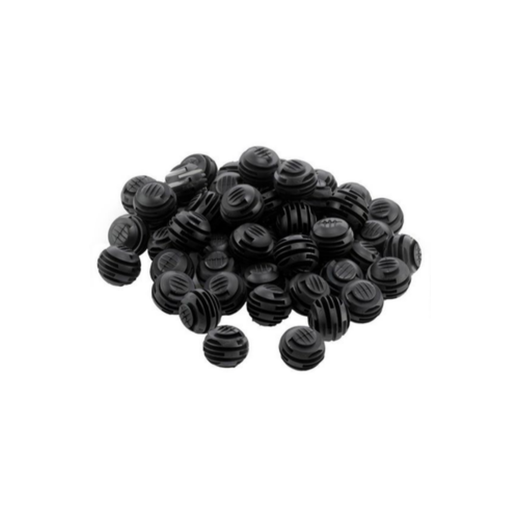


Aquatic Science pH- pH reducer for ponds, granules
Regular price
13,90 €
Regular price
Sale price
13,90 €
Unit price
/
per
| Conditionnement | Price | Price per kg | vs 400 g |
|---|---|---|---|
| 400 g | 13,90 € | 34,75 € | — |
| 1 kg | 25,90 € | 25,90 € | −25 % |
4,63 € × 3 with no fees
Klarna.
This pH reducer brings the pH of a pond down to the value you are aiming for, even by just a few tenths: water at 8 brought down to 7.5, or mains water at 7.8 lowered towards 7. One measure of 25 g per 1,000 L lowers the pH by 1 to 2 units depending on the KH, and a fraction of a measure is enough for a small difference.
 Customer support 7 days a week by email
 Delivery within 2 to 15 business days
100 % secure payment
The summary
- How to dose: one 25 g scoop per m³, in small steps.
- When to use it: as soon as the pH rises above the target value, even by a few tenths, with a KH above 6.
- How many doses: 16 scoops in the 400 g tub, 40 in the 1 kg one.
- Which tub: 400 g for a small pond, 1 kg for a large pond or repeated corrections.
Granules to bring a pond's pH down to the target value, in small doses
Hard mains water, a new concrete pond or heavy algae growth can raise the pH beyond what you want. The higher the pH, the greater the share of the ammonium released by the fish that turns into ammonia, its toxic form, and the more limescale builds up on the pump and nozzles. This reducer, made from weak acids and vitamin C, brings the pH down to your target value, whether you are correcting water at 8.5 or fine-tuning water at 7.8 to bring it towards 7.2. It works without making the pH plunge, provided you adjust the dose to the amount of correction needed and know your KH.
Two tests before each dose
The pH and KH drop test for ponds gives you the two values you need in 5 minutes. With the KH in front of you, you know whether a full dose or a half dose is right.
⚖️ KH determines the dose
One measure of 25 g per 1,000 litres lowers the pH by 1 to 2 units, and it is the KH that makes the difference. Water rich in carbonates resists, and the drop stays modest. Water low in KH reacts strongly, and the drop can overshoot your target. The dose is therefore set according to the gap to be corrected: a full measure to gain about one unit, a fraction of a measure for a few tenths, for example a quarter of a measure to go from 7.8 to 7.5. Measure the KH before dosing, start with a fraction of a measure if the KH is low, and keep it above 6 dKH so that the pH holds afterwards. Mix the dose in some pond water, spread it over the whole surface and wait 24 hours before repeating.
KH above 10 dKH
The water resists: the drop stays close to one unit per dose.
KH of 6 to 10 °dKH
The most common case: one measure for a difference of about one unit, less for a few tenths, then a test the next day.
KH of 4 to 6 °dKH
The water reacts quickly: start with a half dose.
KH below 4 dKH
Do not lower the pH: raise the KH first, otherwise the pH will become unstable.
🔍 Finding the cause
A pH that is too high always has a cause, and the reducer only corrects the effect. A masonry pond or new concrete coping releases lime for several months. Pebbles or limestone rocks placed in the water continuously release carbonates. Very hard mains water raises the pH with every top-up. Finally, in summer, heavy algae growth consumes the carbon dioxide dissolved in the water during the day, and the pH rises until the end of the day before falling at night. So measure in the morning to judge, and treat the source where possible: remove limestone rocks, top up with rainwater or shade part of the pond.
Correcting over several days
A sudden drop in pH stresses fish more than a slightly high pH. If the gap to be corrected exceeds one unit, spread the correction over several days using half-doses, and always leave 24 hours between two additions.
🌱 In aquaponics
In an established aquaponic system, the pH tends to fall on its own, because nitrification produces acidity. The pH reducer is therefore mainly useful at start-up, when mains water is above 7.5, the top of the 6.4 to 7.5 range aimed for in aquaponics: water at 7.8 can be brought down towards 7 with a few small doses spread over several days. Plants absorb iron poorly above a pH of 7.5, so bringing the water towards 7 at start-up benefits both the filter bacteria and the first crops. Once the biological filter is up and running, most systems need the opposite, and it is the KH buffer that takes over. Measure the pH every week during the first month: you will see the trend reverse as the filter becomes colonised. The guide to regulating pH in an aquaponics system explains this change and how to keep the pH stable.
Technical specifications
The essentials
- Dose
- 25 g per 1,000 L
- Effect of one dose
- -1 to -2 pH unitsThe drop is greater when the KH is low. For a few tenths, a fraction of a measure is enough.
- Composition
- Weak acids, vitamin C
- Interval
- At least 24 h between two doses
The pots
- 400 g tub
- 16 doses, 4 applications for 4,000 L
- 1 kg tub
- 40 doses, 4 applications for 10,000 L
Markers
- Recommended range
- From 7 to 8.3 in a pond, KH above 6In aquaponics, from 6.4 to 7.5.
- Storage
- Kept dry, 12 months
To budget for separately
- Measures pH and KH
- pH and KH test for ponds
- If the KH is low
- KH buffer for ponds
2 further specifications are available in the detailed view.
In the box
- 1 tub of 400 g or 1 kg, with its 25 g scoop, depending on the size chosen
Dosage, effect per dose and storage recorded on 08/10/2026 from the manufacturer's data sheet and two retailer descriptions. Recommended pH range recorded on 12/10/2026 from the manufacturer's data sheet. Number of doses calculated from the 25 g measure.
Which pot for your pond?
The same pellets in two sizes. What sets them apart is the volume of water each one can treat in four applications.
400 g or 1 kg?
Answer one question and the table highlights the pot that suits you.
| Volume treated in 4 doses (L) | 25 g doses (doses) | Typical use | Price | |
|---|---|---|---|---|
| 400 g tubYour choice | 4000 L | 16 doses | Small pond, one-off correction | 13,90 € |
| Recommended 1 kg tubYour choice | 10000 L | 40 doses | Large pond or repeated corrections | 25,90 € |
400 g tub
What the pot treats
Volume treated in 4 doses (L)4000 L
25 g doses (doses)16 doses
Typical useSmall pond, one-off correction
1 kg tubRecommended
What the pot treats
Volume treated in 4 doses (L)10000 L
25 g doses (doses)40 doses
Typical useLarge pond or repeated corrections
Dose of 25 g per 1,000 L recorded on 08/10/2026 from the manufacturer's data sheet. Number of doses and volumes calculated from this dose.
Help choosing
A question about your pond
Estimate your
delivery time
Your estimate
Delivery
Estimated time
It covers preparing your order and then the transit time quoted by the carrier, counted in working days.
It is not a guaranteed delivery date: public holidays, peak periods, customs or a carrier delay can extend it. The exact amount, in your currency, is worked out in the cart once your address is entered.
Delivered to your home by Colissimo or Chronopost, as you choose during checkout. The exact amount is shown in your basket, according to the total weight of your order.
Frequently asked questions
6 questions
6 key questions
You may also like




Related articles

Understanding

Guide

Understanding

Pond

Fish
Let us talk about your project
A question about this product or your setup? Our team will answer and advise you.

Interest-free instalment payments
Offered depending on the cart amount, at checkout.

Delivery in 2 to 15 working days
Depending on the products and shipping sites. Estimate by destination in the estimator on this page.

After-sales service 7 days a week by email or chat
Our team answers all your questions.

Shop responsibly
Become part of the change.
