And what about sturgeon in aquaponics – is it feasible?
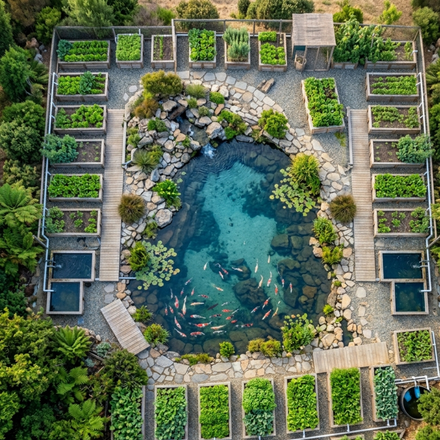
The question comes up regularly, since a garden pond can serve as a reservoir for growing beds installed alongside it. The answer is yes, under fairly specific conditions. Sturgeon eat a great deal and produce a very consistent amount of nitrogen, which nitrifying bacteria convert into nitrates that plants can use, and their comfortable temperature range, around 18 to 24 degrees, overlaps well with that of a domestic aquaponic system.
Two constraints determine success. The first is oxygen, which is already shared between the fish, the filter bacteria, and the plant roots – and sturgeon are among the most oxygen-hungry species in the pond. Oversized aeration running throughout the night is not optional. The second relates to solids, as a significant proportion of the feed distributed passes through as particles that clog the grow medium if no settling stage is placed between the pond and the growing beds.
On top of this comes the question of volume, which remains the real barrier to entry. A sturgeon requires several thousand litres on its own, which rules out small balcony or terrace systems and points firmly towards a proper garden pond coupled with separate growing beds. In return, this large volume stabilises temperature and water parameters, giving considerably more margin for error than a small system.
On the growing side, the range of crops is wider than with a strictly cold-water fish. Lettuces, watercress, spinach, and herbs produce excellent results in spring and autumn, and fruiting vegetables such as tomatoes or peppers remain viable in summer as long as the water stays below 26 degrees. To compare with a genuinely cold-water approach, our article on salmonid aquaponics covers the case of trout, which are considerably more demanding on this point than sturgeon.