



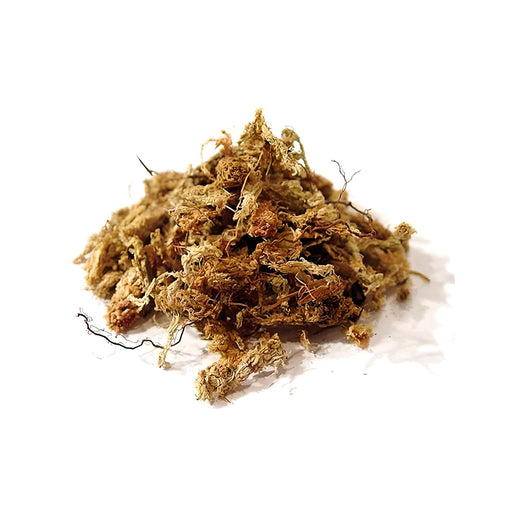


Horticultural pumice in 3 to 6 mm grains
Regular price
2,100.00 RSD
Regular price
Sale price
2,100.00 RSD
Unit price
/
per
| Format | Price | Price per L | vs 20 L |
|---|---|---|---|
| 20 L | 2,100.00 RSD | 105.00 RSD | — |
| 33 L | 3,000.00 RSD | 90.91 RSD | −13 % |
700.00 RSD × 3 with no fees
Klarna.
Pumice is a lightweight, chemically stable, honeycombed volcanic rock, whose 3 to 6 mm grains drain, aerate and retain water all at once. It serves as a grow medium for seedlings, cuttings and hydroponic or aquaponic grow baskets, and it lightens your potting compost mixes. The 33 L bag weighs about 25 kg.
 Customer support 7 days a week by email
 Delivery within 2 to 15 business days
100 % secure payment
The summary
- Grain size: pumice grains of 3 to 6 mm, in 20 L or 33 L bags.
- What it provides: a porosity of 80 to 85% of the volume, shared between air and retained water.
- The pH: from 7 to 8, with no active lime, so it does not raise the pH of your water.
- Aquaponic system: it fills the grow baskets, and can be mixed with 8 to 20 mm aggregate in a grow bed.
- Which size: 20 L for seedlings and a few pots, 33 L for tubs and mixes.
- Before use: rinsing with clean water removes dust and stops the water clouding.
Volcanic grains of 3 to 6 mm for seedlings, cuttings and soilless growing
Horticultural pumice in 3 to 6 mm grains is a lightweight volcanic rock, 80 to 85% porous, with a pH of 7 to 8. Once rinsed, it fills seedling trays, cutting trays and grow baskets, or lightens a potting compost. Sold in 20 or 33 L bags, it complements 8 to 20 mm aggregates in an aquaponic bed.
Pumice is born of explosive volcanic eruptions, when the gases dissolved in lava expand suddenly. The rock, cooled too fast to crystallise, has kept these bubbles in the form of a glassy mineral foam, threaded with fine channels that connect with one another and with the outside. Crushed and graded into grains of 3 to 6 mm, it becomes a light, stable grow medium that does not break down and that you can reuse from one crop to the next.
🌋 A rock full of air
The total porosity of horticultural pumice reaches 80 to 85% of its volume. At rest, 45 to 55% of the volume remains occupied by air, while 30 to 35% retains water, so your roots find both the oxygen and the moisture they need. A dry grain absorbs roughly its own weight in water, then releases it slowly, which spaces out the watering of a pot without ever waterlogging it. Its cation exchange capacity, of around 30 meq per 100 g, also allows it to retain some of the positively charged nutrients, such as potassium or calcium.
The pH of pumice is between 7 and 8, and the rock contains no active limestone. It therefore does not release carbonates into the water, unlike limestone gravel, which makes it suitable for a nutrient solution as well as for the water of a fish system. The 33 L bag comes from an Italian horticultural pumice quarry. The guide to choosing a grow medium for aquaponics places pumice among the other aggregates.
🐟 Pumice in aquaponics
In aquaponics, the 3 to 6 mm grains are used first of all to fill the grow baskets of gutter and deep water culture systems, where they hold the crown of the plants above the water while letting the roots pass through. They are also suitable for seedlings and cuttings that you then transplant into the system. For a flooded grow bed, the FAO aquaponics manual recommends aggregate of 8 to 20 mm. This fine grade is therefore mixed there with a coarser aggregate, because a thick layer of small grains packs down and holds more water between drain-downs. Its pores also give nitrifying bacteria a surface area of 200 to 300 m² per cubic metre, on which they convert the fish's ammonium into nitrate for your plants.
Grow baskets filled with pumice
In a gully or deep-water system, each plant sits in a slotted basket that needs weighting and stabilising. The 3.5 to 14 cm hydroponic grow pots, filled with 3 to 6 mm pumice, hold the root plug in place without retaining too much water around the crown. You can transplant your plants in just a few movements, and the pumice can be recovered, rinsed and reused for the next crop.
Rinse the pumice before filling with water
The bags contain rock dust left over from crushing. Rinse the grains in a bucket or a sieve until the water runs clear, then leave them to soak for a few hours before putting them in place. Otherwise the dust would cloud the water in your system and end up in the pump.
These pores make pumice a biofilter, whose volume is sized according to the fish feed ration. Allow roughly 1 L of volcanic gravel per gram of feed given each day, compared with 0.5 L for plastic media designed for filtration. A 33 L bag therefore provides the surface area needed for around 33 g of feed per day, which is the ration for about 0.7 m² of lettuces, since a bed of leafy vegetables receives 40 to 50 g of feed per square metre per day. In a NFT or deep water system, where the baskets hold only a few handfuls of pebbles, this role falls to a separate biofilter, which the pumice can also fill.
The pH governs the work of these bacteria. Nitrification works best above pH 7.5 and stops below 6, whereas plants prefer more acidic water, so aquaponic systems are run at around 6.8 to 7.0, with an alkalinity of at least 100 mg/L of CaCO3. As nitrification gradually acidifies the water, the pH tends to fall over the weeks. Pumice, which does not release carbonates, keeps this drift easy to read, and you correct it by alternating small doses of hydrated lime and potassium hydroxide, which also supply calcium and potassium to the plants. The article on regulating pH in aquaponics covers these corrections in detail.
🪴 Seedlings, cuttings and mixes
On its own, pumice works as a grow medium for cuttings and seedlings: it stays airy, does not compact and does not encourage collar rot. Mixed with potting compost or coco fibre, it lightens the grow medium, improves pot drainage and limits settling over repeated watering. One part pumice to two or three parts compost already gives a noticeably freer-draining mix for potted plants, herbs and succulents; you can then adjust the proportion to suit the plant and how often you water. For a compost that also needs to hold a reserve of water and cations, zeolite can be mixed in the same way, at 10% of the volume.
♻️ Reusing pumice
Being mineral, pumice does not degrade over time and does not lose its structure. After a crop, remove the roots, rinse the grains thoroughly, then leave them to dry before storing them. The 33 L bag, which weighs around 25 kg straight from the quarry, becomes noticeably lighter once the grains are dry, since the bulk density of dry pumice falls to 430 to 530 kg per cubic metre. In hydroponics, where pumice supplies no nutrients, a longer rinse between two crops flushes out the salts of the previous solution left in the pores, before you start afresh with a new solution prepared with a hydroponic fertiliser.
Technical specifications
Pumice stone
- Nature
- Vesicular volcanic rockNaturally expanded during the eruption
- Particle size
- 3 to 6 mm
- pH
- 7 to 8Without active limestone, it does not release carbonates
- Total porosity
- 80 to 85% of the volumeOf which 45 to 55% is air at rest
- Water retention
- 30 to 35% of the volumeAbout 100 g of water absorbed per 100 g of dry pumice
- Exchange capacity
- Approximately 30 meq/100 gIt retains part of the potassium and calcium
- Surface area for bacteria
- 200 to 300 m²/m³Support for nitrification, in a bed or a biofilter
- Sizing an aquaponic bed
- Mix with 8 to 20 mmOn its own, this fine grade compacts in a thick layer
To allow for in addition
- Net pots
- Slotted pots from 3.5 to 14 cmFor gully and deep water culture systems
- Fertilisation
- Hydroponic fertiliserPumice provides no nutrients in hydroponics
2 further specifications are available in the detailed view.
In the box
- 1 bag of 3 to 6 mm pumice grains, 20 or 33 L depending on the size you choose
Nature, pH, porosity, water retention, exchange capacity and densities from the EuroPomice technical datasheet for horticultural pumice (March 2024). Colonisable surface area and recommended grade for a media bed: FAO small-scale aquaponics manual.
Manufacturer and product safety
- Manufacturer
- Europomice S.r.l.
- Postal address
- Via Napo Torriani, 1
20124 Milano
Italie - Contact
- info@europomice.it
- Website
- www.europomice.it
Information provided under Regulation (EU) 2023/988 on general product safety.
Which bag of pumice?
The same 3 to 6 mm grain size, in a 20 L or 33 L bag.
20 or 33 L?
Three quick questions, and the table highlights itself.
| Volume (L) | Approximate weight (kg) | Recommended use | Price | |
|---|---|---|---|---|
| 20 LYour choice | 20 L | 14 kg | Seedlings, cuttings, net pots | 2,100.00 RSD |
| Recommended 33 LYour choice | 33 L | 25 kg | Trays and mixes | 3,000.00 RSD |
20 L
The bag
Volume (L)20 L
Approximate weight (kg)14 kg
Recommended useSeedlings, cuttings, net pots
33 LRecommended
The bag
Volume (L)33 L
Approximate weight (kg)25 kg
Recommended useTrays and mixes
Volumes read from the bags, weights estimated from the density published by EuroPomice.
Buying guide
Three questions to help you choose your bag
Estimate your
delivery time
Your estimate
Delivery
Estimated time
It covers preparing your order and then the transit time quoted by the carrier, counted in working days.
It is not a guaranteed delivery date: public holidays, peak periods, customs or a carrier delay can extend it. The exact amount, in your currency, is worked out in the cart once your address is entered.
The exact shipping cost is calculated at checkout, based on the total weight of your order and the destination. Lead times start from dispatch and remain estimates. For a destination not listed here, write to us at contact@univers-aquaponie.com.
Frequently asked questions
8 questions
6 key questions, 8 in the detailed view
You may also like


Related articles

Guide
Which grow medium should you choose in aquaponics?
This article places pumice among the aggregates of a grow bed.
Read the article

Hydroponics
The Kratky method: passive hydroponics without a pump
Baskets filled with pumice suit this crop without a pump.
Read the article

Hydroponics
Getting started with indoor hydroponics
This article explains how to start soilless seedlings indoors.
Read the article

Guide
The nitrogen cycle in aquaponics
The pores of the pumice house the bacteria of this cycle.
Read the article

Crops
Which plants can you grow in aquaponics?
The choice of plants guides the choice of grow medium and size.
Read the article

Guide
Aquaponics and hydroponics: what is the difference?
Pumice is used in both techniques, with different fertilisation.
Read the article
Let us talk about your project
A question about this product or your setup? Our team will answer and advise you.

Interest-free instalment payments
Offered depending on the cart amount, at checkout.

Delivery in 2 to 15 working days
Depending on the products and shipping sites. Estimate by destination in the estimator on this page.

After-sales service 7 days a week by email or chat
Our team answers all your questions.

Shop responsibly
Become part of the change.
