What is Aquaponics ?

Written by Ulysse Hay · May 22, 2025
Système aquaponique associant élevage de poissons et culture de légumes

Aquaponics is far more than a growing method: it is a living ecosystem in which fish and plants grow together in perfect harmony. Inspired by the workings of nature, this sustainable approach is attracting a growing number of people who want to produce their own food while respecting the environment. But what exactly is aquaponics?

Aquaponics: sustainable food production by combining fish and plants

What if you could grow vegetables while raising fish in a perfect balance, where each element feeds the other with no water waste and no pesticides? What might sound like an environmentalist's dream is in fact very much real: this is aquaponics, an innovative growing method that brings together respect for nature, food self-sufficiency, and ease of use. At a time when the search for sustainable solutions is becoming a necessity, this system appeals equally to hobby gardeners and professional growers alike.

Let us be clear from the outset: aquaponics is not a technique reserved for engineers. The principle can be summed up in a single sentence — fish feed the plants, and the plants clean the fish's water. What does require a little attention is the start-up phase and monitoring during the first few weeks. Once the balance is established, a correctly sized system can generally be managed in just a few minutes a day.

But how does aquaponics actually work? Where does it come from? And, crucially, is it possible to set one up at home, even without a garden? In this article, we will dive into the fascinating world of aquaponics, explore its origins, understand its applications, and discover how anyone can, at their own pace, adopt this approach to growing food differently.

Trout tank and filtration system in an aquaponic installation opening onto a lettuce greenhouse

How does aquaponics work?

In a pond, fish naturally produce waste rich in ammonia. This waste is then broken down by bacteria into nitrates, a form of nutrient that plants can readily absorb.

The roots of the plants, submerged in a grow medium or simply in the water, take up these nutrients to grow. By filtering the water, they purify it, allowing it to be returned to the fish tank.

This virtuous cycle makes it possible to grow vegetables, herbs, or even fruit, while raising fish at the same time. The whole system runs without soil, without the addition of chemical fertilisers, and with very low water consumption.

Three players work together, and none can be removed without the whole system falling out of balance. The fish provide the raw material, the bacteria transform it, and the plants consume it. Bacteria are the most commonly overlooked element, yet they are the true engine of the system. They naturally colonise the surfaces of the filter, the grow medium, and the walls of the tank, and their population generally takes several weeks to establish itself.

In practice, the water circulates in a loop. A pump sends it from the pond to the growing area, where it passes through the grow medium or the roots before returning to the pond, most often by gravity. Depending on the setup, this circulation is either continuous or governed by flood-and-drain cycles, which allows the roots to breathe. Additional aeration is almost always beneficial, as dissolved oxygen benefits both the fish and the bacteria.

The good news is that there are relatively few parameters to monitor: temperature, pH, and ammonia, nitrite, and nitrate levels. A few regular tests are sufficient to keep track of how the system is performing, particularly during the first few weeks.

An ancient history and a modern revival

An ancient history and a modern revival

The Aztecs were already growing vegetables on chinampas, man-made islands set on lakes that were naturally fertilised by fish-rich waters. Across Asia, certain traditional rice paddies incorporated fish farming: the fish fertilised the plants, which in turn purified the water, forming a virtuous cycle. The idea of combining aquatic farming with plant cultivation is therefore nothing new.

These ancient practices were not aquaponics in the modern sense of the word. They relied on open environments and observation rather than on a controlled closed-loop system. They do show, however, that the underlying intuition — bringing together water, fish, and plants — has crossed centuries and continents.

It was during the 1970s that the modern concept of aquaponics was rediscovered and formalised, largely in the context of the search for sustainable alternatives to intensive agriculture. The research carried out over the following decades moved the field from intuition to practical sizing guidelines, most notably by defining the relationship between the amount of feed given to the fish and the growing area required. These guidelines remain useful today, even though every system is ultimately a case unto itself.

Today, in the face of water management challenges and a growing demand for more locally sourced food, aquaponics is experiencing a new surge of interest. Aquaponic farms are springing up on city rooftops, on the urban fringe, and on former brownfield industrial sites.

In France, the movement is more recent than in North America and is developing along two parallel lines. On one side, private individuals setting up small systems at home, driven by curiosity or a desire for self-sufficiency. On the other, urban and peri-urban farms seeking to produce food as close as possible to the consumer.

Raised aquaponic planter with fish pond and lettuce grow beds tended by a gardener

What are the benefits of aquaponics?

Local, seasonal produce: you grow ultra-fresh food at home, reducing your dependence on industrial supply chains.

Water savings: the vast majority of water — around 90% depending on the setup — is recirculated in a closed loop. Only evaporation and harvesting account for any real consumption.

Natural growing without chemicals: fish and bacteria are at the heart of the system. Using pesticides would be fatal to them, which rules the question out entirely.

Dual production in a small footprint: in the same space, you harvest both vegetables and fish.

No soil required: growing is done without soil, which makes it possible to produce food where the ground is poor, contaminated or simply absent — on a terrace, a concrete slab or a rooftop.

Minimal weeding and little heavy lifting: the growing beds are raised, there is no digging or hand-watering, making it accessible to people who can no longer garden at ground level.

It would be misleading to mention only the benefits. Aquaponics requires a continuous supply of electricity for the pump and aeration, an initial investment that is generally higher than for a conventional kitchen garden, and regular attention — if only to feed the fish. Some heavy-feeding crops do less well than leafy vegetables, and getting the system up and running takes patience. These are perfectly manageable constraints, but it is better to be aware of them before you start.

Aquaponics at home Geraldine Aquaponics Kit

Aquaponics at Home

Thanks to our aquaponics kits designed for home use, it is now possible to set up a productive system at home — even indoors — without necessarily needing a large garden. Transform a corner of your house into an indoor kitchen garden or set up a small pond on the patio: home aquaponics adapts to almost any space.

Many families today choose domestic aquaponics as a way to reconnect with nature, learn to grow their own vegetables and introduce children to ecology. Whether you have a small balcony, a patio, a garden or even a greenhouse, there are solutions suited to getting you started.

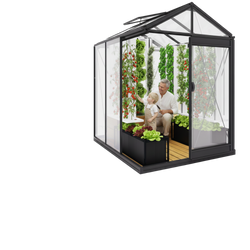
The choice of format depends mainly on the space and light available to you. A small aquarium topped with a herb trough fits on a worktop and needs only a supplementary grow light. A patio pond is already enough to produce lettuces throughout the growing season. A greenhouse, finally, extends the harvest period considerably and shields the system from temperature swings.

It is also an excellent educational tool. The nitrogen cycle, photosynthesis and the very concept of an ecosystem become visible and tangible, which explains the success of these installations in schools, libraries and community centres.

Large-scale aquaponics

Large-scale aquaponics

By combining local food production, reduced chemical inputs, and low water consumption, aquaponics offers considerable advantages, particularly in urban areas or regions facing water stress. Innovative farms are now using aquaponics as a lever for sustainable productivity, while providing consumers with healthy, locally grown food.

These professional aquaponic greenhouses can produce year-round, even in environments that are ordinarily poorly suited to agriculture, thanks to precise system management, grown without soil and under glass.

At this scale, running an operation becomes a genuine profession in its own right. Sizing, production, processing, sales, and managing an entire team all require skills spanning aquaculture, market gardening, chemistry, and commerce — disciplines that rarely overlap and that demand complete, well-rounded teams.

The business model most commonly relies on fish production, which is more profitable than vegetable growing and can be processed to achieve high added value. Herbs, salads, tomatoes, and strawberries are also among the crops regularly grown at large scale in aquaponics. Proximity to the consumer, freshness, and the absence of treatments are the main selling points of these farms.

Univers Aquaponie is a brand of the Aquaponeasy group, which also develops this type of large-scale farm. The first project, covering approximately one hectare, will break ground in 2027 in Vic-sur-Seille, in the Moselle. The aim is to bring to large scale what we champion at a domestic level: reconnecting people with their food and choosing quality produce from sustainable farming.

The farm will combine trout farming with the production of various vegetables and herbs, with an on-site processing facility and a vermifilter system to make use of fish sludge. A farm shop and a dining area are also planned. To find out more, visit aquaponeasy.com.
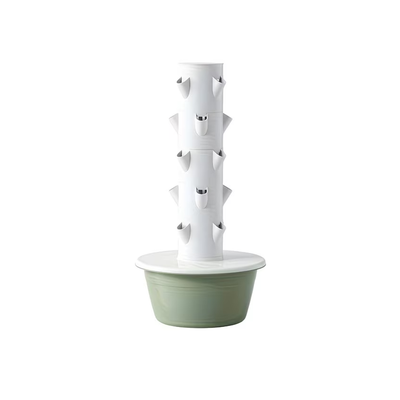
Green-tub hydroponic growing tower installed on a balcony among lettuces and herbs

Why choose aquaponics over hydroponics?

Aquaponics, born from the combination of "aquaculture" (fish farming) and "hydroponics" (soilless plant cultivation), offers a sustainable and ecological solution that differs from hydroponics in many ways.

Unlike hydroponics, which relies on prepared nutrient solutions, aquaponics creates a symbiotic ecosystem where fish waste naturally provides the nutrients plants need. In return, the plants purify the water, which is then cycled back to the fish.

This circular, self-sustaining model of food production makes aquaponics a more natural approach, whilst yielding healthy, high-quality produce. By choosing aquaponics, you opt for a method that addresses the challenges of food sovereignty and water conservation, drawing the best from both aquaculture and hydroponics.

That said, there is no need to set the two techniques against each other. Hydroponics remains simpler to manage, since you have precise control over what you feed your plants, and it can deliver very high yields with demanding crops. The trade-off is that you need to purchase nutrient solutions on a regular basis, and it produces only plants.

Aquaponics requires a little more patience at the start, while the bacterial population becomes established, but it then offers excellent stability and a dual harvest. Many growers also describe the water as more alive and better buffered, forgiving minor fluctuations more readily than a purely mineral solution. The best choice ultimately depends on what you want to produce and how much you enjoy tending a living ecosystem.

There is no need to make a definitive decision either way. Vertical growing towers, for instance, work equally well whether fed by a hydroponic nutrient solution or connected to a fish pond.

The two founders in a Hélio aquaponic greenhouse, surrounded by tomatoes and vegetables in cultivation Helio 10 m² Aquaponics Greenhouse

Aquaponics for greater food independence

Faced with changing lifestyles and uncertainty around food supplies, many households are looking to produce part of what they eat. Aquaponics fits naturally into that approach.

It makes it possible to grow fresh vegetables and raise fish at home, all year round, even in limited spaces.

With a well-designed aquaponic system, anyone can improve their quality of life by reducing their reliance on conventional supply chains. It is a straightforward and effective way to take back control over what you eat, while taking concrete steps towards a healthier diet that is kinder to the environment.

It is worth being realistic about the scale involved. A domestic system will not replace your entire weekly shop. It does, however, cover salads, microgreens and fresh herbs very well — precisely the products that are most perishable, most expensive per kilogram, and most often imported out of season.

Many users combine approaches: an aquaponic system for quick-growing fresh crops, and an outdoor kitchen garden for potatoes, squashes and storage vegetables. The two complement each other far more than they compete. And there is something genuinely rewarding about feeding the people you love with quality food you have grown yourself.

Aerial view of an outdoor aquaponic system: fish pond, grow beds and a deep water culture lettuce raft in hexagonal modules A River In The Garden Aquaponics Kits : Taravo & Estéron

What makes up an aquaponic system?

Whatever its size, an aquaponic installation relies on the same building blocks. Understanding them makes it much easier to choose a kit or design your own setup.

The fish pond is the starting point. Its volume determines almost everything else, since it dictates how many fish you can keep, and therefore how many nutrients will be available for the plants.

Filtration works on two levels. Mechanical filtration captures solid particles, while biological filtration provides the bacteria with the surfaces they need to break down ammonia. In small grow medium-based systems, the growing bed often handles both roles at once.

The pump and aeration keep water and oxygen circulating. These are the only components that consume any real energy, and the ones whose failure makes itself felt most quickly.

The growing area takes several forms depending on the project: a grow medium bed filled with clay pebbles, floating rafts on a pond, nutrient film technique channels, or vertical towers. Each has its strengths, and there is nothing to stop you combining them within a single installation.

To this you can add a few simple but invaluable accessories: a thermometer, water test kits, and something to shade the pond in summer. Nothing overly technical, but these are the things that make a real difference day to day.

Young woman smelling flowering basil in a herb garden in full sun

How long before the first harvests?

This is the question everyone asks, and the honest answer starts with a nuance: it depends mainly on the season and the temperature of your water.

The first step is starting the nitrogen cycle, commonly known as cycling. This involves letting the bacteria establish themselves before introducing a full fish population. Depending on the temperature and method used, this phase typically takes three to six weeks. Adding a bacterial starter can often shorten it, though it cannot be skipped entirely.

During this period, you monitor ammonia and nitrite levels, which rise and then fall back down, while nitrate begins to appear. The system is generally considered established once ammonia and nitrite return consistently to zero.

On the harvest side, leafy vegetables move quickly. Lettuces, basil and microgreens can usually be harvested within a few weeks. Fruiting crops such as tomatoes or strawberries require a well-established system and a sufficient fish population, as their nutrient demands are higher.

It is also quite common for a first year to serve mainly as a learning experience, with the second year generally proving far more productive. This is not a failure — it is the normal pace of an ecosystem finding its feet.

Conclusion: growing differently, at home and for the future

Aquaponics is more than a clever system: it is a new way of thinking about food and our relationship with nature. By combining aquaculture and market gardening within a single ecosystem, it makes local, sustainable, and environmentally responsible production a reality.

Whether you are passionate about aquaculture, motivated by food self-sufficiency, looking for a rewarding project, or simply mindful of your health, aquaponics offers a practical and accessible solution.

If you are still unsure, start small. A modest system, carefully managed, teaches you infinitely more than a large installation launched too hastily. You will then know exactly what you want to scale up — and why.

Univers Aquaponie offers complete, easy-to-install kits so that everyone can get started at their own pace. What if you took the first step towards more sustainable food production, with one fish, one plant, and a good deal of common sense?

Sources

SMIDAP, Étude de faisabilité technico-économique d'un pilote d'aquaponie en Pays de la Loire (OPRA 2), 2018, Approximate water saving from a recirculating system, and feedback from a French pilot project.

ITAVI, Aurélien Tocqueville, Réglementation et aquaponie, premier tour d'horizon, 2020, Regulatory framework for fish farms and list of permitted species in France.

University of Florida IFAS Extension, HS1252, A Practical Guide for Aquaponics as an Alternative Enterprise, Daily water renewal rate, stocking densities, and feed rations.

Oklahoma State University Extension, Nitrification and Maintenance in Media Bed Aquaponics, Biological start-up period for a new system.

New Mexico State University, Rossana Sallenave, Important Water Quality Parameters in Aquaponics Systems, CR-680, Reference ranges for pH, dissolved oxygen and nitrogen.

Frequently asked questions

First, allow for the biological start-up of the system — roughly two to four weeks before nitrification establishes itself, and often a full month before you can grow in earnest. After that, lettuces and herbs can be harvested within a few weeks, whereas fruit crops take an entire season.

The classic temptation is to plant everything on day one. It is far better to start with a few undemanding plants and wait until nitrates are actually showing up in the water.

Yes, provided you compare like with like. Recirculating systems, on which aquaponics is based, operate with a daily water renewal of just a few per cent of the total volume, whereas open pond farming involves large-scale water replacement. French pilot projects put the saving at around 90% less water than conventional production.

On a domestic kitchen garden scale, the comparison also favours aquaponics over growing in open ground. Water is neither drained deep into the soil nor lost through run-off — it circulates in a closed loop and only leaves the system through evaporation, plant transpiration, and the small amount carried away with the sludge removed from the filter.

In practice, regular top-ups are still necessary, particularly in summer and in a greenhouse where evaporation increases significantly. Rainwater harvesting is preferable to tap water, whose chlorine must in any case be neutralised or allowed to off-gas before being added to the pond.

For a domestic system where nothing is sold, no particular formalities are required. Everything changes the moment production is sold commercially.

  • The installation then falls under the rules applicable to fish farms, with a declaration or authorisation requirement depending on production capacity.
  • The species kept must be among those native to French waters, such as carp, trout, perch, pike-perch, or tench.
  • An exotic species is only an option in a closed facility, with no discharge into the natural environment.

If in doubt, the local departmental directorate for territories (direction départementale des territoires) is the body to consult before purchasing any fish.

This is the real weak point of the method. Without a pump, water stops circulating through the biofilter and oxygen levels drop first in the fish tank. A few hours generally pass without harm in cool, lightly stocked water, but far less so in the height of summer with a high stocking density.

A small battery-powered air pump is enough to get through a typical power cut. After a prolonged stoppage, restart circulation and then test for ammonia and nitrites over several days, as bacteria deprived of oxygen take time to return to their normal activity.

Yes, provided the fish receive a quality feed and no pesticide treatment has ever been applied to the crops. Rinse the vegetables as you would any other harvest.

The same mistakes come up time and again with beginners.

  • Adding too many fish before the biofilter has been colonised.
  • Overfeeding, which drives ammonia up even faster than a high stocking density.
  • Rinsing filter media under chlorinated tap water, thereby killing the bacteria.
  • Never testing the water, then discovering a problem only when fish start gasping at the surface.

None of these is serious if caught early. A test kit and a log book are worth more than any sophisticated piece of equipment.

Read next

Salmonponics: aquaponics in cold water

Salmonponics: aquaponics in cold water

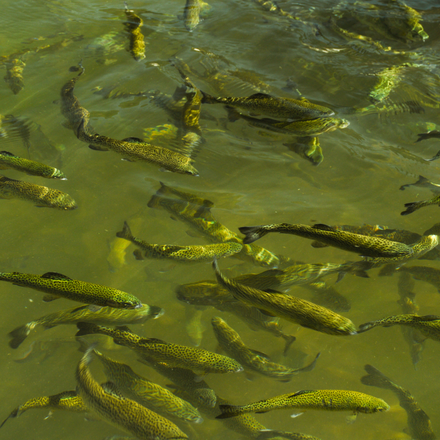
Aquaponics is often associated with pond fish like goldfish and koi. However, there is a variant perfectly suited for our temperate regions, cool climates, and winters : salmoponics. Trout, char, brook trout, these iconic

Read the article
Is aquaponics suitable for animal welfare ?

Is aquaponics suitable for animal welfare ?

We often talk about what aquaponics produces. But rarely about what the fish that make it work experience. Are they simply tolerated in a system designed for production, or can aquaponics truly respect their

Read the article
What to sow in autumn in aquaponics

What to sow in autumn in aquaponics

Autumn is not the end of the growing season — it is the start of the most peaceful one. Here is what to sow, when to do it and how to achieve leaf harvests

Read the article
Growing tomatoes in aquaponics

Growing tomatoes in aquaponics

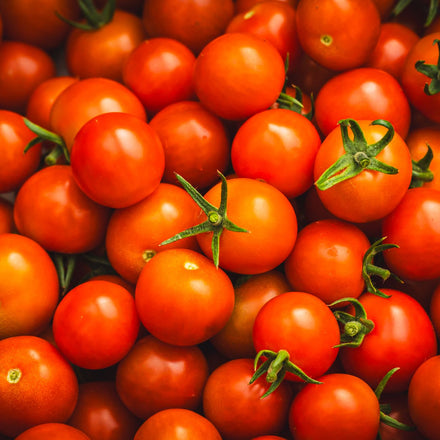
Hungry for nutrients and a lover of warmth, the tomato finds aquaponics an ideal growing environment. This comprehensive guide takes you from choosing a variety through to harvest, covering pH, hand pollination, and pruning,

Read the article
Raising tilapia in aquaponics

Raising tilapia in aquaponics

Tilapia is the most widely farmed fish in the world in aquaponics, renowned for its hardiness and rapid growth. Understanding its actual requirements in terms of temperature, volume and feeding is the key to

Read the article
Raising perch in aquaponics

Raising perch in aquaponics

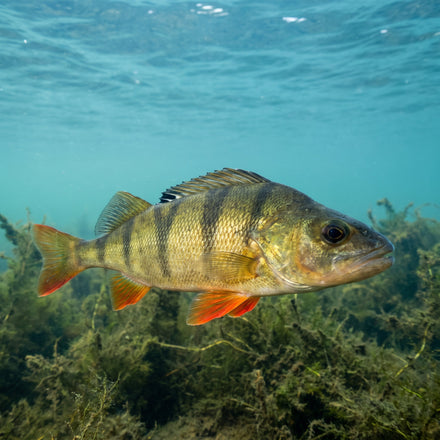
The common perch is the predatory fish of European temperate waters: hardy, with sought-after flesh, and perfectly suited to aquaponic systems in temperate climates. Here is how to raise this fish, the temperatures to

Read the article