What fertilizer should I use in aquaponics ?

Written by Ulysse Hay · September 28, 2025
Compléments nutritifs employés en aquaponie

In aquaponics, fish and bacteria provide many of the nutrients plants need. However, some nutrients can sometimes be lacking. Adding the right fertilizers then becomes essential to maintain a healthy balance. But what products can be used without harming the fish or disrupting the ecosystem ?

The importance of using natural fertilisers in aquaponics

In aquaponics, fish produce waste which, once processed by micro-organisms, becomes nutrients the plants can absorb. The plants, in turn, filter and purify the water for the fish. This clever system is often enough to ensure good fertility. Yet some elements run short or become unavailable. A deficiency in iron, potassium, calcium or magnesium can quickly hold back plant growth and compromise the overall balance. That is when adding suitable fertilisers becomes necessary. Unlike in a conventional garden, the aim is not to fertilise generously, but to correct with precision and moderation.

The role of fertilisers in aquaponics

The role of fertilisers in aquaponics

In aquaponics, fertilisers are supplements, not a means of heavy feeding. The aim is never to feed the plants directly as you would with conventional fertilisers, but to make up for specific deficiencies that upset the balance of the system. Each addition should be thought of as a fine correction, made with care, because the slightest mistake affects the fish and the bacterial colony. In this context, fertiliser becomes a tool for managing the system, allowing you to optimise productivity while protecting the ecosystem.

Chelated iron: a must against chlorosis Chelated iron (iron chelate) EDDHA 6%

Chelated iron: an essential against chlorosis

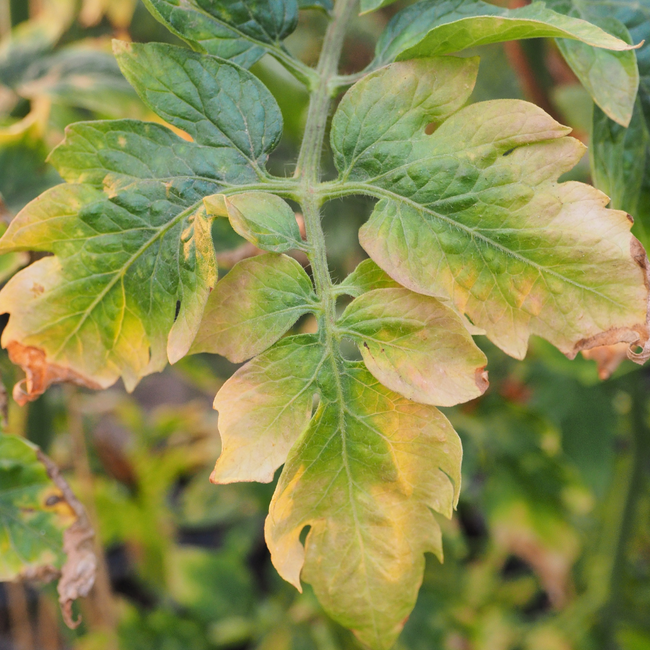
Iron is probably the most problematic nutrient in aquaponics. Often present, it quickly becomes unavailable when the pH rises above 7. The plants then show the typical symptoms of iron chlorosis: young leaves turn yellow but keep green veins. To correct this, chelated iron is used. EDDHA iron 6% is the most stable even at high pH (up to 9) and remains effective in basic soils or solutions, but it colours the water strongly and contains less active iron. EDTA iron 13% is the most concentrated and economical, but it only works well at a pH below 6.5. DTPA iron 11% offers an ideal compromise: it stays stable up to a pH of about 7.5, which covers the whole 6.4 to 7.5 range targeted in aquaponics, does not alter the colour of the water and is perfectly suited to aquaponic systems. A few grams are usually enough to restart growth and restore vigorous foliage. Chelated iron is therefore an indispensable ally, and it is wise to keep some on hand at all times.

Potassium: the key to resilience and fruiting Patentkali fertiliser granules, potash, magnesia and sulphur

Potassium: the key to resilience and fruiting

Without potassium, plants become fragile, flowering is reduced and fruit develops poorly. The most visible symptoms are dried-out leaf margins and brittle stems. To remedy this, aquaponics generally uses potassium bicarbonate, which has the advantage of also regulating pH, or potassium sulphate, which is very effective and easily absorbed. Patentkali supplies potassium and magnesium in the same granule (30% K₂O and 10% MgO), but it was designed for open-ground use and should be used with caution in aquaponics. It is very rich in sulphates (44% SO₃), which accumulate in recirculating water, it can contain up to 3% chloride and, unlike potassium bicarbonate, it raises neither the pH nor the KH. Reserve it for an occasional supply of magnesium and potassium on a system whose pH is already stable, dissolving the granules in a bucket of system water and splitting the dose. These additions must be made carefully, as an excess of potassium can interfere with the uptake of other nutrients.

Calcium nitrate and magnesium sulphate crystals, the two classic supplements for correcting these deficiencies Epsom salt, soluble magnesium sulphate

Calcium and magnesium: an essential duo

Calcium is essential for plant structure and fruit health. A deficiency causes distorted leaves and the notorious blossom end rot on tomatoes or peppers. Magnesium, at the heart of chlorophyll, is just as vital: a deficiency shows up as yellowing between the veins of the older leaves. To correct these shortfalls, you would generally use calcium carbonate or calcium hydroxide, which also remineralise the water, and magnesium sulphate, better known as Epsom salt. Properly dosed, these additions rebalance the system and quickly restore vigour to your crops.

Natural fertilisers and organic supplements Seabird guano, nitrogen and phosphorus fertiliser

Natural fertilisers and organic supplements

Beyond mineral inputs, certain natural fertilisers can usefully complement an aquaponic system. Marine guano, rich in phosphorus, stimulates flowering and fruiting. Seaweed extracts, rich in trace elements and natural stimulants, strengthen plant resistance. Liquid organic fertilisers can also occasionally support growth. However, their use must remain moderate, as an excess of organic matter risks overloading the biological filtration. These products therefore have their place as occasional "boosts", and not as the basis of fertilisation.

Trace elements: small details that matter

Micronutrients: small details that matter

While iron, potassium, calcium and magnesium are often discussed, trace elements should not be forgotten: zinc, boron, manganese, copper… These nutrients, needed in very small quantities, play a crucial role in the overall health of plants. Their absence sometimes causes subtle symptoms that are hard to identify, but that eventually reduce productivity. To avoid these hidden deficiencies, some growers occasionally add trace element solutions suited to aquaponics, or opt for natural extracts (seaweed, liquid composts). These micro-inputs complement the work of the fish and ensure balanced growth.

Conventional fertilisers to avoid at all costs

Conventional fertilisers to avoid at all costs

In aquaponics, not all fertilisers can be used. Complete fertilisers from the shops are mainly a problem because of what they provide on top of nitrates: ammoniacal nitrogen or urea, which turn into ammonia that is toxic to fish, and concentrated salts that push conductivity up. Nitrates themselves remain of low toxicity for most warm-water fish below around 100 mg/L. Products that are too concentrated or dissolve too quickly should be avoided, as should fertilisers containing heavy metals or chemical additives. The rule is simple: use only aquaponics-compatible products, either natural or specially formulated to be harmless in a living system.

The importance of monitoring and testing the water 10-in-1 water analysis kit for ponds

The importance of monitoring and water testing

Before adding any fertiliser, it is essential to know the state of the system. Monitoring the pH, conductivity and hardness of the water is an indispensable habit. Regular tests make it possible to anticipate deficiencies and adjust inputs precisely. They are also a way of checking that the supplements you add do not disturb the fish. Good practice is to keep a logbook, noting each addition and its visible effects on the plants. Over time, this record becomes a valuable foundation for understanding your system better and avoiding mistakes.

Best practice for using fertilisers

Good practice when using fertilisers

The key to using fertilisers in aquaponics comes down to two words: moderation and observation. It is better to split the applications and introduce them gradually rather than add a massive dose that would upset the balance. After each addition, you need to watch the plants closely and also monitor the system's reaction (water, fish, bacteria). Aquaponics-compatible fertilisers are designed to limit the risks, but their effectiveness depends on rigorous management.

In conclusion

Using fertilisers in aquaponics is not an admission of failure, but a natural step in managing a complex system. The fish and bacteria do most of the work, but some nutrients need targeted supplements. Chelated iron, potassium, calcium, magnesium, trace elements and marine guano are all suitable solutions, provided they are used with discernment. Aquaponics, more than a growing method, is a continuous learning process: that of balance. By observing your plants, monitoring your parameters and choosing compatible products, you will turn every correction into an opportunity to strengthen the stability of your system and improve its productivity.

Sources

Eck, Körner et Jijakli, Nutrient Cycling in Aquaponics Systems, Springer, 2019, Proportion of dietary nitrogen retained by fish, and typical deficiencies in potassium, calcium and magnesium.

Yang and Kim, Characterizing Nutrient Composition and Concentration in Tomato-, Basil-, and Lettuce-Based Aquaponic and Hydroponic Systems, Water, 2020, Comparative concentrations of potassium, calcium and magnesium, and conductivity levels.

Tsoumalakou et al., Precise Monitoring of Lettuce Functional Responses to Minimal Nutrient Supplementation, Agriculture, 2022, Dose of DTPA chelated iron used and the effect of combining iron and potassium.

New Mexico State University, Aquaponics, Circular 680, Influence of pH on nutrient availability, including iron.

Oklahoma State University Extension, Nitrification and Maintenance in Media Bed Aquaponics, Working pH ranges and monitoring nitrification after a correction.

SMIDAP, Rapport du programme OPRA 2 sur l'aquaponie, French field experience on water monitoring and nutritional corrections.

Frequently asked questions

Always adjust it first. Above pH 7, a portion of the iron precipitates and becomes unavailable to the roots: you would be dosing into nothing and loading the water pointlessly.

Because the nutrient source is a fish feed, not a formulated fertiliser. The review by Eck, Körner and Jijakli notes that approximately 30% of the nitrogen supplied by the feed is retained by the fish themselves; only the remainder circulates, and for other elements the proportion actually available is even lower.

The figures speak for themselves. A study published in Water in 2020 measured, across comparable installations, approximately 75 mg per litre of potassium in aquaponics versus 333 in hydroponics, 18 mg of calcium versus 146, and 1.6 mg of magnesium versus 40. Nitrogen, by contrast, remained in a similar range.

This is precisely the purpose of the supplements described above: it is not nitrates that are lacking, but cations. A system that appears to be running well can therefore plateau due to a shortage of potassium or magnesium even when all your nitrogen tests are showing perfect results.


Never correct two parameters on the same day, as you will no longer be able to tell what made the difference. The order that saves time:

  • Start by measuring pH and carbonate hardness, and bring the pH into the working range before adding anything else.
  • Check the feed ration given to the fish: an underfed system will produce widespread deficiencies that no fertiliser will correct in the long term.
  • Then address iron, whose deficiency is the most common and the quickest to resolve.
  • Wait around ten days, then consider potassium, calcium, or magnesium depending on the symptoms that persist.

Record every intervention and its date: it is the only way to attribute an improvement to the right cause.

The doses found in the literature provide a guideline rather than a rule. A trial published in Agriculture in 2022 applied iron in the form of DTPA chelate at 40 µmol per litre, equivalent to just over 2 mg of iron per litre of system water, and recorded a net yield gain in lettuce when combined with potassium.

In a home setup, split the dose: apply half the target amount, observe for ten to fifteen days, then add the remainder if the young leaves have not regained their green colour. Add the product in the evening, as darkness slows the degradation of the chelate.

Some of them, yes. Copper and zinc, found in many horticultural trace element solutions, are toxic to fish and invertebrates at doses that remain harmless to plants. A large addition of soluble salts will also cause a sharp spike in conductivity. The safe approach is to dilute in a bucket of system water, pour slowly into the return zone, and never double a dose on the grounds that nothing seemed to happen.

No, and relying on it alone is misleading. Conductivity adds up all dissolved ions without distinguishing between them: water high in carbonates and low in potassium will give the same reading as a well-balanced solution. Research published in Water in 2020 also recorded conductivity values two to three times lower in aquaponics than in hydroponics, with no adverse effect on lettuce growth.

Use it as a trend indicator, noted in your logbook, and leave diagnosis to foliar symptoms.

Read next

Solar aquaponics, powering your system

Solar aquaponics, powering your system

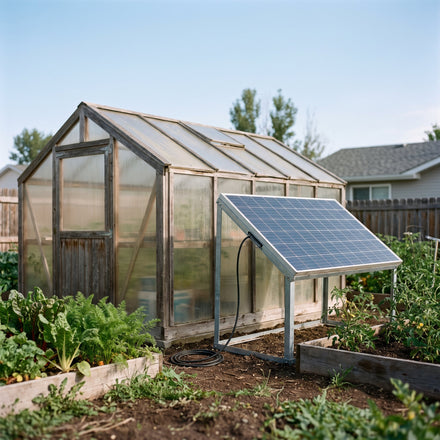
Running a pump and air stone on solar energy is within reach of any homeowner, provided you start from actual consumption rather than panel wattage. Here is the calculation method, the useful equipment and

Read the article
What to sow in autumn in aquaponics

What to sow in autumn in aquaponics

Autumn is not the end of the growing season, it is the start of the most peaceful one. Here is what to sow, when to do it and how to achieve leaf harvests through

Read the article
Vermiponics: worms in aquaponics

Vermiponics: worms in aquaponics

Vermiponics involves introducing compost worms into the grow medium beds of an aquaponic system, where they break down fish sludge and plant debris that bacteria then convert into assimilable nutrients. This page covers suitable

Read the article
Aquaponics in businesses and schools

Aquaponics in businesses and schools

We picture aquaponics in a garden or a greenhouse. Rarely in a school playground, a hospital's shared garden or the lobby of a corporate headquarters. And yet, that is where it produces some of

Read the article
Aquaponics and Summer Holidays

Aquaponics and Summer Holidays

You're going away for two weeks in July and your aquaponics system will be running without you : this thought rightly makes you anxious, because heatwaves, evaporation, and fish feeding raise practical questions. Good

Read the article
Growing pots for aquaponics

Growing pots for aquaponics

The net pot is an unassuming but decisive accessory in aquaponics: it supports the plant, houses the grow medium and allows water and oxygen to circulate freely. This guide explains how to choose the

Read the article

Discover our aquaponics greenhouses and kits:

View all
Produits du rayon Kits d'aquaponie chez Univers Aquaponie

Aquaponics kits

Aquaponics kits ready to install in the garden, on a patio or in a greenhouse, with fish tank, grow beds and pump.

Discover
Produits du rayon Univers Plantes chez Univers Aquaponie

Plants

Seeds, grow media, fertilisers and aquatic plants for successful growing in aquaponics, hydroponics and the vegetable garden.

Discover
Produits du rayon Univers Équipements chez Univers Aquaponie

Equipment Universe

The equipment that keeps a system running: soilless growing, water circulation and aeration, filtration, temperature, plumbing and lighting.

Discover
Produits du rayon Serres d'aquaponie chez Univers Aquaponie

Aquaponics greenhouses

Greenhouses designed for aquaponics, supplied with their fish tank and grow towers.

Discover
Produits du rayon Univers Poissons chez Univers Aquaponie

Fish

Feed, monitor the water and care for your pond, aquarium or aquaponic fish.

Discover
Produits du rayon Univers Formation chez Univers Aquaponie

Learning

Books and practical courses on aquaponics, hydroponics and food self-sufficiency.

Discover