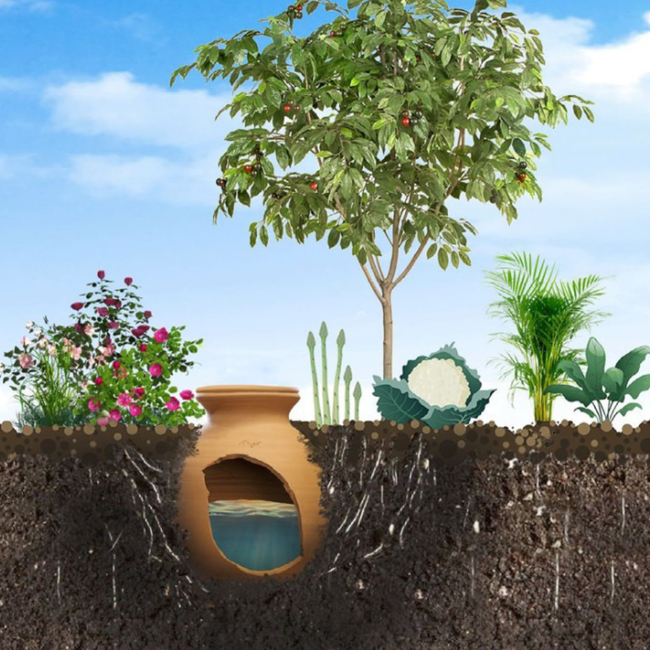
This is the system behaving normally, pushed to its limits. Under intense solar radiation, dry wind and low air humidity, evaporative demand rises sharply, roots draw more water, the soil dries out against the vessel wall and the olla follows suit. Research from agricultural services on water losses makes clear that these three factors, radiation, wind and humidity, matter far more than the temperature alone shown on a thermometer.
The answer is not to add more ollas in a hurry, but to reduce demand. Mulch thickly over the entire surface around the ollas, shade plants during the harshest hours with fleece or an upturned crate over young plants, and avoid any soil cultivation that would open the ground to evaporation. Fill the ollas in the evening if possible, so that the whole night is available for diffusion.
A supplementary surface watering remains perfectly reasonable during a heatwave. A slow soak at the base, once every two or three days, takes pressure off the olla without undermining the whole point of the system. Return to your normal routine once the heat breaks, and use the opportunity to note the volume consumed, that is your most reliable guide to sizing for the following season.