



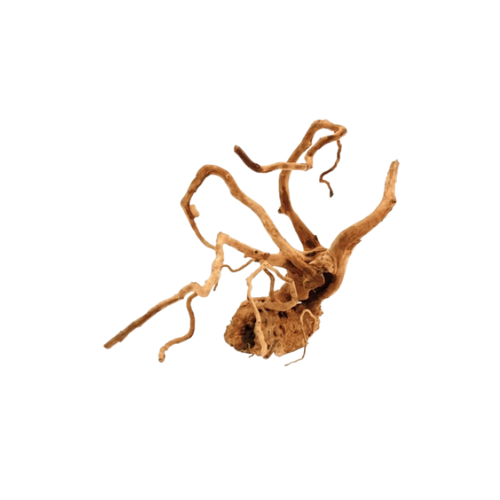

Natural slate for aquariums, 1 to 2 kg
Regular price
$7.45
Regular price
Sale price
$7.45
Unit price
/
per
Natural slate can be laid flat, stacked or propped against the glass to build terraces and overhangs in a freshwater aquarium.
Each piece weighs 1 to 2 kg, has a unique shape and also serves as a spawning surface for cichlids.
 Customer support 7 days a week by email
 Delivery within 2 to 15 business days
100 % secure payment
The summary
- What you receive: a slate stone of 1 to 2 kg, chosen from the batch, with a unique shape.
- What it allows: laying out a terrace, creating an overhang, wedging a floating root in place.
- Before filling: a rinse in clean water and a scrub with a brush, nothing more.
- What substrate to place it on: directly on the bottom of the tank, never on a layer of loose sand.
- What it does to the water: slate is not a carbonate rock, and the vinegar test confirms it in 10 seconds.
- Shipping: heavy for its size, can be combined with the rest of your order.
Flat stone for stacking, to build rock formations and provide a spawning surface
Natural slate for aquariums is used to build terraces, overhangs and walls in a freshwater tank. Each flat stone weighs 1 to 2 kg and has a unique shape. It is placed directly on the base, before the sand, and also gives cichlids, such as the angelfish, a sloping spawning surface.
Slate splits into thin, even plates, which makes it useful in a tank: laid flat, it makes a table; stood against the back glass, it makes a wall; wedged at an angle, it makes a shelter. Each piece weighs 1 to 2 kg, and its shape changes from one plate to the next, so you will be building the décor with the stone you receive rather than the one in the photo.
🧱 Building with sheets
Always place the first stone on the bottom of the tank, before pouring in the sand. Sand that the fish dig through gradually hollows out under a slab placed on top of it, and the stack ends up toppling over. Once the base is resting on the glass, you can pile up two or three layers, crossing the slabs like the stones of a dry-stone wall, so that each piece rests on two supports rather than just one.
If you are using more than two thicknesses, or if burrowing fish live in the tank, fix the whole thing in place. Out of the water, a special aquarium silicone applied in dots between two panels is enough; in a tank that is already full, a glue that sets underwater saves you from draining it. Finally, leave a clear gap behind the structure, because sludge builds up in that corner and you will need to be able to get the siphon bell in there.
A root and a shell to dress the plates
A slate structures the bottom of the tank, but its straight lines remain visible as long as nothing breaks them up. An aquarium root laid across a terrace breaks up this geometry and gives the fish a shaded area above the slab. If you keep bottom-dwelling fish, a coconut half slipped under an overhang also offers them an enclosed hiding place.
🥚 A sloping spawning surface
Several freshwater cichlids lay their eggs on a hard, smooth surface rather than in a cavity. This is true of the angelfish (Pterophyllum scalare) and the discus, which readily choose a vertical or steeply angled support. A slate tile leaned almost upright against the back glass gives them this surface, which is steadier than a plant leaf swaying in the current and easier to keep an eye on from the front of the tank.
Before spawning, the pair spend a long time cleaning the chosen surface with their mouths, then the female lays her eggs in rows which the male fertilises straight away. So place the slate in a calm area, out of the direct flow of the filter, and do not move it once this cleaning has begun. If you want to raise the fry separately, slate has a practical advantage: you can lift it out with its eggs and transfer it to a rearing tank without detaching anything.
🪨 A rock made of layers
Slate is a metamorphic rock formed from compacted clays. Pressure has aligned its minerals into parallel layers, and it is along these planes, known as cleavage planes, that it splits into slabs. Dense and barely porous, it sinks as soon as it is submerged, unlike a piece of root. It normally contains no limestone, so it changes neither the pH nor the hardness of your water, which a few drops of white vinegar on the dry stone will confirm in 10 seconds.
Technical specifications
The essentials
- Weight per piece
- 1 to 2 kg
- Shape
- Flat plate, single outlineNo piece is identical to the one in the photo.
Installation
- Support
- Directly on the tank floorOn sand, the stack eventually topples over.
- Preparation
- Rinsing and brushing with clean water
In the box
- 1 slate stone of 1 to 2 kg
Weight taken on 20/09/2026 from the batch in stock. Type of rock and vinegar test taken on 11/10/2026 from geology and aquascaping guides on slate.
Estimate your
delivery time
Your estimate
Delivery
Estimated time
It covers preparing your order and then the transit time quoted by the carrier, counted in working days.
It is not a guaranteed delivery date: public holidays, peak periods, customs or a carrier delay can extend it. The exact amount, in your currency, is worked out in the cart once your address is entered.
This stone ships in a small reinforced parcel and is combined with the rest of your order. Its weight counts towards the calculation, which is made at checkout according to your destination.
Frequently asked questions
6 questions
6 key questions


Related articles

Bases
The nitrogen cycle in aquaponics
Spawning always leaves a surplus of food in the water.
Read the article

Fish
Which fish to choose for aquaponics?
Species that look for a hard surface on which to lay their eggs.
Read the article

Assembly
Setting up your aquaponic system
The fish tank, its bottom and what settles there in the first few weeks.
Read the article

Troubleshooting
Understanding and clearing cloudy water
Rock dust put back into suspension, and the time it takes to settle.
Read the article

Grow medium
Which grow medium to choose for aquaponics?
Fine grain gets dug out from under a heavy stone; coarse grain much less so.
Read the article

Wellbeing
Is aquaponics suited to animal welfare?
A hiding place changes the behaviour of a territorial fish.
Read the article
Let us talk about your project
A question about this product or your setup? Our team will answer and advise you.

Interest-free instalment payments
Offered depending on the cart amount, at checkout.

Delivery in 2 to 15 working days
Depending on the products and shipping sites. Estimate by destination in the estimator on this page.

After-sales service 7 days a week by email or chat
Our team answers all your questions.

Shop responsibly
Become part of the change.
