Green pond water: 5 solutions

Written by Joan Canals · May 13, 2026
Bassin de jardin avec eau verte due à la prolifération du phytoplancton en suspension

In the middle of summer, the water in your pond turns an opaque green and you can no longer see your fish. Good news : five natural solutions, well combined, are enough to restore clear water in a few weeks, without any chemicals.

Why does pond water turn green ?

Green pond water is caused by a proliferation of suspended single-celled microalgae, called phytoplankton. These tiny organisms multiply at a dizzying speed as soon as they find three ingredients together: abundant light, warm water, and excess nutrients (nitrates and phosphates).

This guide presents five natural levers to combine : shading the surface, oxygenating the water, using barley straw, supporting filter bacteria, and manually removing organic matter. As a bonus, you will find a preliminary diagnosis point and the number 1 mistake that ruins all other efforts.

Testing the water to pinpoint the cause Phosphate Test

Test the water to identify the cause

Before taking any action, measure the nitrates (NO3) and phosphates (PO4) in your pond. These two parameters are the true fuel for phytoplankton ; knowing them will help you determine where to focus your efforts.

Aim for less than 30 mg/L of nitrates and less than 0.5 mg/L of phosphates for a healthy pond. Above these levels, algae will take over the ecosystem in just a few days.

Strip or drop water tests (such as JBL) are sufficient for a quick and reliable diagnosis. Repeat the measurement weekly during treatment.

Shading with floating plants Yellow Hardy Waterlily : Nymphaea Gold Medal

Shade with floating plants

Phytoplankton needs light to multiply. Covering between 50 and 60% of the pond surface with floating plants drastically cuts off this essential resource.

Aquatic plants such as water lilies, water hyacinths, or water lettuce play this dual role: they provide shade and absorb dissolved nutrients, depriving algae of their second fuel source.

Do not exceed 60% coverage, otherwise oxygenation and gas exchange become insufficient. One-third of open water is always necessary.

Boosting dissolved oxygen Pond aerator kit + hoses + diffusers

Boost dissolved oxygen

Well-oxygenated water promotes aerobic bacteria that break down nutrients before algae can absorb them. Without aeration, organic matter transforms into nitrogen and phosphorus, which are directly usable by phytoplankton.

A dedicated aerator, connected to a separate outlet from the main pump, ensures continuous oxygenation. Choose a porous ceramic diffuser rather than a simple perforated hose.

The goal is to maintain a dissolved oxygen level above 5 mg/L. This is also essential for the comfort of your fish in summer.

Barley straw, a living filter

Barley straw, a living filter

A centuries-old English agricultural tradition, barley straw works through the slow oxidation of its fibres in contact with water and UV light. The process releases hydrogen peroxide in very small quantities, sufficient to inhibit the growth of unicellular algae.

Allow around 10 to 25 grams of straw per square metre of pond surface, placed in a floating net. Replace every 2 to 3 months. Ideally introduce it at the start of spring, when the water temperature reaches 10 °C.

This method is 100% natural, biodegradable, and safe for fish and plants alike. It works as a preventive measure rather than a cure.

Green water, filamentous algae, cyanobacteria

Three phenomena often confused, but with very different consequences. Green water (phytoplankton) is unsightly but harmless, and even beneficial to young fish that feed on it. Filamentous algae form green hairs on stones and plants, which are annoying but pose no health risk.

The case of cyanobacteria

Cyanobacteria, mistakenly called blue-green algae, are actually photosynthetic bacteria. They form a foamy green or blue-green algal bloom on the surface. Some species produce hepatotoxins, neurotoxins, or dermatotoxins dangerous to humans and animals. If in doubt, do not touch the water and consult a professional for analysis.

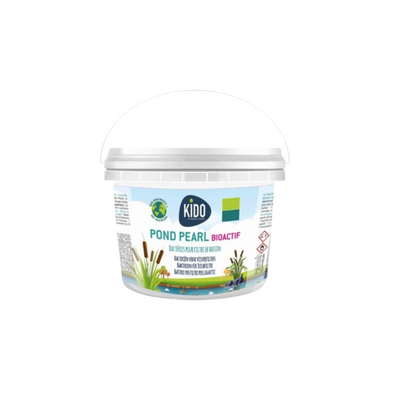
Bacteria, invisible allies Bacterial beads for ponds : KIDO Pond Pearl

Invisible bacteria allies

A biological filter colonized by beneficial bacteria converts toxic ammonia into nitrites, then into nitrates that can be absorbed by plants. Without this bacterial relay, waste stagnates and directly feeds algae.

You can speed up the establishment or regeneration of the filter with additions of commercial bacterial cultures. Biological filtration takes 2 to 3 weeks to produce its full effects.

Avoid at all costs cleaning your filter with chlorinated tap water ; you would kill the colony in a few minutes. Always rinse it with pond water.

Regular Manual Removal

Regular manual withdrawal

Simple but essential, the weekly removal of dead leaves, spent flowers, and clumps of filamentous algae physically takes organic matter out of the system before it breaks down and releases nutrients.

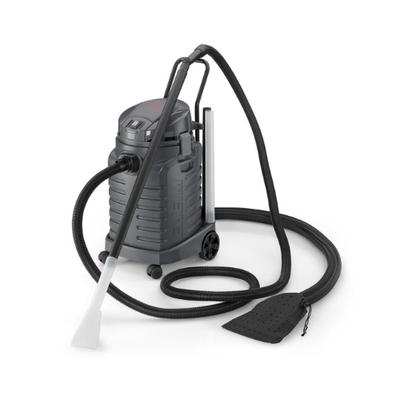
A fine-mesh pond net does the job. For larger ponds, a floating surface skimmer draws in particles continuously.

Allow 10 minutes per week in summer for a domestic pond of 3 to 5 m³. This simple routine is enough to prevent the bulk of problematic build-up.

The mistake that undermines your efforts

The mistake that ruins your efforts

Overfeeding your fish is by far the number one cause of persistent green water. Unconsumed pellets fall to the bottom, disintegrate, and release nitrogen and phosphorus, the ideal feast for phytoplankton.

Feed only what your fish consume in 2 to 3 minutes. Two small portions a day are better than one large one. In summer, observe your pond before and after each feeding.

If you suspect an imbalance related to food, also read our guide on cloudy water which follows the same logic.

Combine for lastingly clear water

None of the five solutions works dramatically on its own. The winning combination involves plant shading, bubbler oxygenation, barley straw for prevention, a well-maintained biological filter, and weekly manual removal. All while keeping an eye on the amount of food distributed.

Allow two to four weeks for transparency to return, longer if your pond is new and its ecosystem still unstable. Patience and regularity are your best allies for a clear pond without any chemicals.

Sources

SRAC 453, Recirculating Aquaculture Tank Production Systems, A Review of Current Design Practice, Size classes of solids, mesh size, settling time, and the proportion of feed excreted as solids.

N.C. Cooperative Extension, Algae Control in Ponds, Distinguishing phytoplankton from filamentous algae, the absence of effect of the dye on phytoplankton, and the risk of oxygen depletion.

Penn State Extension, Barley Straw for Algae Control, Barley straw dosage of 10 to 25 grams per square metre of surface area and the risk associated with overdosing.

Maryland Sea Grant, Barley Straw, A Potential Method of Algae Control in Ponds, Application rates per unit area, action time relative to temperature, and renewal frequency.

New Mexico State University, Circular 680, Water Quality, Dissolved oxygen and nitrate benchmarks, and when to measure.

Oklahoma State University Extension, Nitrification and Maintenance in Media Bed Aquaponics, Maturation time for a biological filter and maintenance of the media.

Rutgers NJAES, Blue-Green Algae in Waterways (FS1216), Identifying cyanobacteria and what to do when faced with an algal bloom.

Zhao et al. 2022, Int. J. Environ. Res. Public Health, grow media and plants for water purification, The respective roles of the grow medium and the plant in nitrogen removal.

Frequently asked questions

Because the cells involved are smaller than what a mechanical filter can capture. In recirculating aquaculture systems, drum filters and screens typically operate at around twenty to sixty micrometres, and anything that passes through that mesh remains in suspension. Phytoplankton sits precisely in that blind spot.

Add to this that sedimentation, which is effective within roughly fifteen to thirty minutes for heavy solids, does almost nothing against cells that actively maintain their position in the water column. Against green water, mechanical filtration is not the right tool — it is the deprivation of light and nutrients that makes the difference.

It clears the water within a few days but removes no nutrients. Switch it off and the water turns green again. It is a useful stopgap, never a long-term solution.

This is the classic emergency in a green-water pond, and it plays out at dawn. During the night, micro-algae stop photosynthesising and switch to respiration, so dissolved oxygen concentration reaches its lowest point just before sunrise. The denser the algal bloom, the more severe that drop.

The immediate response is mechanical. Run the air pump continuously, day and night, direct a pump return towards the surface, and restart the waterfall if you had switched it off. Suspend feeding for two or three days until the situation stabilises, as digestion consumes oxygen and uneaten food consumes even more as it decomposes.

Only then should you take measurements. The general target is a dissolved oxygen concentration comfortably above five milligrams per litre, measured early in the morning rather than mid-afternoon, when the reading is flattering and misleading. And if you need to remove plant biomass, do it in stages — never during the critical episode itself.
Yes, it is almost inevitable. A new pond has no established bacterial colony on its filter media, and nitrification takes several weeks to build up. During this period, nitrogen remains freely available and phytoplankton is the first to take advantage of it.

  • Do not carry out a large water change — you would reset the process entirely.
  • Feed very sparingly, or not at all, during the first few days.
  • Rinse the filter media in pond water, never tap water.
  • Plant straight away, without waiting for the water to clear.

The colour often corrects itself once the filter has matured, provided you have not restarted it several times in the meantime.

Reducing feed, yes — stopping it for an extended period, no. A significant proportion of the feed given exits the fish as solids, in the region of half according to recirculating aquaculture references, and this matter then mineralises into nutrients directly available to algae. Halving the ration for two to three weeks therefore has a real impact on the problem.

A prolonged fast, on the other hand, weakens fish that are already stressed by the heat. Keep a regular feeding rhythm, reduce the quantity, and never make up for a missed day with a double ration the next.

Daphnia do indeed graze on phytoplankton and can clear the water within a few days, but they rarely survive in a stocked pond, where fish consume them faster than they can reproduce. The trick is to give them a dense plant refuge in which adults can hide and multiply in safety.

As for so-called cleaner fish, none of them filter phytoplankton in a temperate garden pond. Adding more individuals mainly means adding more organic load — and therefore more fuel for the algae.

Read next

Salmonponics: aquaponics in cold water

Salmonponics: aquaponics in cold water

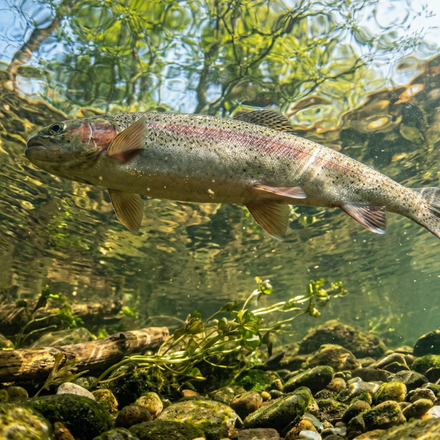
Aquaponics is often associated with pond fish like goldfish and koi. However, there is a variant perfectly suited for our temperate regions, cool climates, and winters : salmoponics. Trout, char, brook trout, these iconic

Read the article
Germination failure: causes and solutions

Germination failure: causes and solutions

Failed seedlings are a gardener's nightmare. In aquaponics, stunted growth impacts the entire nitrogen balance. If your seeds don't sprout, it's not a foregone conclusion : it's an unlifted biological "lock." A seed is

Read the article
Watering your plants with an olla

Watering your plants with an olla

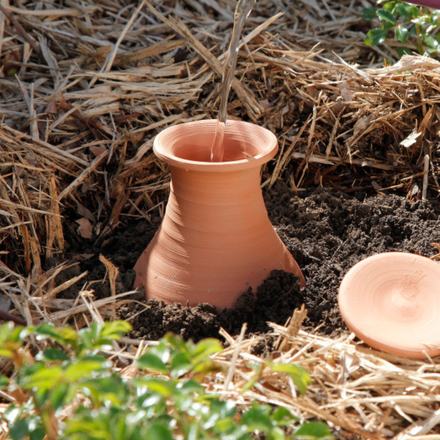
The Olla, also called an Oya, is a microporous clay pot buried near plants. It slowly releases water according to the roots' needs, allowing for deep, economical, and consistent irrigation. Increasingly popular, this system

Read the article
Is aquaponics suitable for animal welfare ?

Is aquaponics suitable for animal welfare ?

We often talk about what aquaponics produces. But rarely about what the fish that make it work experience. Are they simply tolerated in a system designed for production, or can aquaponics truly respect their

Read the article
Que semer en automne en aquaponie

Que semer en automne en aquaponie

L'automne n'est pas la fin de la saison de culture, c'est le début de la plus tranquille. Voici quoi semer, quand le faire et comment réussir des récoltes de feuilles jusqu'au cœur de l'hiver

Read the article
Maladies des poissons en aquaponie

Maladies des poissons en aquaponie

Les maladies des poissons comptent parmi les défis les plus redoutés en aquaponie. Apprenez à reconnaître les premiers signes d'alerte, à comprendre les causes profondes et à choisir le bon traitement sans compromettre vos

Read the article