




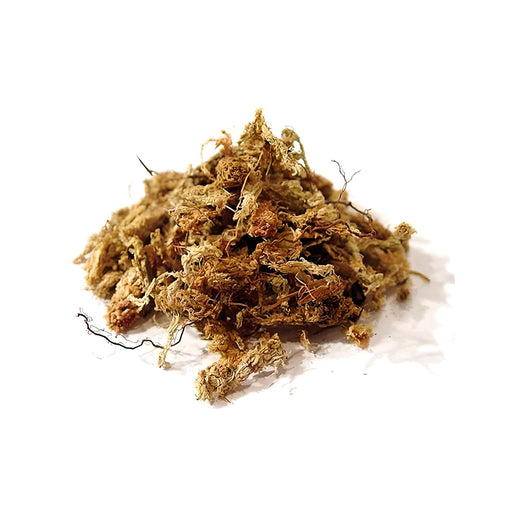


Seedling pellets to rehydrate, peat or coir
Regular price
$15.00
Regular price
Sale price
$15.00
Unit price
/
per
These Jiffy seedling pellets arrive dry and flat, packed in a biodegradable net. Placed in lukewarm water, they swell in a few minutes and form a plug that takes a seed or a cutting, then is transplanted whole into a pot or the open ground.
100 % secure payment
The summary
- What they are: compressed pellets of peat, peat and coir, or coir, held in a biodegradable mesh.
- How to use them: soak in water at around 20 °C, then place a seed or a cutting in the centre of the plug.
- Which size: packs of 50 or 100 peat pellets, or boxes of 1,000 and 1,155 for a nursery.
- In aquaponics: the seedling germinates outside the system, then moves into a perforated pot with its plug intact.
Compressed seedling plugs that swell with water, in peat or coir
A Jiffy pellet first looks like a small brown disc, 35 to 39 mm across, dry and light. Yet it contains everything a seedling needs for support: peat or coir, compressed and then held together by a biodegradable net. On contact with water, the material swells back up and the pellet takes the shape of a small cylinder, 41 mm in diameter for the 38 mm peat pellet, which holds its shape thanks to the net. You thus get a plug ready for sowing, with no pot, no compost to firm down and no plastic to throw away.
💧 From dry disc to plug
Before sowing, lay the pellets side by side in a tray, hole facing up, then cover them with room-temperature water, around 20 °C. The material absorbs the water and expands upwards within a few minutes. Once the pellets are fully swollen, pour off the remaining water and gently squeeze each plug to remove the excess. The seed is then placed in the hollow at the top, and the cutting is pushed in the same way. The mesh holds the material together until transplanting, and the roots pass through it with no difficulty. It is made of PLA, a material derived from plant starch, certified compostable under controlled conditions according to standard EN 13432.
🧪 What the plug contains
The material of a plug is prepared for a young seedling, which tolerates neither soil that is too acidic nor a solution that is too salty. In the peat-based versions, the peat is corrected with an addition of lime, and the brand gives it a pH of around 5.3; a starter fertiliser low in ammonium feeds the seedling during its first weeks. The peat in the Jiffy-7 is also heat-treated, which gives a sterile medium at the outset. The coco fibre in the Jiffy-7C, entirely peat-free, is washed and then buffered, that is, stripped of the excess salts it contains in its raw state, and it too receives a starter fertiliser. The two materials do not behave in the same way: peat retains water for a long time, whereas coco, which is more airy, dries out faster and needs lighter but more frequent watering.
Peat, 38 mm
The classic Jiffy-7 pellet, made of compressed peat, suits most vegetable and herb seedlings.
Peat and coir, 39 mm
The mixture of peat and coir, supplied in boxes of 1,000, is used for sowing seedlings in bulk in a nursery.
Coir, 35 mm
The Jiffy-7C in washed, buffered coco fibre drains quickly and suits plants that like air at the roots.
Packaging
The packs of 50 and 100 cover a season in the garden, while the boxes equip a nursery or a greenhouse.
A heat mat to bring on spring seedlings
A tomato seed takes 14 days to germinate in a grow medium at 15 °C, and only 6 days at 25 °C. Placed on a 50 x 30 cm seedling heat mat, controlled by a probe thermostat, the tray of pellets keeps that warmth day and night, and you gain a week on the germination of your March seedlings. Just keep an eye on moisture, because a plug heated from below dries out faster.
A root plug that must never dry out
A pellet that dries out completely is hard to rewet and the young root suffers. Always keep a little water in the bottom of the tray during germination, without letting the plugs sit in water permanently, because a saturated plug deprives the roots of oxygen and encourages damping off of seedlings.
🌡️ From germination to transplanting
Most vegetables grown without soil germinate well at 24 °C by day and at least 18 °C at night, whereas lettuces and leafy vegetables prefer a cooler range, from 15 to 21 °C. Once the seedling has emerged, put the tray under bright light, otherwise the stem becomes leggy and flops over. Let the plug dry out slightly between waterings: it should feel damp to the touch, never soaking. The first supplementary fertiliser feeds should only be given once the true leaves have appeared, the ones that follow the two seed leaves. When transplanting, hold the plug rather than the stem, and water it two hours beforehand: it is easier to handle and the seedling suffers less stress.
🐟 Sowing for aquaponics
In aquaponics, seedlings germinate separately, in their tray, and join the system once they are strong enough. A lettuce is ready at 3 or 4 true leaves, a tomato as soon as it has its first true leaves, often between 4 and 7 weeks after sowing, and a courgette in 2 to 4 weeks. This stage in the nursery protects the young plants, because heavily loaded fish water can burn the roots of a seedling that is too young. You then place the plug in a slotted net pot, wedged with a few clay pebbles, and its roots pass through the mesh to reach down into the water. Peat and coconut fibre are fine materials: leave the plug whole in its pot rather than crumbling it, so that no particles end up in the fish tank or the pumps. The starter fertiliser contained in the pellet feeds the plant while it germinates, and rinsing the plug under clean water, just before wedging it in its pot, stops some of it being carried through to the fish. The article on getting spring seedlings right describes this move from tray to system.
🌍 Peat or coco: what changes
Peat forms in peat bogs at a rate of about 1 mm a year, so a metre of peat represents a thousand years of accumulation. These habitats cover only 3% of the earth's land surface but store at least 550 gigatonnes of carbon, and a bog drained for extraction decomposes on contact with the air, releasing that carbon back into the atmosphere. Coco fibre, by contrast, is a by-product of the coconut, imported mainly from India and Sri Lanka and then washed with fresh water to bring its conductivity below 500 µS/cm. It holds up to 10 times its dry weight in water, slightly less than peat, hence the more frequent watering of coco pellets. The three versions of pellets therefore give you the choice between the forgiving nature of peat and a plug that is entirely peat-free, two growing media in which a lettuce seed or a basil cutting finds the water and air it needs.
📦 Choosing your size
For a family vegetable garden or a small indoor system, the pack of 50 peat pellets covers a batch of spring seedlings, and the pack of 100 lets you stagger lettuce sowings throughout the season. The boxes of 1,000 peat and coir pellets and of 1,155 coir pellets are aimed at greenhouses, nurseries and growers who sow every week. Because the pellets stay compressed and dry until rehydrated, you simply store them in their sealed packaging, somewhere dry, and moisten only the number you need for each sowing.
Technical specifications
The pellet
- Material
- Peat, peat and coco, or cocoDepending on the chosen format
- Net
- BiodegradableIt stays in place at transplanting
- Dry diameter
- 35 to 39 mm41 mm once swollen, for the 38 mm peat
- Additions
- Lime and starter fertiliserpH around 5.3 for peat, depending on the brand
Application
- Rehydration
- Water at 20 °CLeave to swell, then squeeze out the excess
- Seedling
- 1 to 2 seeds per plug
- Transplanting
- Whole plug with its nettingIn a pot, a basket or in the ground
- Coco Jiffy-7C
- Washed and bufferedLighter, more frequent watering than with peat
In the box
- 50 or 100 peat pellets, or 1,000 and 1,155 pellets in a box, depending on the size chosen
Materials, netting, peat pH and coir treatment from the brand; lime and fertiliser in the mix from a distributor. Transplanting from SRAC publication 5011; peat and coir from the IUCN and the Royal Horticultural Society.
Manufacturer and product safety
- Manufacturer
- Jiffy Products International BV
- Website
- jiffygroup.com
Information provided under Regulation (EU) 2023/988 on general product safety.
Estimate your
delivery time
Your estimate
Delivery
Estimated time
It covers preparing your order and then the transit time quoted by the carrier, counted in working days.
It is not a guaranteed delivery date: public holidays, peak periods, customs or a carrier delay can extend it. The exact amount, in your currency, is worked out in the cart once your address is entered.
Lots are dispatched from a distributor's warehouse in France, as a small parcel, and the boxes of 1,000 or 1,155 as a medium-sized parcel. The exact shipping cost is shown in your basket.
Frequently asked questions
6 questions
6 key questions
You may also like


Related articles

Seedling
Getting spring seedlings off to a good start in aquaponics
The transfer of seedlings in plugs to the system is described there.
Read the article

Diagnosis
Germination failure: causes and solutions
A plug that is too dry or too cold is listed there among the causes of failure.
Read the article

Seedling
Setting up an indoor seedling area
Heat, light and seedling trays are set up there step by step.
Read the article

Season
What to sow in autumn in aquaponics
Autumn seedlings of lamb's lettuce and lettuce are prepared there in soil blocks.
Read the article

Crops
Which plants can you grow in aquaponics?
The plants to sow for an aquaponic system are reviewed there.
Read the article
Let us talk about your project
A question about this product or your setup? Our team will answer and advise you.

Interest-free instalment payments
Offered depending on the cart amount, at checkout.

Delivery in 2 to 15 working days
Depending on the products and shipping sites. Estimate by destination in the estimator on this page.

After-sales service 7 days a week by email or chat
Our team answers all your questions.

Shop responsibly
Become part of the change.
